You don’t need a garage full of machines to start building a cabin. You need a short list of tools that work off a battery, survive rain and sawdust, and fit in a truck bed. That’s the real question behind beginners tools for woodworking when the “workshop” is a job site in the woods.
Most beginner guides assume you’ve got a table saw, a drill press, and a dust collector bolted to the wall. A solo cabin builder doesn’t have any of that, and doesn’t need it. Here’s what actually earns its spot in the toolbox when you’re framing walls fifty yards from the nearest outlet.
Measuring and Marking: Get This Wrong and Everything Else Fails
Bad measurements ruin good lumber. This is the one category where cheap tools cost you real money, because a warped tape or a loose square throws off every cut that follows it.
The Core Three
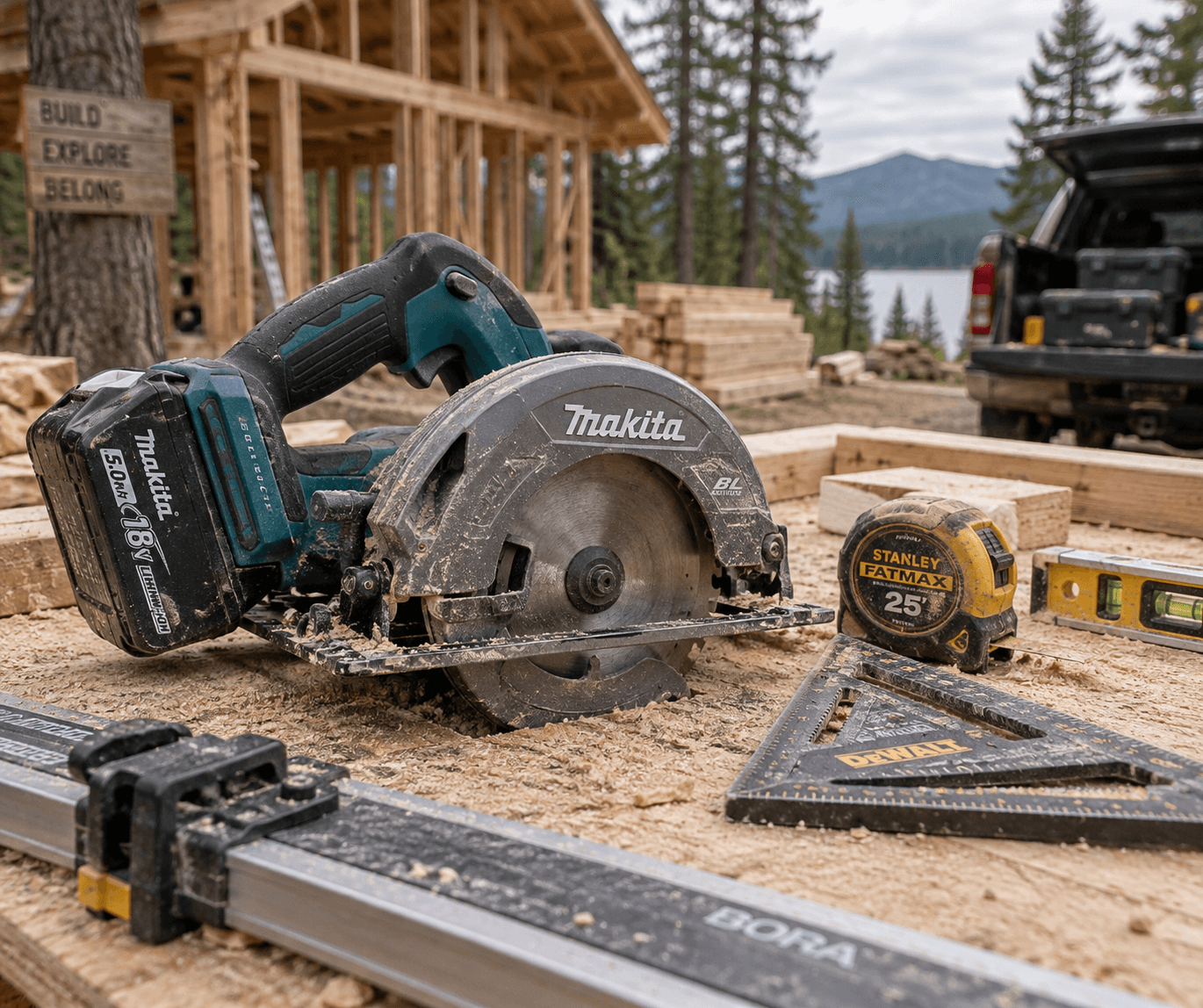
A 25-foot tape measure, a 7-inch speed square, and a 2-foot level cover 90% of layout work on a cabin frame. Get a tape with a stiff, straight blade (Stanley FatMax or Milwaukee are both solid, around $12 to $20) — the cheap retractable ones bend sideways under load and give you false readings on long walls.
Why a Speed Square Beats a Framing Square On-Site
A speed square is smaller, thicker, and doesn’t flex in wind or get stepped on and bent like a flat framing square does. For marking rafter angles, checking a stud is plumb, or squaring up a cut line, it does the job in half the time. Skip the framing square until you’re cutting actual roof rafters — a speed square handles everything else a beginner needs.
Cutting Tools: Battery-Powered Beats Corded on a Build Site
A cordless kit is non-negotiable for off-grid or semi-off-grid builds, because you won’t always have a generator running or an extension cord reaching the far corner of the site.
Circular Saw First, Table Saw Never (Yet)
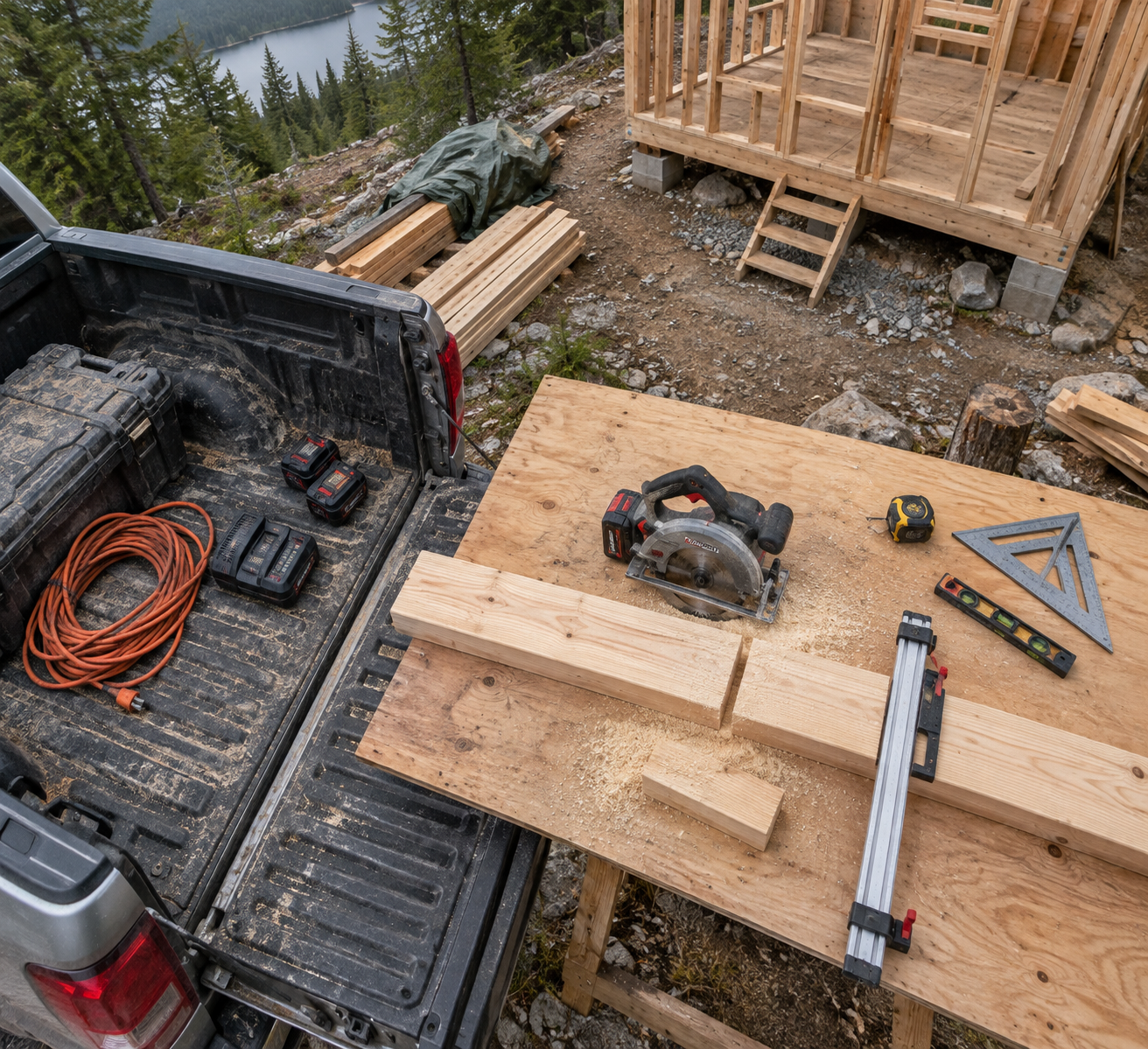
A cordless circular saw, 18V or 20V depending on brand, handles framing lumber, plywood sheathing, and most deck boards. A 6.5-inch blade is plenty for 2x material. Rip cuts on wide sheets go slower without a table saw, but a straight-edge clamp guide gets you a clean line anyway.
A Hand Saw Still Earns Its Place
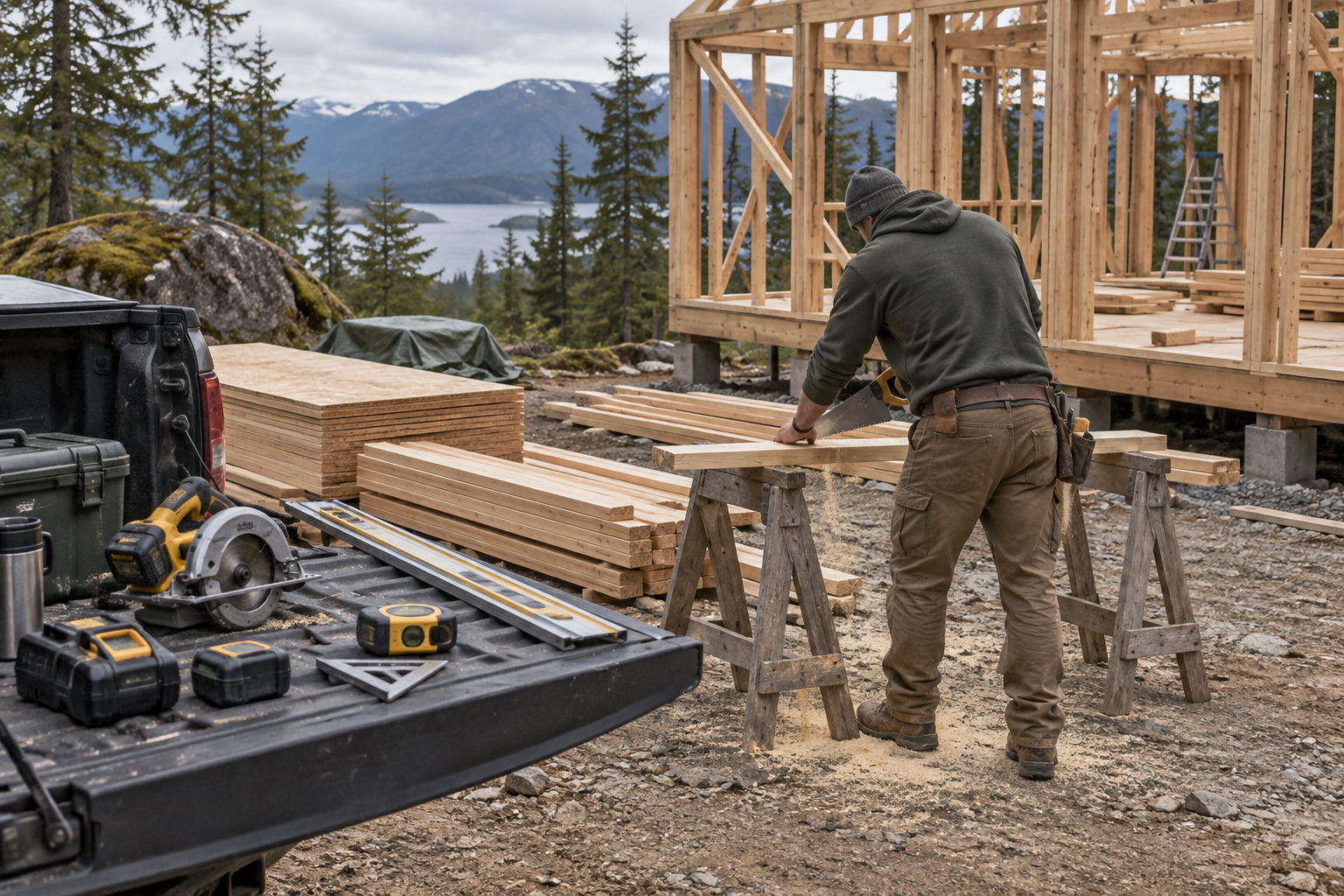
Keep a basic hand saw or a folding pruning saw in the truck. Batteries die, chargers get left at home, and sometimes a quick notch cut isn’t worth pulling out the power tool at all.
One real tradeoff: cheap battery packs lose charge fast in cold weather, which matters if you’re building through a Montana or Vermont winter. Buy at least two batteries from day one.
Driving, Fastening, and Shaping Wood
Tool
Typical Price (2026)
Why a Cabin Builder Needs It
Cordless drill/driver
$80–$150
Drilling pilot holes, driving screws, mixing concrete with a paddle bit
Hammer (16 oz claw)
$15–$30
Toe-nailing studs, setting hardware, pulling bent nails
Wood chisel set (3-4 piece)
$25–$50
Cleaning out notches, door hinge mortises, trimming joints
Bar clamps (4-pack, 24″)
$40–$70
Holding boards square while screwing, gluing up jambs
A cordless drill/driver combo does double duty as both drill and impact driver on most cheaper kits, which is fine for a beginner. Once you’re driving hundreds of structural screws, a dedicated impact driver saves your wrist.
Don’t skip the chisels. A lot of beginners try to force doors, windows, and hardware into openings that are a sixteenth of an inch too tight, when five minutes with a chisel would’ve solved it cleanly.
Finishing Touches: Sanding, Treating, and Protecting the Wood
Cabin lumber takes a beating from sun, rain, and temperature swings, so finishing isn’t optional even for a “rustic” build.
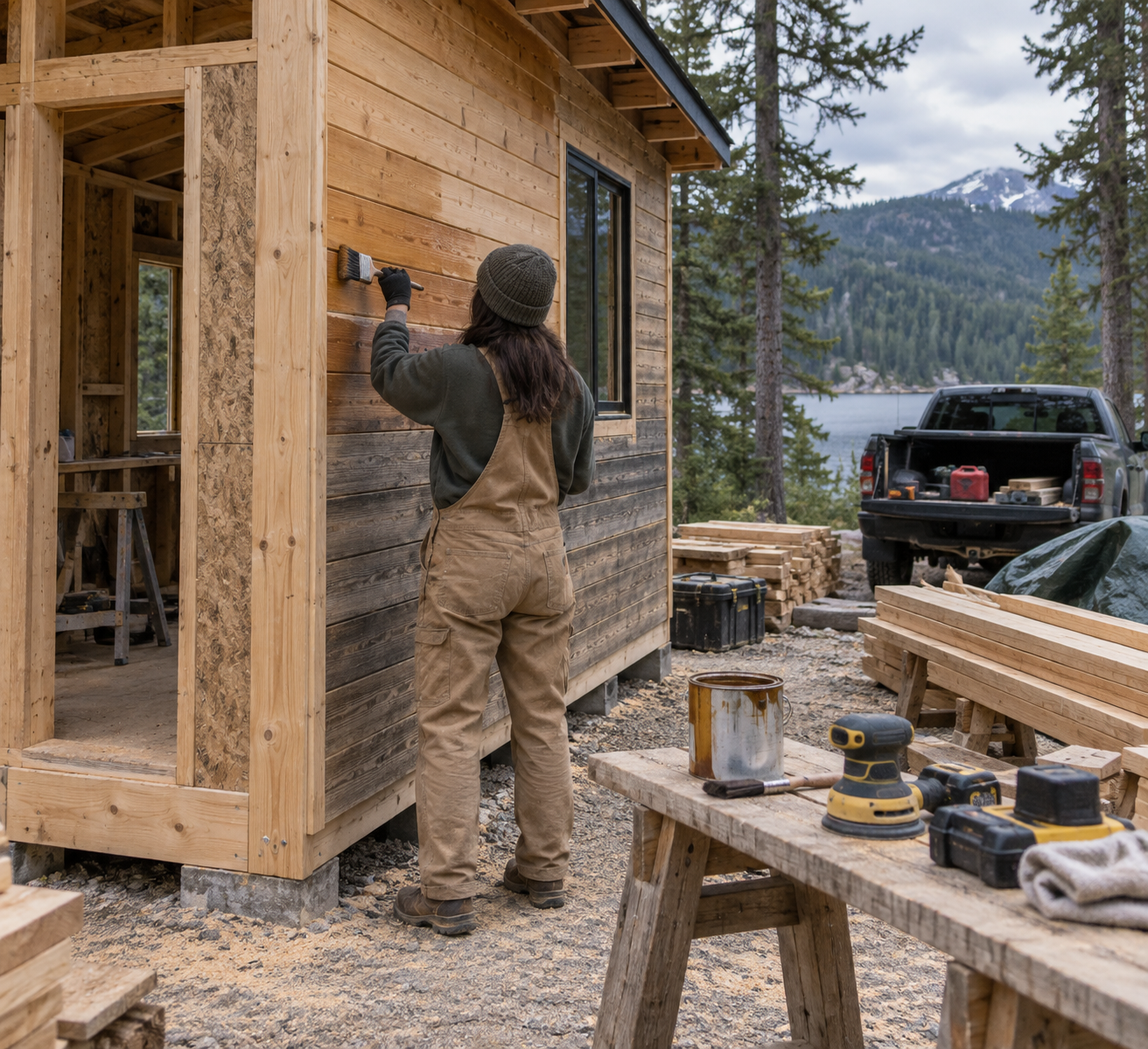
A random orbital sander with 80, 120, and 220-grit discs handles everything from rough-cut lumber to final smoothing before finish goes on. Battery-powered models exist, but a corded sander is fine here since sanding usually happens near a generator or once you’ve got power run to the site.
For wood treatment, match the product to the wood and the climate: an exterior oil-based stain with UV blockers for siding, a borate-based treatment for ground-contact posts, and a simple penetrating sealer for interior framing that stays dry. I’ve gone deeper on specific treatment schedules and what held up through a full Pacific Northwest winter over on cabinlodger.com, if you want the long version.
Safety gear belongs in this section too, not as an afterthought. Here’s the minimum beginner list, in rough order of how often you’ll reach for it:
Safety glasses (ANSI Z87.1 rated) — wear these for every cut, no exceptions
Hearing protection — foam plugs or earmuffs for the circular saw and sander
Work gloves — leather palm, not thick winter gloves that kill your grip
Dust mask or N95 — mandatory when sanding treated or painted wood
Steel-toe or composite-toe boots — dropped lumber happens more than you’d think
Knee pads — for subfloor and decking work, your knees will thank you later
Frequently Asked Questions
What’s the minimum tool list to start a cabin build from scratch?
A tape measure, speed square, cordless circular saw, cordless drill, hammer, level, and basic safety gear (glasses, ear protection, gloves) covers framing and rough carpentry. Expect to spend $400 to $600 total for decent mid-grade versions of each.
Should a beginner buy a table saw before starting a cabin?
No — a table saw is a workshop tool, not a job-site necessity. A circular saw with a straight-edge guide handles 90% of cabin framing cuts, and you can add a table saw later once you’re doing finish carpentry or cabinetry.
Are cheap drill bits and saw blades really a problem for beginners?
Yes. Dull or low-quality blades burn wood, wander off the cut line, and force you to re-cut boards, which wastes lumber and time. A $25 carbide-tipped blade outlasts three $8 blades and gives cleaner cuts from the first board.