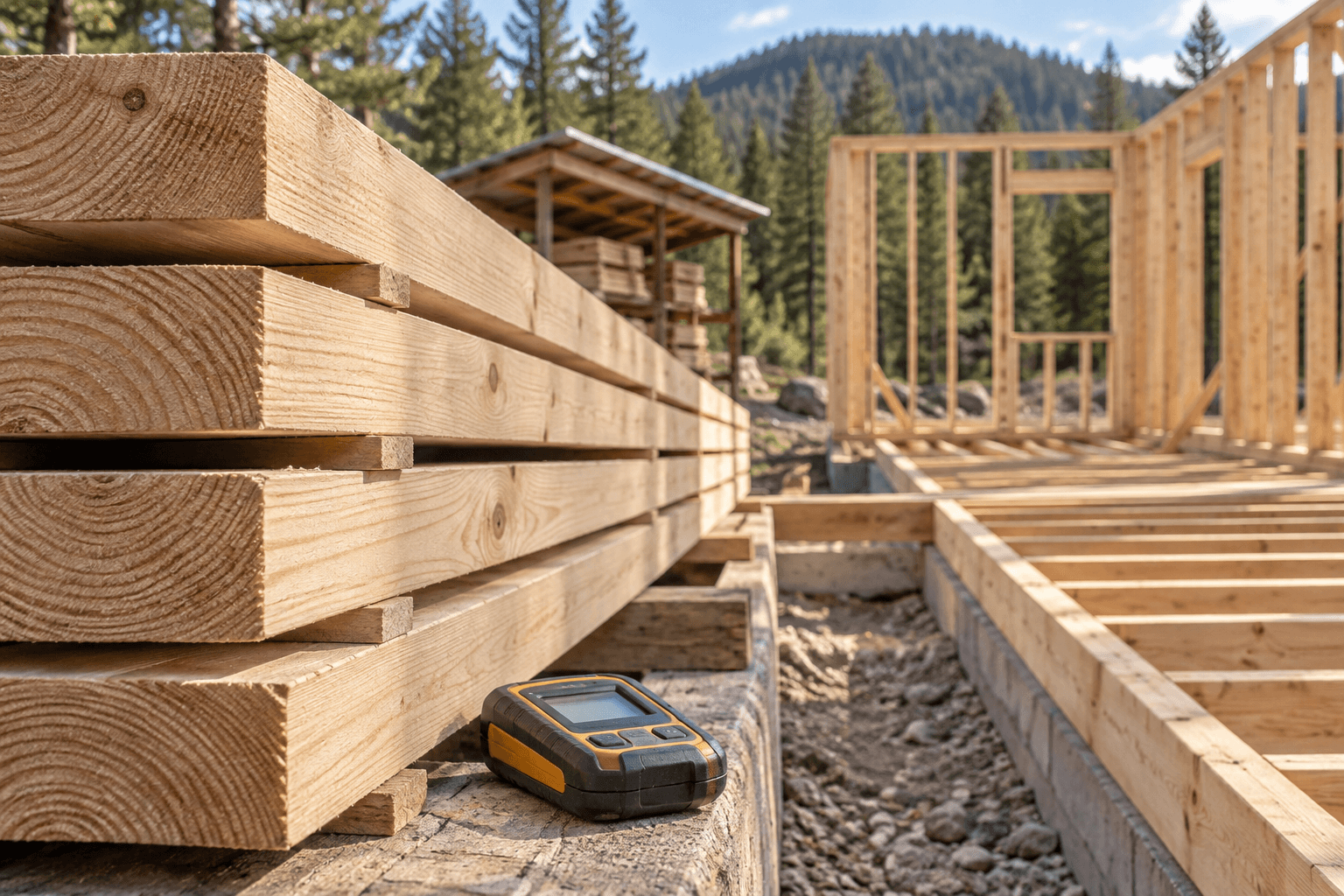
Pick up a board straight off a kiln truck and it feels lighter than one that’s been sitting in a barn all summer. That weight difference is moisture leaving the wood, and it’s the whole reason kiln dry wood costs more and behaves better once you nail it into a wall. If you’re framing a cabin and wondering whether the extra cost per board foot is worth it, the answer depends on which part of the build you’re talking about.
Kiln drying isn’t magic. It’s a controlled process where lumber sits in a heated chamber, usually between 160°F and 180°F, for anywhere from a few hours to several days depending on species and thickness, until moisture content drops to around 6-8%. Compare that to air-dried lumber, which might still sit at 15-20% moisture depending on your climate and how long it’s been stacked. That gap changes how the wood performs the day you build with it and for years after.
1. Dimensional Stability for Framing
This is where kiln dry wood earns its keep. Wood shrinks and swells as moisture content changes, and green or air-dried lumber can still be losing water for months after you frame with it. That movement shows up as gaps in drywall, squeaky floors, or nails backing out of studs.
Kiln dried framing lumber has already done most of its shrinking before it reaches the job site. A 2×6 stud at 8% moisture content will move very little once it’s inside a conditioned wall, compared to the same stud at 19% still drying out behind your sheetrock. For stick-framed cabins, this stability is the single biggest reason to pay the premium.
2. Lower Risk of Warping and Twisting
Warping happens when moisture leaves wood unevenly, and it’s a bigger problem with air-dried lumber that dries at its own pace depending on stacking, airflow, and weather. Kiln drying controls the process, so moisture leaves more evenly across the board.
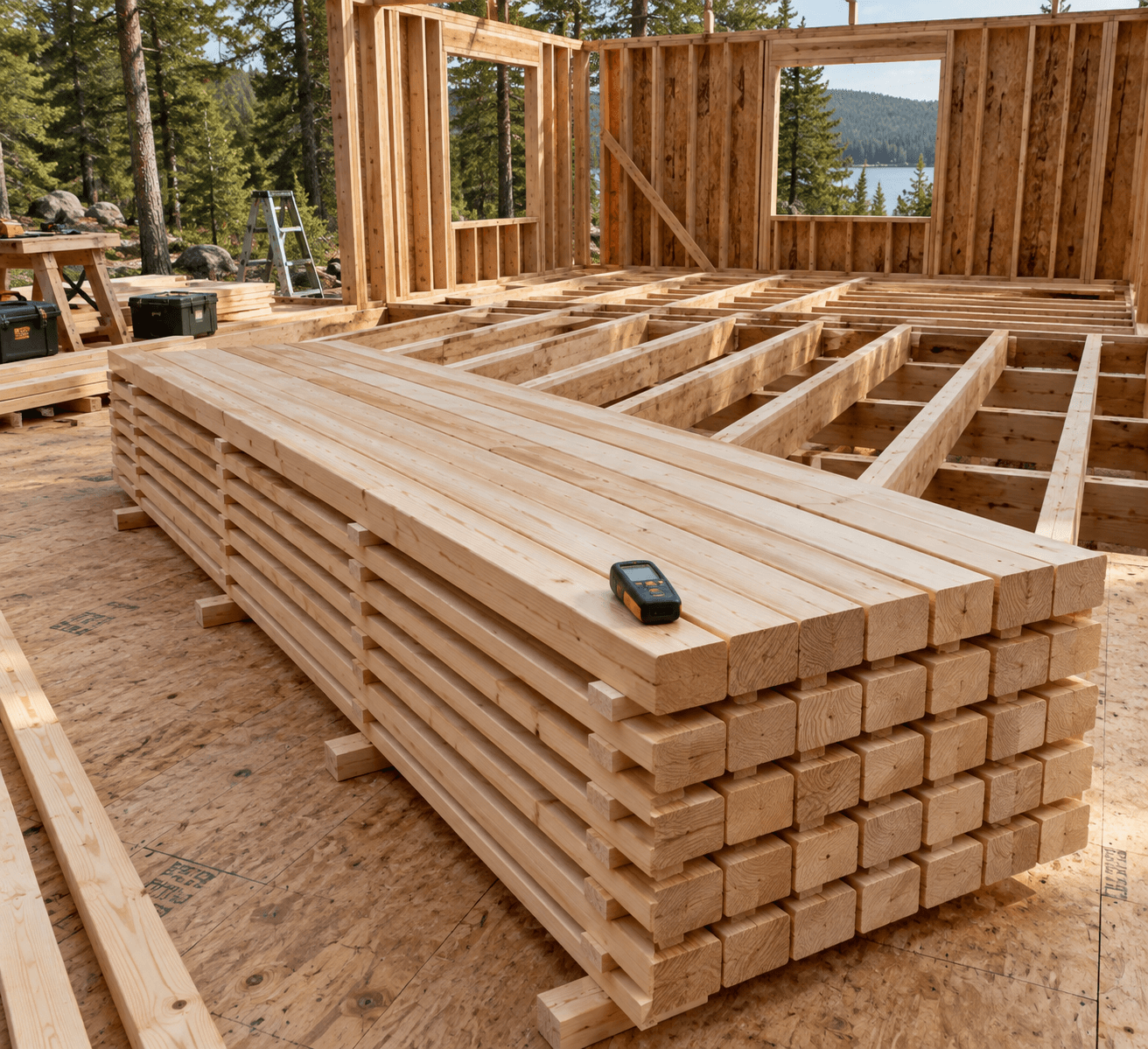
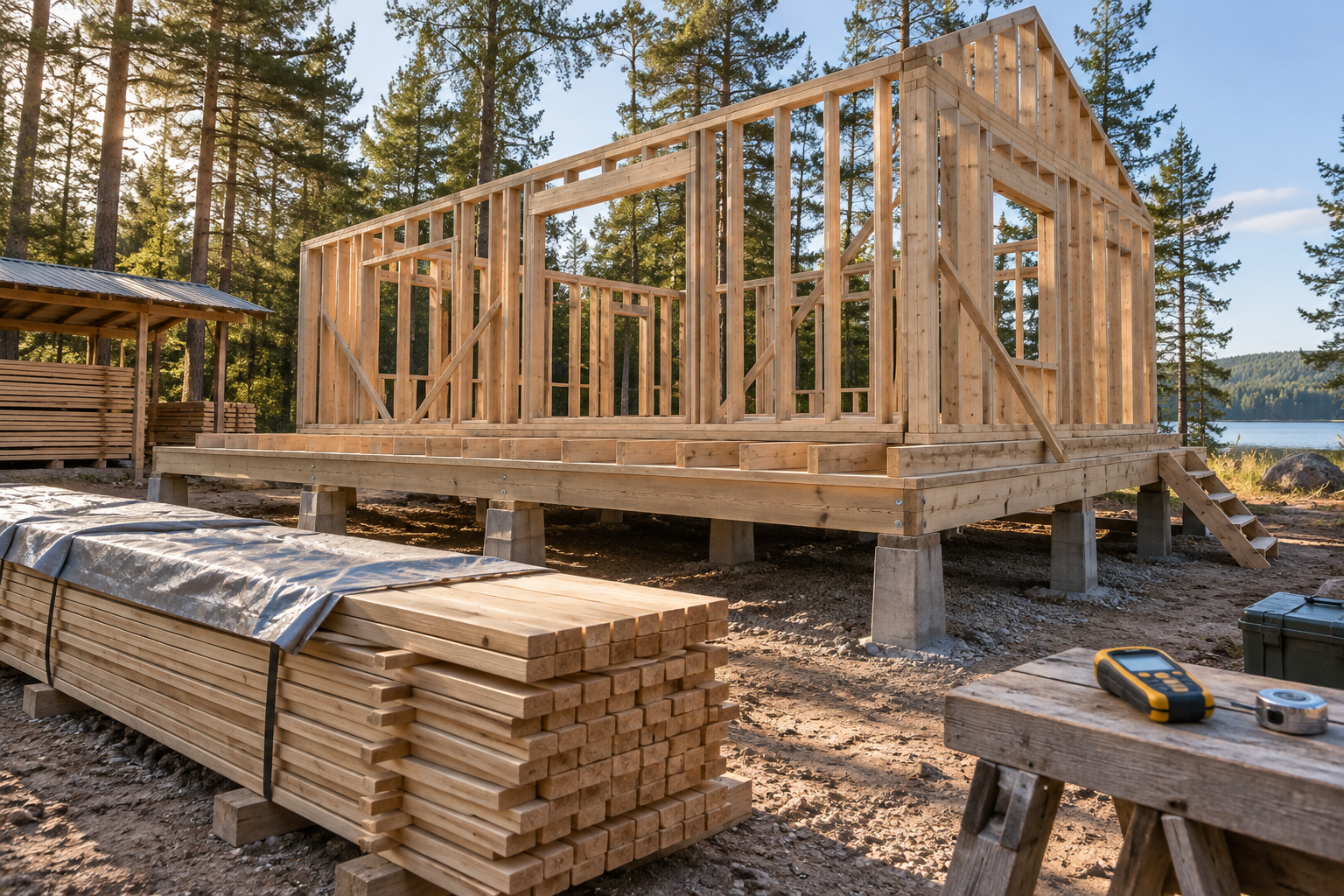
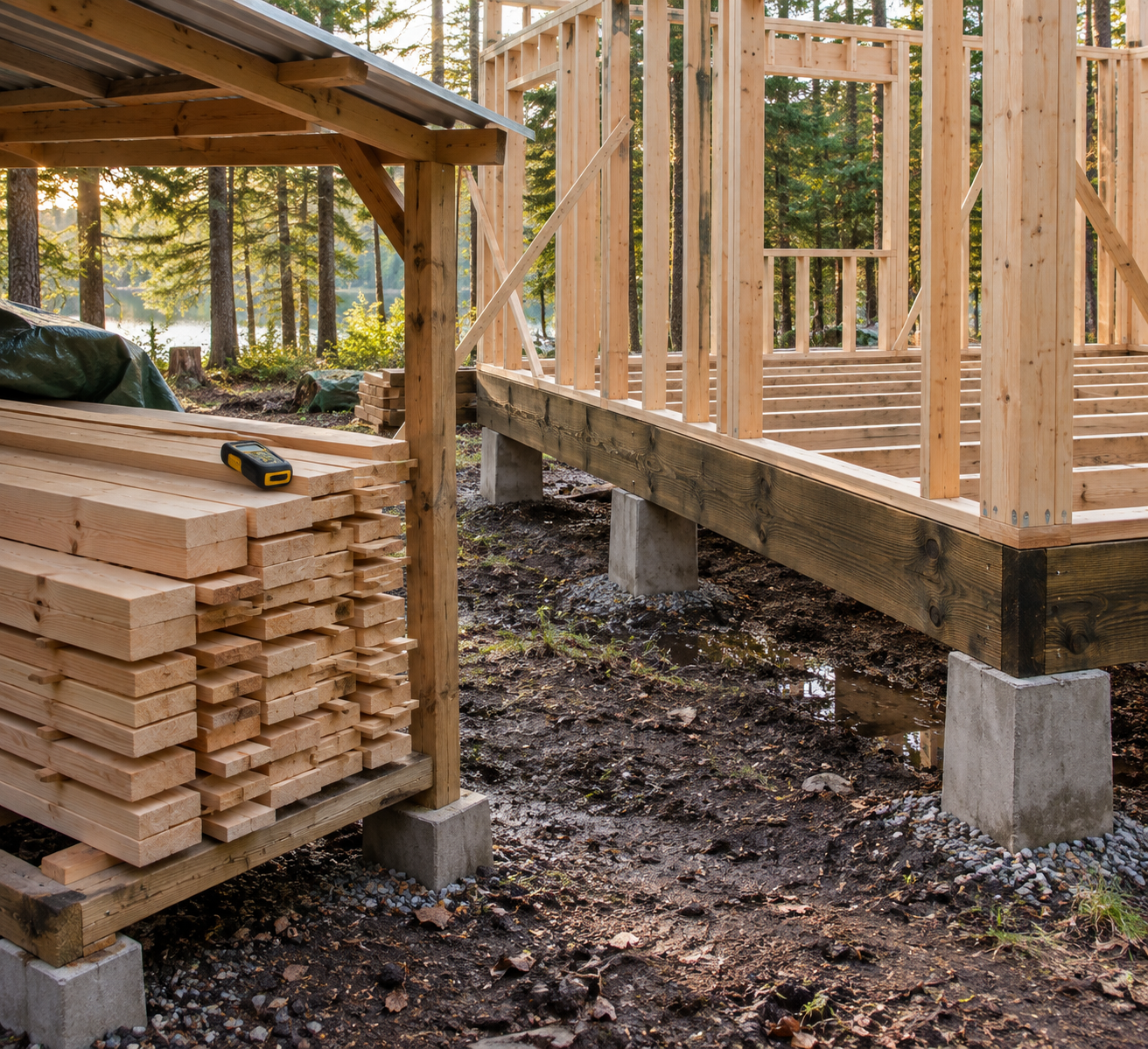
That doesn’t mean kiln dried wood never warps. Bad storage after purchase can undo the benefit fast — stack it flat, keep it off wet ground, and cover it if it’s sitting outside for more than a few days. A board that reabsorbs humidity in your driveway for three weeks isn’t much better than one that was never kiln dried at all.
3. Better Resistance to Mold and Fungal Decay
Mold and wood-decay fungi need moisture above roughly 20% to take hold, and kiln dried lumber starts well under that threshold. That gives you a head start, especially in humid climates or if your cabin site doesn’t get much airflow under the floor.
This resistance is a starting condition, not a permanent shield. Once kiln dried wood is installed and exposed to rain, ground contact, or a leaky roof, it picks up moisture just like any other wood. For sill plates, floor joists near grade, or anything close to your water supply lines, pair kiln dried lumber with a proper vapor barrier and pressure-treated wood where it touches concrete or soil.
4. Fewer Insect and Pest Problems
Insects like powderpost beetles and carpenter ants prefer damp wood, and the heat cycle in kiln drying kills existing eggs and larvae already in the lumber. That’s a real advantage over air-dried stock, which can carry pests picked up during months of outdoor storage at the mill or lumberyard.
It’s worth knowing this protection is about what’s already in the wood, not a lasting insect barrier. Kiln dried lumber left outside near a tree line for a season can pick up new pest activity just like anything else. If you’re storing lumber before your build, stack it on pallets, away from brush, and check it before you frame.
5. Consistent Strength for Structural Loads
Moisture content affects wood strength more than most first-time builders expect. Wetter wood is more prone to fiber crushing, connector loosening, and reduced load capacity, which matters for anything carrying weight, like roof trusses or floor beams.
Moisture Content
Typical Use
Strength Behavior
19%+ (air-dried, unseasoned)
Rough framing, sheds
More prone to shrinkage-related loosening
12-15% (partially dried)
Interior framing in dry climates
Moderate stability
6-8% (kiln dried)
Structural framing, trim
Most consistent strength and fastener hold
Grade stamps matter here too. Not all kiln dried lumber hits the same number — a grader stamp showing “KD19” allows up to 19% moisture, while “KD” or “MC15” targets lower, tighter ranges. Ask your supplier which standard they’re using before assuming every kiln dried board on the rack is equally dry.
Where Kiln Dried Wood Isn’t the Right Call
Kiln drying shines for framing lumber, siding, and interior trim, but it’s not automatically the best choice for every part of a cabin. Full log cabin builds are the clearest exception.
Log Walls Favor Slow, Natural Drying
Large logs dry unevenly in a kiln because the outside dries faster than the core, which can cause surface checking (those long cracks you see in log siding) or case-hardening. Standing dead timber or slow air-dried logs, dried over a year or more, often hold up better structurally and keep more of the character builders want in a log cabin.
Cost Adds Up Fast on Big Timbers
Kiln drying large logs takes longer and costs more per board foot than drying dimensional lumber, since bigger timbers need more time in the chamber to dry through. For a full log shell, that premium can run into thousands of dollars without a clear performance payoff.
Storage After Purchase Decides the Outcome
Buying kiln dried lumber and leaving it uncovered outside for a month erases most of the benefit. I’ve tracked storage and treatment mistakes like this in more detail over on Cabin Lodger’s build log, since it’s one of the easiest and most expensive mistakes to make right before framing starts.
Frequently Asked Questions
Does kiln dried wood ever absorb moisture again after installation?
Yes. Kiln dried wood reaches a low moisture content at the mill, but it’s not sealed against future exposure. Once it’s exposed to rain, humidity, or ground contact, it reabsorbs moisture just like untreated lumber, so proper flashing and vapor barriers still matter.
Is kiln dried wood worth the extra cost for a small cabin?
For framing, siding, and trim, yes — the stability and strength justify the premium, often $0.10-$0.40 more per board foot depending on species and region. For full log walls, air-dried or standing dead timber can be the better value.
Can I mix kiln dried and air-dried wood in the same cabin build?
Yes, and many builders do. Use kiln dried lumber for framing and interior work where dimensional stability matters, and reserve air-dried or naturally seasoned logs for exterior log walls where slower drying suits the larger timber better.