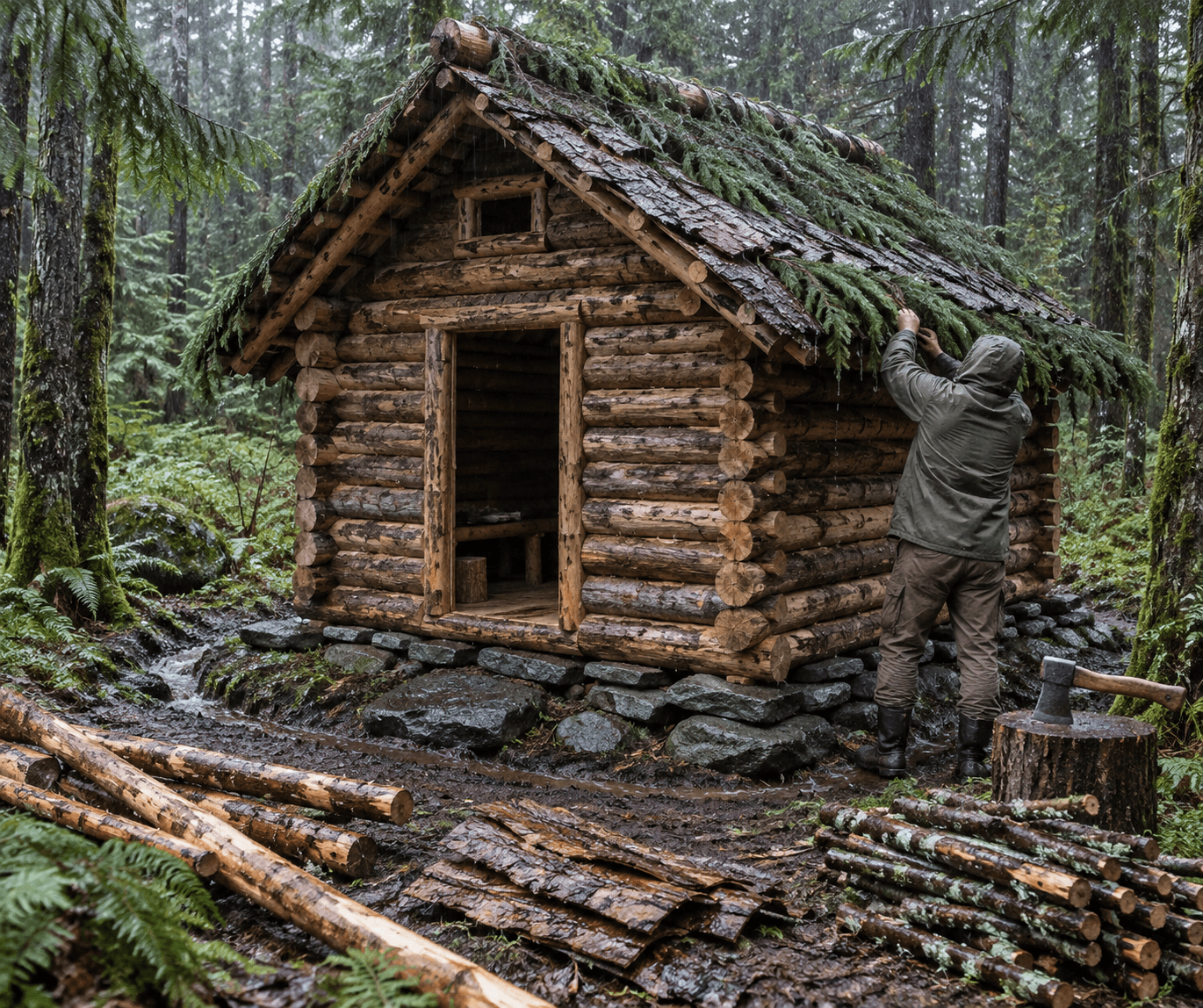
How do you build shelter in woods before dark and stay dry all night? Pick a flat, dry spot. Build small. Shed water off the roof and keep your body off the cold ground. Treat it like a tiny cabin: raised floor, pitched roof, overhang, drainage. I’ll walk through the site, the frame, the layers, and when you should just grab a tarp.
Pick the Site Like You’re Pouring a Foundation
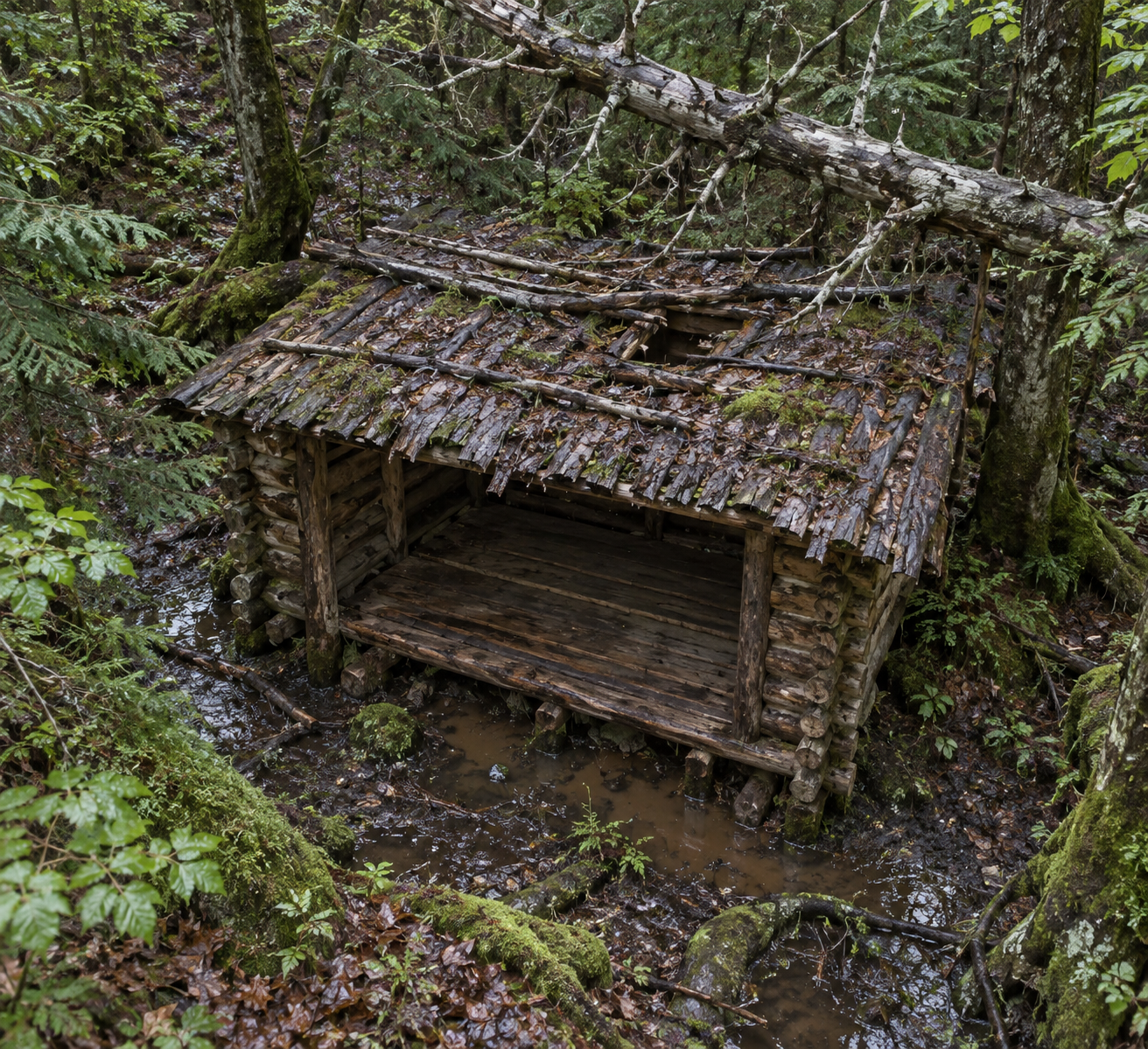
Every cabin starts with the lot, and a woods shelter is no different. A bad site can’t be fixed with better building.
What to look for
Choose ground that’s flat, dry, and slightly higher than what’s around it. Low spots flood in a storm and pool cold air at night. Look for a windbreak, like a boulder or a stand of young trees, on the side the weather comes from.
Look up before you build. Dead limbs hanging in a tree are called widow-makers, and they drop in wind with no warning. Skip any spot under them.
What to avoid
Stay out of dry creek beds and gullies. Stay within a few hundred feet of water, but not beside it, since banks flood and attract bugs. Also check the rules. Many state forests, national forests, and private tracts limit or ban building structures, and cutting live trees is often illegal. Ask the land manager what’s allowed, because the limits vary by agency and by state.
Frame and Roof: A Lean-To Is a Shed Roof on a Budget
A lean-to is the simplest frame that works. It’s basically a single-slope shed roof, the same shape you’d frame on a small cabin.
Wedge a sturdy ridgepole, about 8 to 10 feet long and wrist-thick, between two forked trees or two tripod supports at roughly 3 to 4 feet high. Lean ribs (branches 4 to 6 feet long) against it at about a 45-degree pitch, spaced a hand-width apart. That steep slope sheds water fast. Keep the opening facing away from the wind.
An A-frame is warmer, because it’s closed on both sides, but it takes more poles and more work. For one person, I’d build the lean-to first. The drawback is heat: a lean-to is open on one side, so you’ll need a reflector wall or fire to make it comfortable.
Size matters more than you’d think. Build it only slightly bigger than your body. A shelter 3 feet wide and 7 feet long holds your body heat. A roomy one just gives that heat more air to warm, and you lose.
Layers: Roof Up, Floor Down
Here’s the sequence I’d follow for a debris lean-to:
Lash the ridgepole between supports with paracord or a solid knot, at 3 to 4 feet high.
Lean the ribs on it at about 45 degrees.
Weave small sticks crosswise over the ribs as lath.
Pile on leaves, pine boughs, or bark, starting at the bottom and working up so each layer overlaps like shingles.
Rake a bed of dry leaves or boughs 8 to 12 inches deep inside.
Dig a shallow rain trench around the uphill edge.
Roof thickness
Pile debris at least 2 feet thick on the roof. That sounds like overkill until you see how fast thin thatch leaks. If you can see light through it, water gets in. Leave an overhang of about a foot at the front, the same job eaves do on a cabin.
Floor and drainage
The ground steals heat faster than the air does. Build a bed 8 to 12 inches deep, and make it a raised one if you can: logs along the sides with boughs on top. Compressed leaves lose loft, so add more than looks necessary.
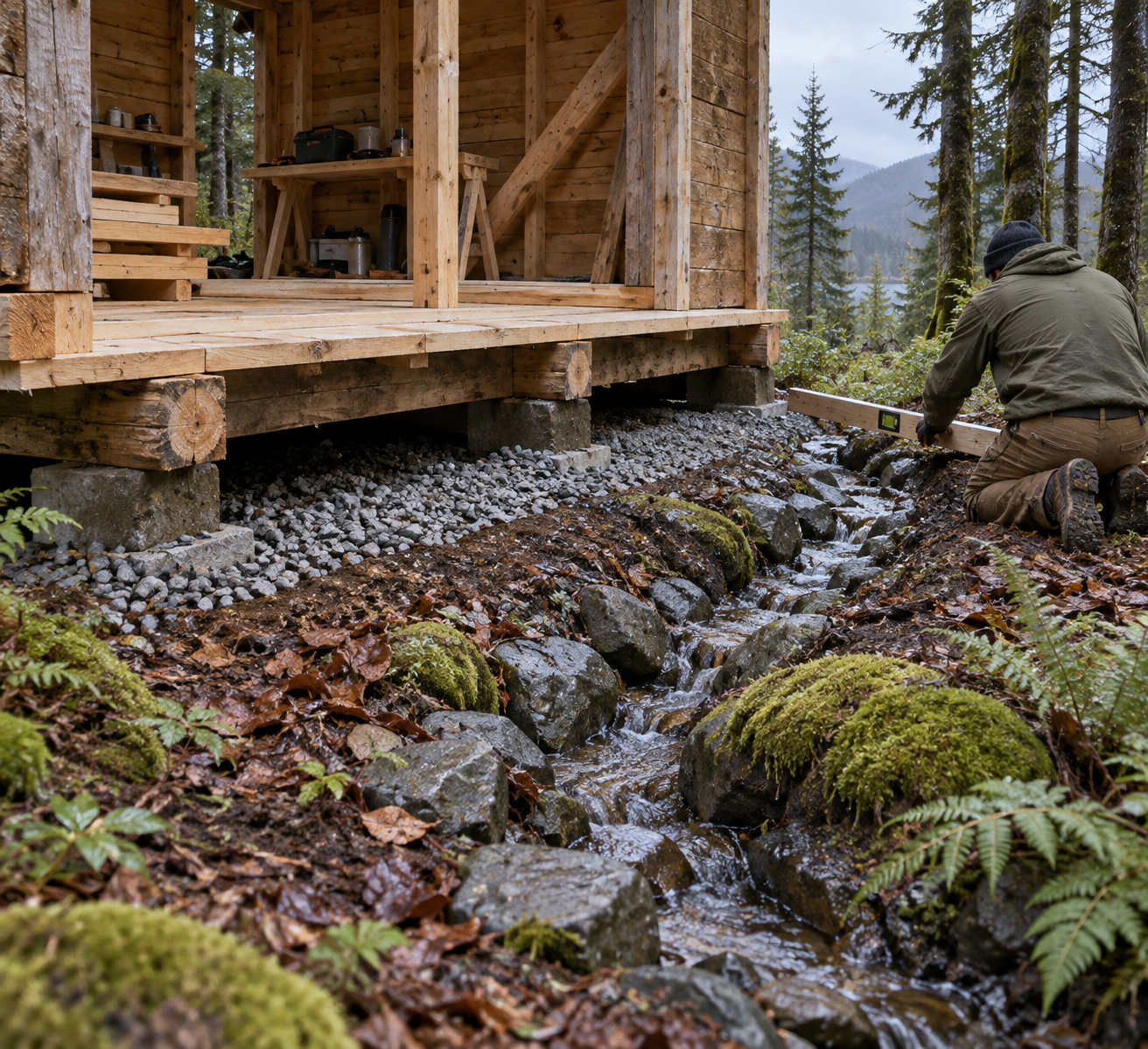
The trench is cheap drainage. Cut it a few inches deep along the uphill side so runoff flows around you, not through you.
Tarp, Debris Hut, or Cabin: Pick by Time and Effort
Be honest about the work. A proper debris shelter takes one person roughly 3 to 5 hours, plus gathering time, and it burns a lot of calories. If you’re short on daylight or it’s already raining, a tarp is smarter.
Option
Build time (estimate)
Weather protection
Best use
Tarp lean-to (8×10 ft)
20-30 minutes
Good in rain, fair in wind
Planned trips, fast setup
Debris lean-to
3-5 hours
Good with thick layers
Emergencies, no gear
Semi-permanent cabin shelter
Days to weeks
Excellent
Owned land, repeat use
If you own the land and want to go further, a log or milled-lumber shed-roof shelter on skids or piers is the next step. Small cabin build guides, like the ones on cabinlodger.com, cover that jump in detail.
Fire and ventilation
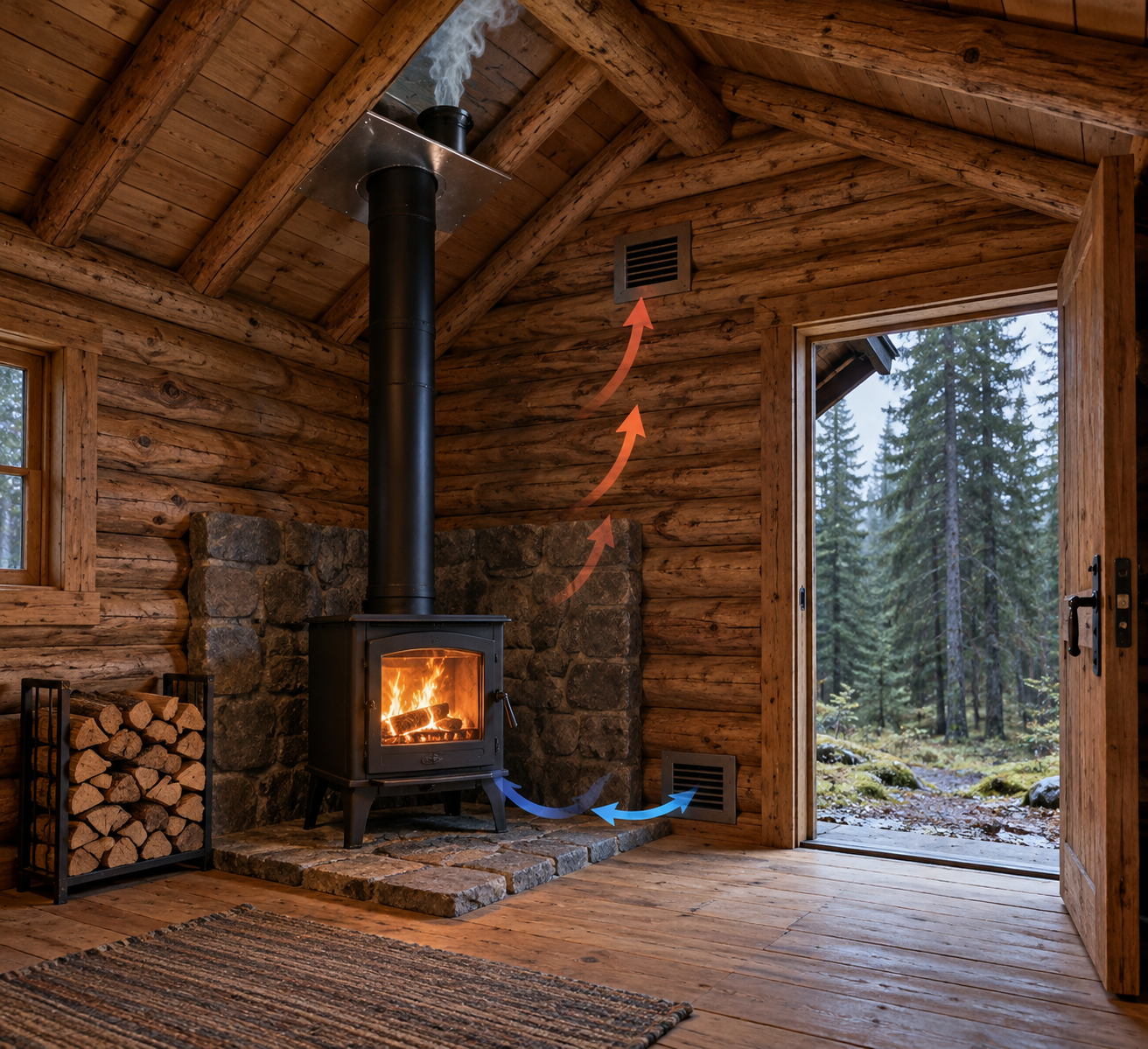
Keep a fire at least 6 to 10 feet from the shelter, with a reflector wall behind it to bounce heat in. Never build a fire inside a sealed debris hut. Leave a vent gap, because smoke and carbon monoxide kill quietly. Debris burns fast, too, so clear the ground around any fire down to bare soil.
Frequently Asked Questions
How long does it take to build a shelter in the woods?
A tarp shelter takes under 30 minutes. A debris lean-to takes about 3 to 5 hours for one person. Start at least 4 hours before sunset, and gather your debris before you commit to the frame.
What tools do I need to build a woods shelter?
A fixed-blade knife, a folding saw, and 50 feet of paracord cover most builds. A small hatchet helps with ridgepoles. A saw is safer and quieter than chopping, though it’s slower on thick poles.
Is it legal to build a shelter on public land?
Often not for anything lasting. Many national forests allow temporary camping but restrict structures and cutting live trees, and private land needs the owner’s permission. Rules vary by agency and state, so confirm with the local ranger district or landowner first.