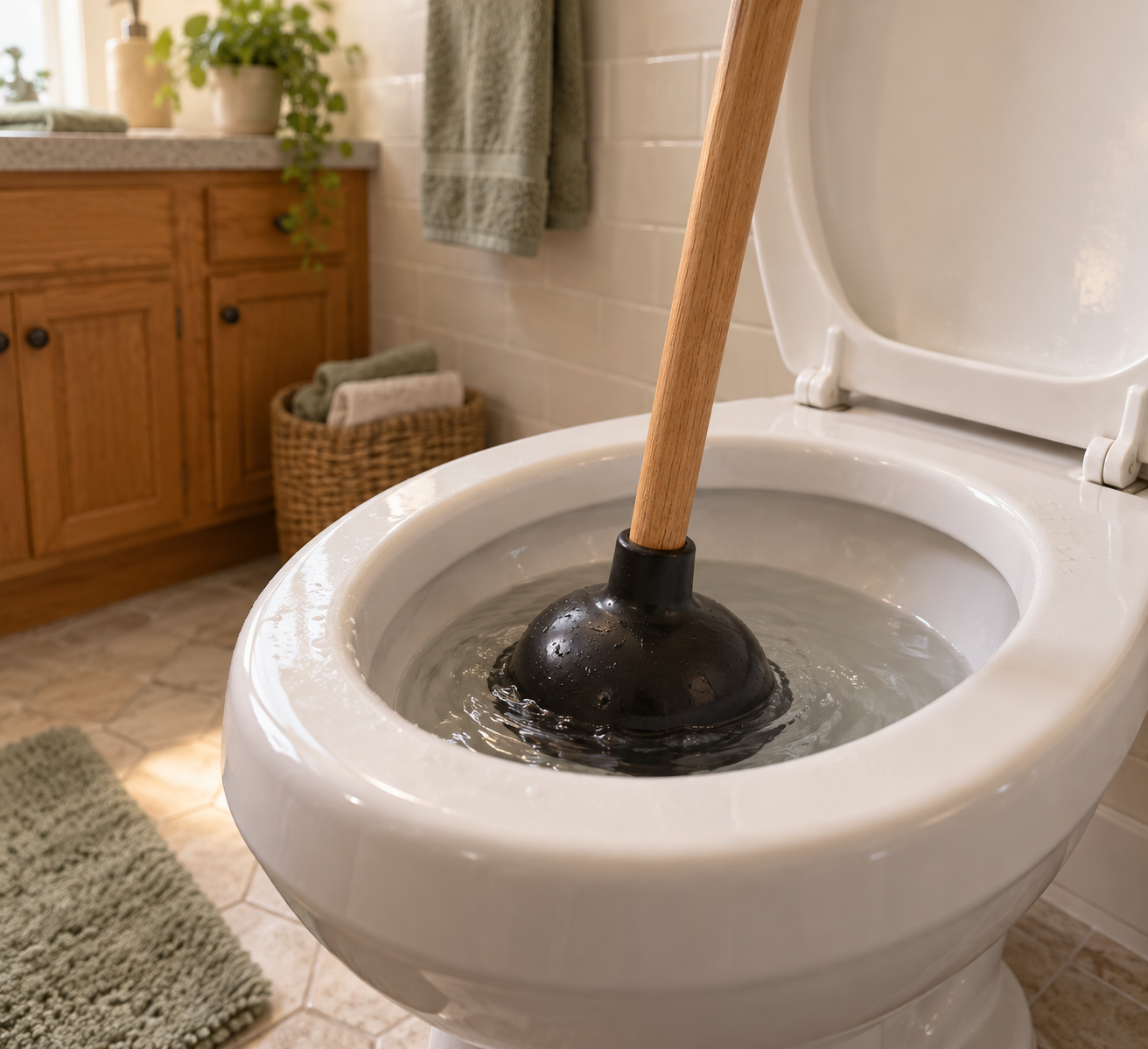
Grab a flanged toilet plunger. Seat the flange fully in the drain so the cup seals around the hole. Push gently once to push out air, then pump hard 10 to 20 times without breaking the seal. Pull up sharply on the last stroke.
Repeat until the water drains. Then flush to confirm.
That’s how to unclog a commode in about two minutes, if the clog is close to the bowl. If it isn’t working, keep reading. Usually it’s the plunger or the seal.
The Right Plunger Decides Everything
Most failed plunging comes down to the tool. A flat sink plunger sits on the bowl’s curved porcelain and can’t seal. You push, and the water just squirts around the edges.
Look for a plunger with a flange: the soft rubber sleeve that drops out of the bottom of the cup. It sits inside the drain hole while the cup seals around the outside. Some flanges fold up into the cup, so check that yours is folded down.
Before you start, set yourself up:
Rubber gloves, because the water is dirty
Old towels or cardboard on the floor
A bucket or jug for adding water
The shutoff valve located, in case the bowl rises
How Much Water You Need
The cup should be covered by water. Water pushes the clog; air just squishes. If the bowl is low, add water from a jug until it covers the cup. If the bowl is nearly full, scoop some out into a bucket so you don’t slop it everywhere.
Stop an Overflow First
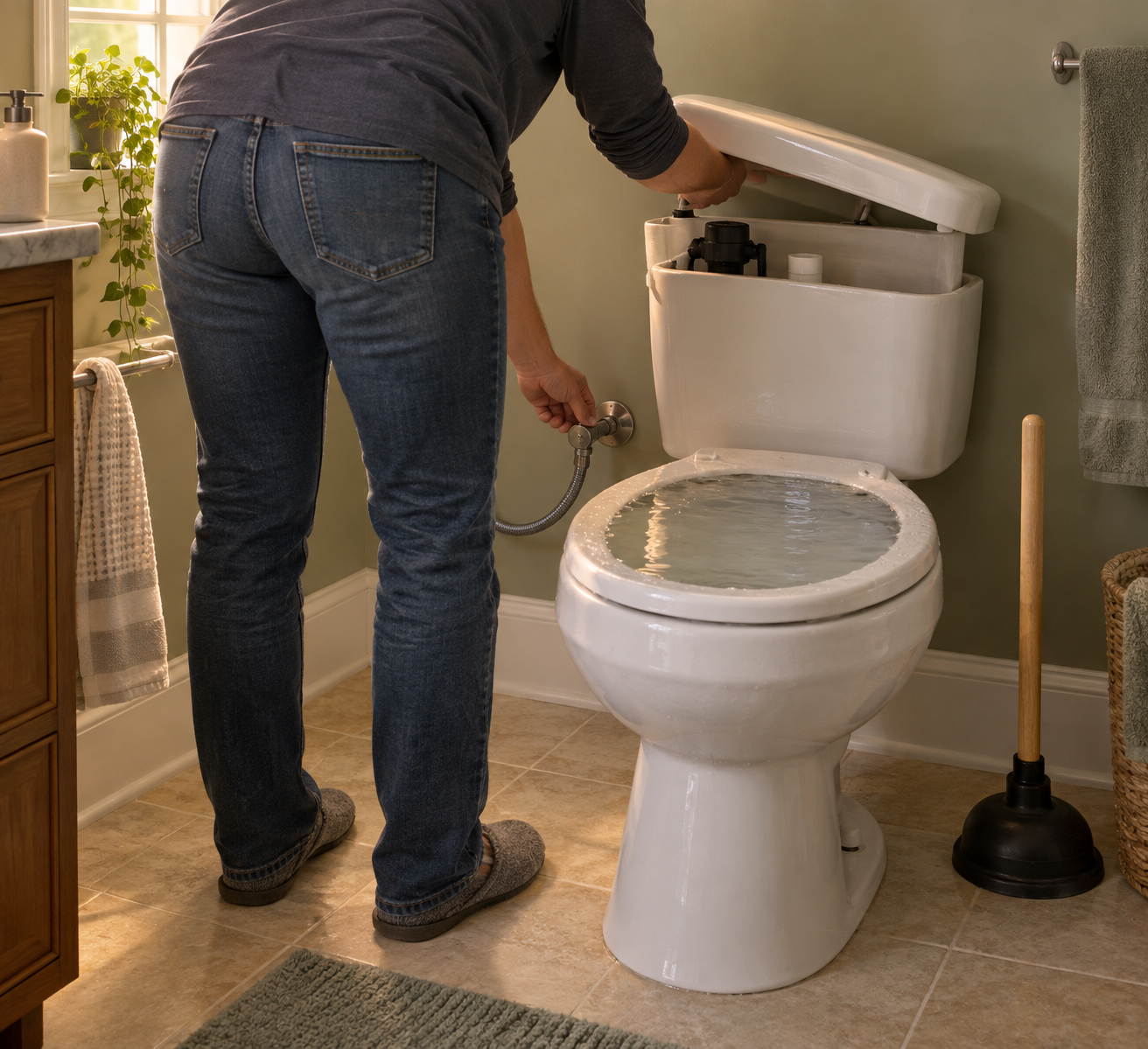
If the water is rising, don’t plunge yet. Reach behind the toilet, near the floor, and turn the small oval handle clockwise. The fill stops in seconds. No valve, or it’s stuck? Lift the tank lid and hold the rubber flapper shut. The tank water is clean.
I test my shutoff valves whenever I rough in plumbing on a build. Old ones seize up from sitting open for years. Turn yours once a season.
Plunging Step by Step: Place, Purge, Pump, Pull
Builders and plumbers call it the four P method. Here’s the sequence:
Place: Tip the plunger into the bowl at an angle so the cup fills with water. Don’t drop it straight down, which traps air.
Seat it: Fit the flange into the drain and press the cup against the porcelain until it seals.
Purge: Push down gently once or twice to push out the trapped air. A hard first push throws dirty water out of the bowl.
Pump: Grip with both hands and pump firmly 10 to 20 times. Keep the cup sealed the whole time. Breaking the seal between strokes loses the pressure that moves the clog.
Pull: On the last stroke, pull up sharply. The suction often drags the clog loose.
Check and repeat: If the bowl drains, great. If not, go again.
Test: Wait until the water level has dropped fully, then flush once. Flushing early is how you get an overflow.
Try three or four rounds of 10 to 20 strokes. If the bowl hasn’t moved after that, stop. More force won’t help a clog that’s sitting deeper than a plunger can reach.
Why the Plunger Isn’t Working
Start with the basics. Is the seal tight? Is the water covering the cup? Is it a flanged plunger? Fix those and try once more.
Still stuck? Match the symptom to the fix:
Symptom
Likely cause
What to do
Water slowly drops, then rises again
Partial clog, soft material
Pour in a squirt of dish soap and hot (not boiling) tap water, wait 20 to 30 minutes, then plunge again
No change after several rounds
Solid object or wipes in the trap
Use a toilet auger (closet auger)
Gurgling, or other drains slow too
Blocked line or vent
Stop plunging and check further down
Clog returns within days
Deeper problem
Inspect the line, vent or tank
A toilet auger is a short cable with a crank and a curved guard that protects the porcelain. Feed the cable in, turn the handle, and it either hooks or breaks up the clog. It costs about $20 to $40 at a hardware store.
Skip harsh chemical drain cleaners. They often don’t clear the clog, and then you’re plunging a bowl full of caustic water. Hot tap water and dish soap are safer.
Cabin, Septic and Off-Grid Toilets: When to Stop Forcing It
A city toilet dumps into a municipal sewer. A cabin usually doesn’t. Yours may drain into a septic tank, a composting setup or a long gravity line, and a repeat clog there can mean something bigger.
Plunging a septic toilet is fine. It’s the same technique. But if the clog keeps coming back, stop and look at the system.
Check These Before Another Round
The vent: A blocked roof vent pipe (bird nest, ice, snow) makes a toilet drain slowly and gurgle. Look up at the vent from outside.
The tank: A full septic tank backs up into the lowest fixture first, which is often the toilet. Most tanks need pumping every three to five years, depending on size and use.
The line: Roots or a sagging pipe between the cabin and the tank cause slow drains in every fixture.
What You Flush Matters
On septic or off-grid, flush only toilet paper and waste. No wipes (even “flushable” ones), no grease, no paper towels. Bleach and strong cleaners in big doses can harm the bacteria that break waste down in the tank.
I plan cabin plumbing so the vent, cleanout and tank lid are easy to reach. When you’re standing in a wet bathroom at 9 p.m., you’ll be glad of it.
Call a plumber (or a septic pro) if more than one drain is slow, water backs up elsewhere, or the clog returns after you’ve plunged and augered. That points to the line, not the bowl.
Frequently Asked Questions
Can I use a flat sink plunger on a toilet?
You can try, but it usually won’t seal on the curved bowl. A flanged toilet plunger fits the drain hole and moves the water properly. If a sink plunger is all you have, fold nothing and expect weak results.
How many times should I plunge before giving up?
Do three or four rounds of 10 to 20 strokes each. If the water hasn’t dropped by then, switch to a toilet auger or the soap-and-hot-water method. A clog that won’t move is probably deeper than the plunger reaches.
Is it safe to plunge a toilet on a septic system?
Yes. Plunging doesn’t harm a septic tank. But a repeat clog on septic can mean a full tank, a blocked vent or a line problem, so check those instead of plunging again and again.