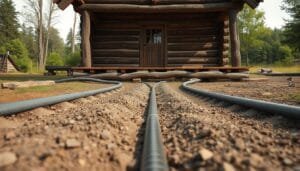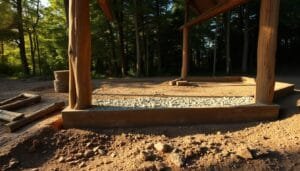
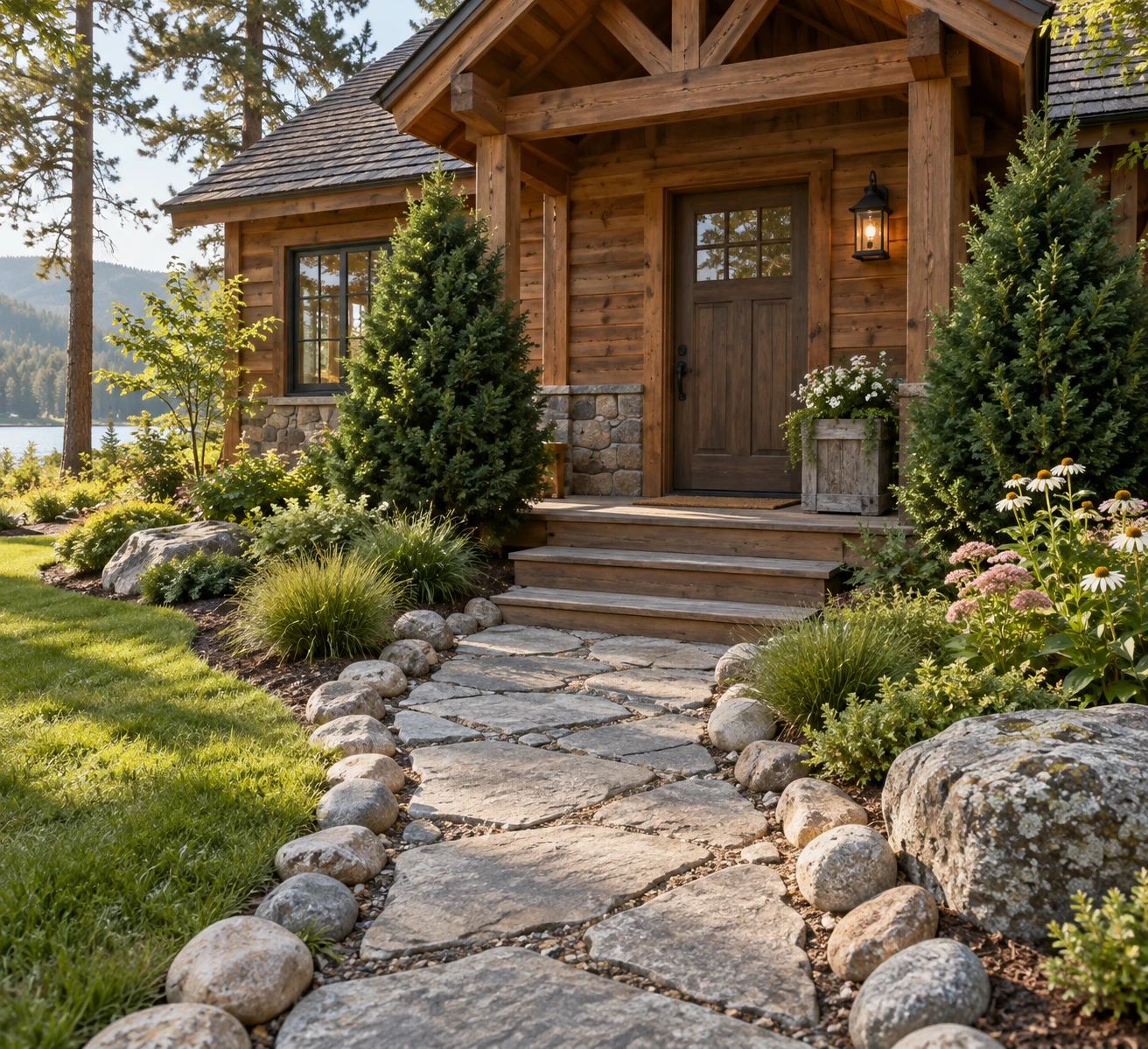

The best small front yard landscaping ideas for a cabin entryway come down to a few things. Lay a clear path to the door that’s 36 to 48 inches wide. Layer plants in three heights. Use low-upkeep materials like gravel, boulders and mulch, and keep all of it a safe distance from your wood walls.
That last part is where most landscaping ideas skip a step. A cabin isn’t a suburban house with brick siding. Wet soil, piled mulch and climbing vines against logs or wood siding cause rot, and that costs a lot more than a few plants. So here’s how I’d plan a small entry that looks good and keeps the building dry.
Start with the path to your door
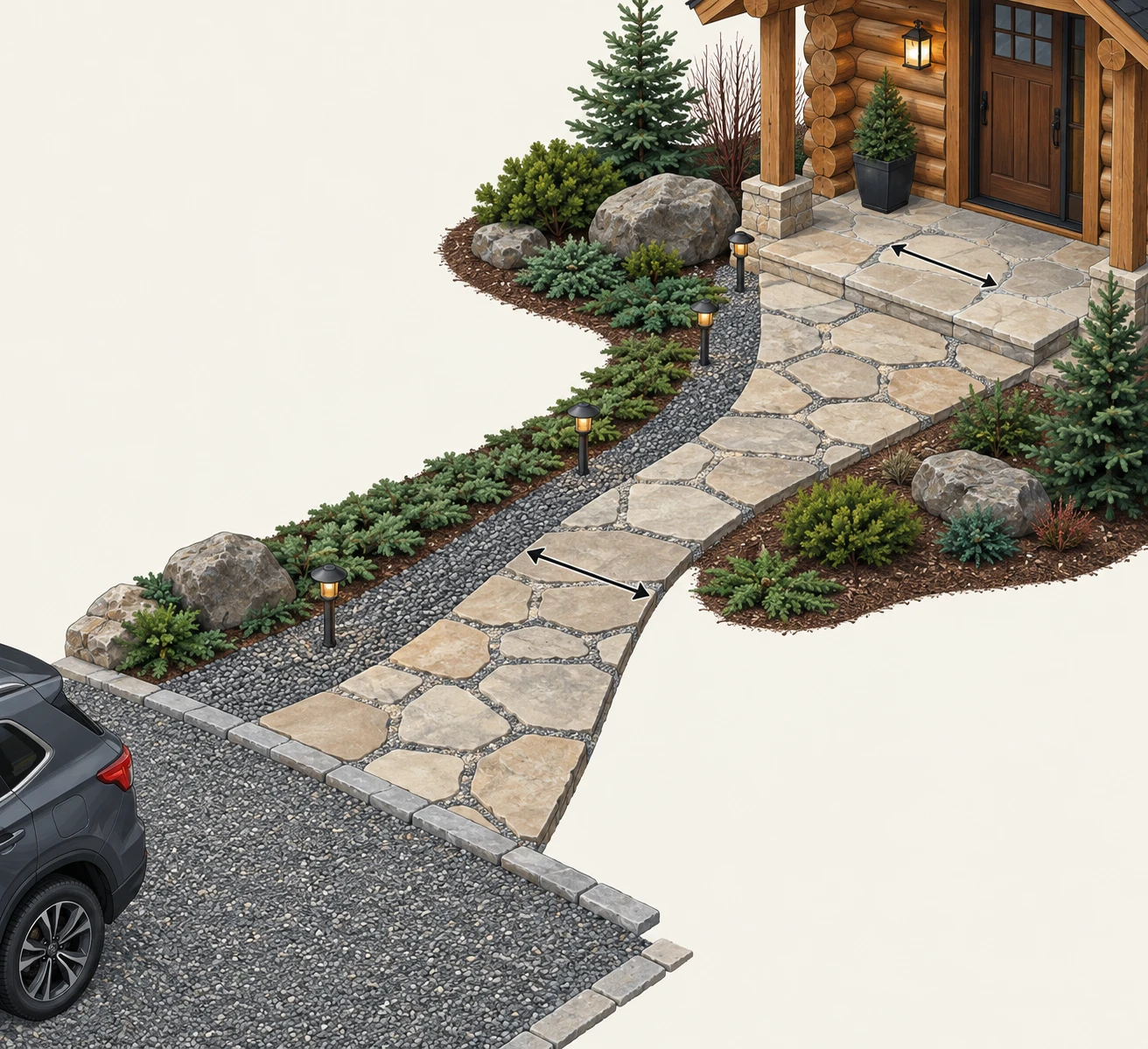
The path does more for a small front yard than any plant. It tells people where to go, it handles mud and snow, and everything else gets planted around it. Get the path right first.
How wide should it be?
36 inches is the standard width for a path one person uses. If you want two people walking side by side, go to 48 inches (4 feet). That’s the width I’d pick for the main route from the parking spot to the door. In snow country, add a strip of gravel or low groundcover along one side. That way you have somewhere to throw shoveled snow without burying your plants.
A nice trick is to widen the path right at the steps. A wider landing tells people they’ve arrived, and it gives you room to set boots or firewood down.
Pick a material that fits the cabin
Straight paths work when the route runs from the road to the door. If the path comes off a driveway at an angle, a gentle curve looks more natural. For a cabin, I’d use natural stone, flagstone set in gravel, or stepping stones. Permeable surfaces (ones water can soak through) like gravel and spaced pavers drain better than poured concrete. That matters when your path runs close to a wood building.
Natural stone also lines up with what designers were pushing in 2026: limestone, terracotta and real stone instead of polished concrete and metal.
Light the steps
Add low path lights along the edge and one light at the steps. At a rural cabin with no streetlights, this is a safety item, not decoration. Solar stake lights work fine if you’re off-grid and don’t want to run another circuit.
Layer your plants in three heights
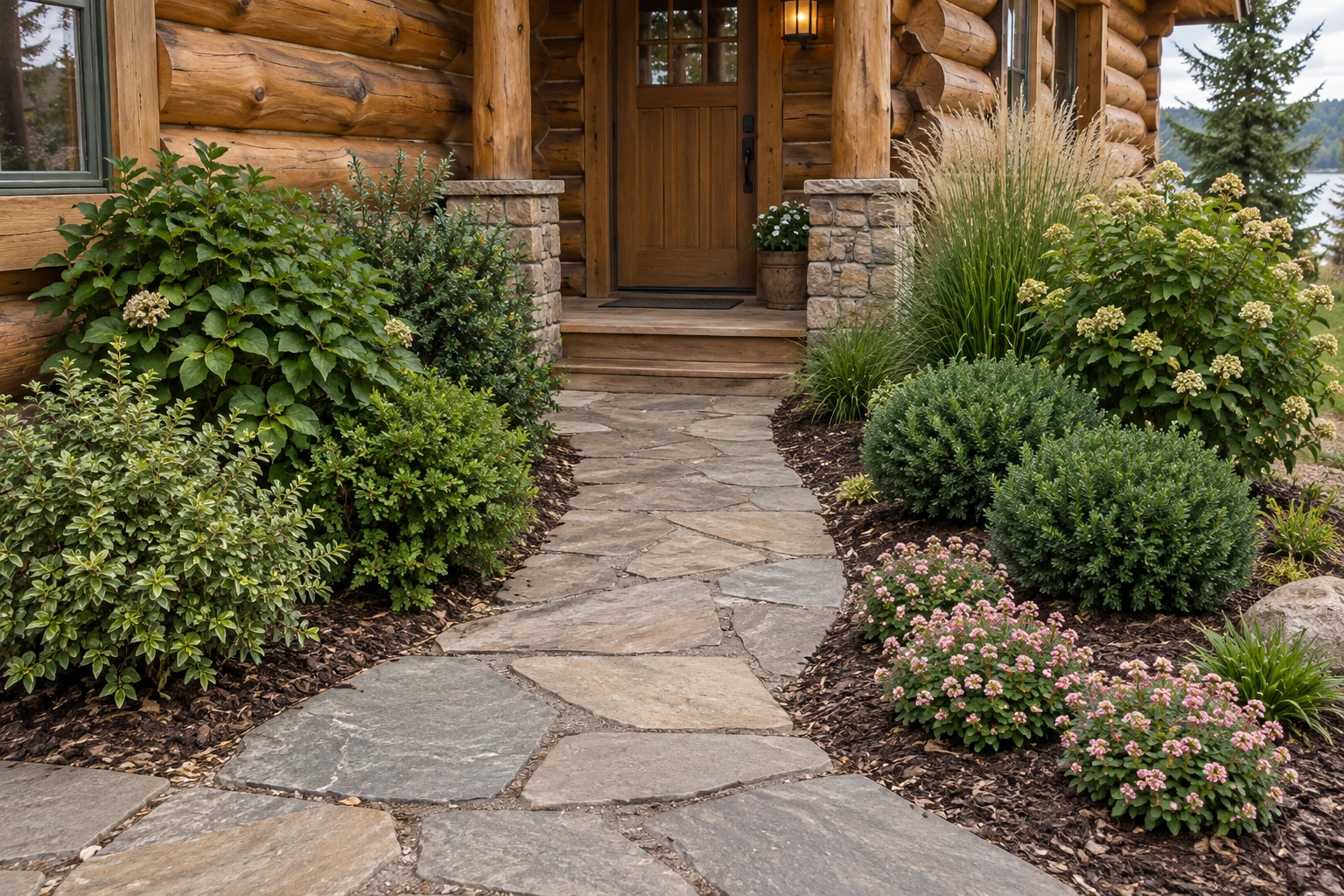
A small yard looks fuller, and more private, when plants step up in height toward the building instead of sitting at one level. A simple three-tier system works well around log and timber homes.
Small, medium and large
| Tier | Typical plants | Typical height | Where it goes |
|---|---|---|---|
| Small | Flowering groundcovers, low perennials | about 10–12 in | Path edges, front of beds |
| Medium | Evergreens, compact shrubs | about 18–22 in | Middle of beds |
| Large | Bushes, tall ornamental grasses | 3 ft and up | Back of beds, corners |
Put a few evergreens in the medium tier so the entry doesn’t look bare from November to April. Ornamental grasses are great in the back row. They move in the wind, they need almost no care, and they give you a bit of screening from the road.
Plan for mature size
This is the mistake that bites small yards. A shrub that’s 12 inches in the nursery pot can hit 4 feet wide in five years. Check the mature width on the tag and space plants for that size, not the size you’re buying. In a small bed, two well-spaced shrubs look better than five crammed ones. Plant smaller items in odd-numbered groups, which reads more natural than pairs or rows.
Keep beds and mulch off the wood
This one comes straight from the building side of things. Wood rots where it stays damp, and a front bed is the easiest way to keep the bottom of a wall damp all year.
The building code requires wood siding to sit at least 6 inches above the soil. Don’t let new beds, topsoil or mulch creep up and close that gap. I’d also keep shrubs about 2 feet out from the wall so air can move and the logs dry after rain. Slope the soil in your beds away from the cabin, not toward it.
Skip wooden trellises against the walls. Vines hold moisture against the wood, and the trellis itself needs staining to hold off weathering and rot. If you want something climbing at the entry, put up a freestanding arbor over the path, or use cable or wire supports set a few inches off the wall.
If you do build wooden steps, edging or an arbor, treat the wood before it goes in the ground. Cabin Lodger has guides on wood treatment and rot prevention under the categories page that cover that part.
Cut the upkeep (and the cost)
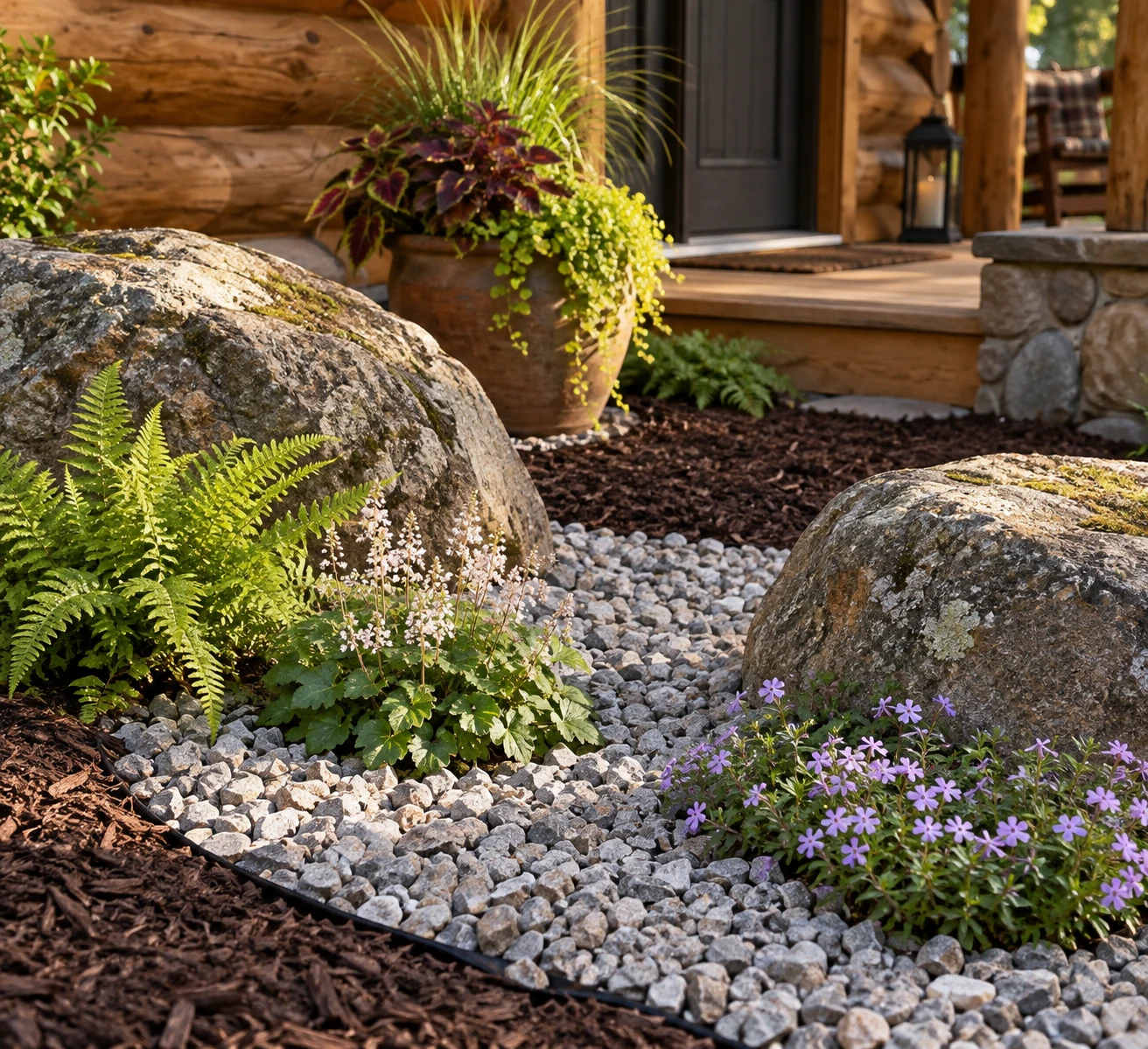
A small yard should take less work and less water than a big one. Lean into that. The cheapest front yard is usually the one with less lawn and fewer plants that need replacing.
Swap grass for gravel and boulders
A patch of lawn in front of a cabin rarely earns its keep. Replace it with a gravel garden: landscape fabric, 2 to 3 inches of gravel, and a few tough plants poking through. Add one or two large boulders. They look right in front of a cabin, they give the yard some shape, and they need zero maintenance. Often you can dig them up on your own land instead of buying them.
Mulch and native plants
Mulch every bed 2 to 3 inches deep (keeping it off the siding, as above). It holds moisture and blocks weeds, so you water and weed less. Then choose native plants. They’re used to your rain and your winters, so they need less help once they’re settled. Your state’s university extension service publishes native plant lists. Maryland’s, for example, includes Christmas fern, foamflower and phlox.
Use containers by the door
A matching pair of large pots on either side of the steps gives you instant color without digging a bed. Filled with tough plants like coleus, creeping Jenny and fountain grass, pots can look good for about 8 months of the year. Plus, you can move them when you work on the porch or stain the logs.
Frequently Asked Questions
What is the 3-5-7 rule in landscaping?
It’s a planting rule that says to group plants in odd numbers, like 3, 5 or 7. Odd groups look more natural than pairs or straight rows. In a small cabin yard, groups of 3 are usually plenty.
What’s the most affordable way to landscape a small front yard?
Replace lawn with gravel and mulch, use boulders from your own land, and plant natives that survive without extra care. Cost mostly depends on how much stone you haul in and how many mature plants you buy. Smaller plants are cheaper and catch up within a few seasons.
What landscaping trends took off in 2026?
Natural stone, low-water planting and looser, less manicured gardens were the big ones. Designers moved away from artificial turf, all-neutral color schemes and high-maintenance yards. That all fits a cabin well, since a slightly wild, low-upkeep entry looks at home in the woods.
References
- Entryway Gardens: 3 Distinctive Designer Ideas
- Front Yard Landscaping Ideas
- Small Front Yard Landscaping Ideas
- Landscaping Ideas For Your Log Home
- 43 Landscaping Ideas for Small Front Yards
- Front Yard Landscaping Ideas
- 27 Creative Small Front Yard Landscaping Ideas To Boost Curb Appeal
- Recommended Native Plants for Maryland – UMD Extension
- Walkway & Garden Path Width
- 7 Landscaping Trends to Say Goodbye to in 2026, According to Experts – Martha Stewart