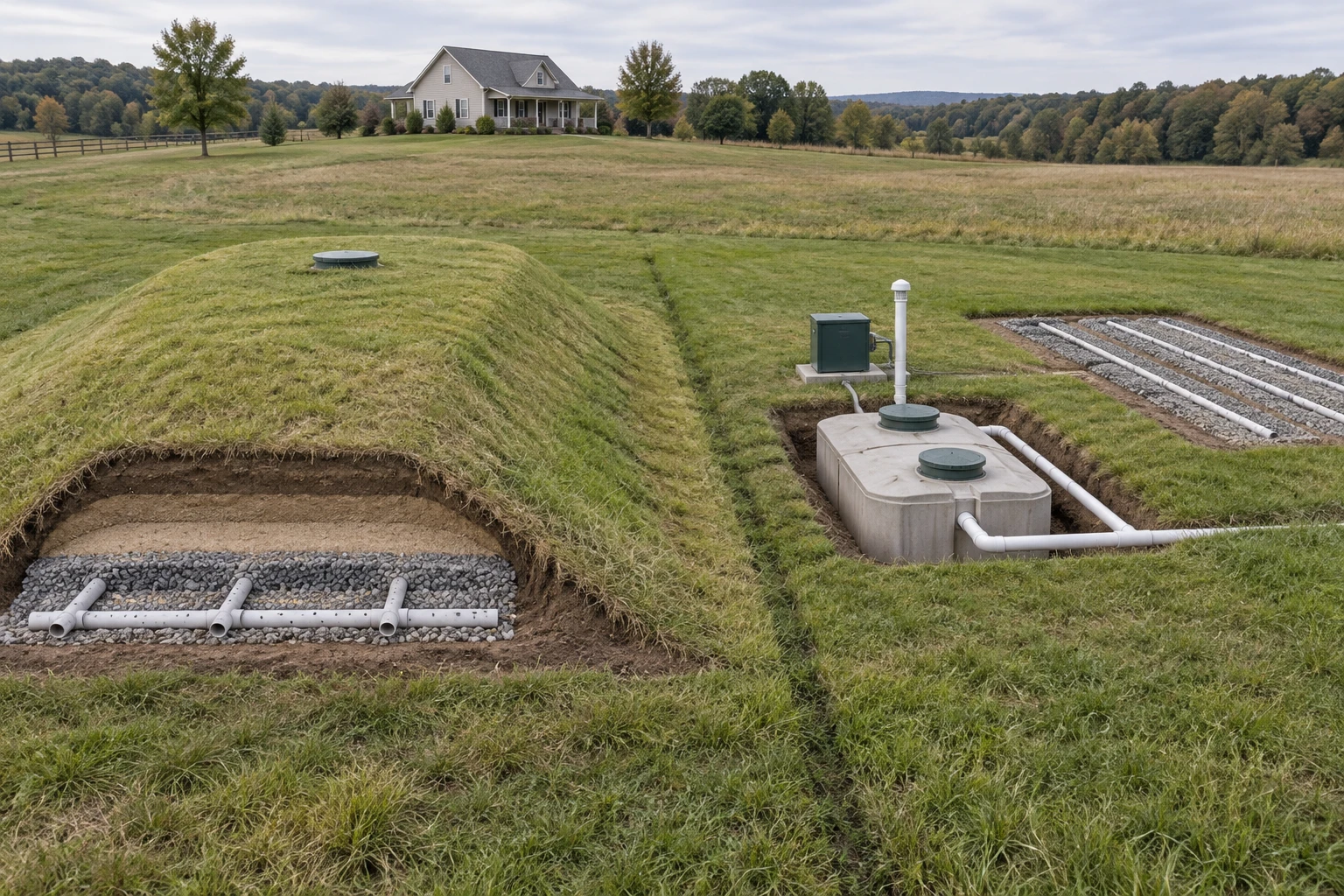
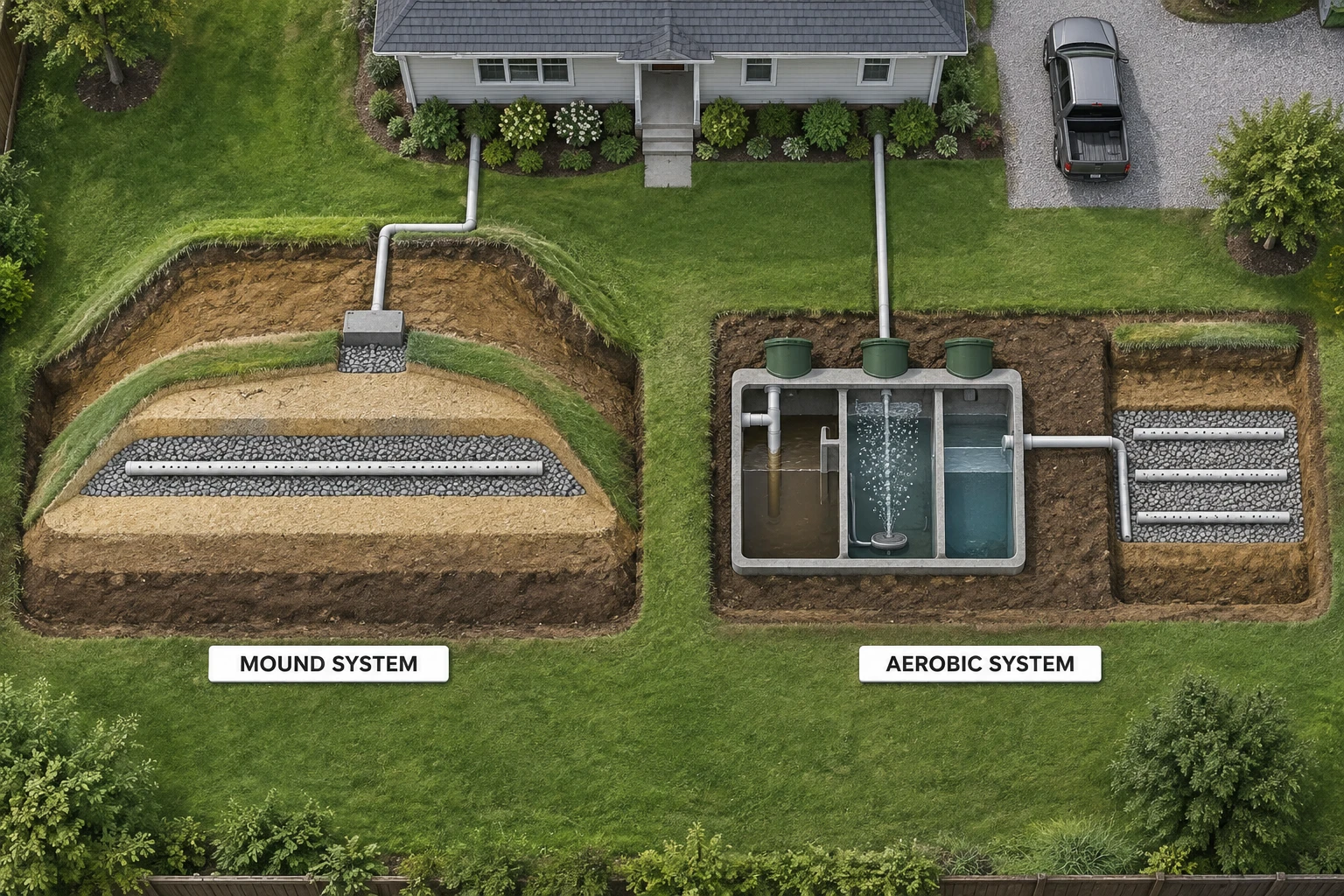
A mound system and an aerobic system aren’t direct rivals. A mound is a drainfield layout: it raises the drainfield above natural grade on engineered sand. An aerobic unit is a treatment step: it adds oxygen in a tank to clean wastewater before it’s dispersed.
Failed your soil test? Mound suits shallow soil, high groundwater and poor drainage, but needs space. Aerobic costs more to run and needs power. Soil and local code decide.
Treatment Step vs. Drainfield: What Each One Does
Every septic system has two jobs. First it treats wastewater. Then it spreads the liquid into the ground. Mound and aerobic split those jobs differently.
How a Mound Works
Wastewater goes into a septic tank first. Then it flows to a pump chamber, which sends it to the mound in measured doses. The effluent (the liquid leaving the tank) trickles through a bed of sand, where bacteria clean it. It then soaks into the native soil below.
How an Aerobic Unit Works
An aerobic treatment unit (ATU) works like a small sewage plant. An air pump or compressor feeds oxygen into the tank. Oxygen speeds up bacteria, so the liquid leaves cleaner than it does from a standard tank. Many units add a final chamber with disinfection.
You can combine the two. An ATU can feed a mound, which helps on a tight lot where the sand bed can then be smaller. Your local health department decides whether that design is allowed.
Side-by-Side: Mound vs. Aerobic
Here’s how the two compare for a typical cabin lot. Costs are rough national ranges; your county’s prices will differ.
Factor
Mound
Aerobic (ATU)
Best site fit
Shallow soil, high water table, shallow bedrock
Small lots, poor soil, sensitive water nearby
Power
Dosing pump only (some designs use none)
Constant, for the aerator
Space
Large footprint
Small
Upkeep
Periodic pump and tank checks
Annual inspections, cleaning, often a required service contract
Installed cost
Typically $10,000–$20,000 and up
About $10,000–$20,000
Running cost
Low
Service $150–$500/year, electricity $100–$300/year
A conventional tank-and-drainfield system runs about $3,000 to $8,000, so either alternative costs two to three times more. Over 20 years, an aerobic system typically costs $5,000 to $10,000 more than a conventional one.
Don’t pick on upfront price alone. Add up the pump, power and service costs first.
The bottom line? Mound costs you space. Aerobic costs you money every year.
When Not to Choose Each One
Let’s start with the mound. Skip it if your lot is small or steep, since it needs a lot of flat room and a lot of sand. Sand is also getting harder to source in some regions, which pushes up the price. The mound also limits what you can do on top of it.
Aerobic has its own dealbreakers. Skip it if you can’t commit to maintenance or can’t guarantee power. A dead aerator stops the treatment, and you may smell it first.
Mound care rules are simple:
Don’t drive or park on it.
Don’t plant trees or shrubs on it, because roots damage the pipes.
Keep grass on it to hold the sand in place.
Redirect roof and surface water away from it.
Walk on it only when you must (light foot traffic is fine).
Aerobic care takes more work. Clean clogged air stones, since they cause odor and heat buildup in the aerator. Check spray heads and drip filters. Pump the tank every 2 to 3 years, or as your installer says.
Off-Grid Power: The Deciding Factor for Cabins
Power usually settles this for an off-grid cabin. An aerobic unit runs its aerator around the clock, so you need dependable electricity. That’s a steady load on a small solar setup or a generator you’d rather not run all day.
A mound often needs only a dosing pump that runs briefly. Some sites use gravity dosing, so the pump isn’t needed at all. That makes mound the easier fit for limited power.
Seasonal use adds a wrinkle. If the cabin sits empty for months, an aerator that keeps running wastes power. One that’s switched off can let the bacteria die back. Ask your installer how the unit handles long gaps, and whether your service contract covers them.
Here’s a simple rule. With a decent solar array and battery bank, an ATU can work. With only a few panels or a weekend generator, lean toward a mound. Still stuck? Look at drip distribution, a recirculating sand filter or an evapotranspiration system, which are other approved options in some areas.
Permits and Soil Tests Come First
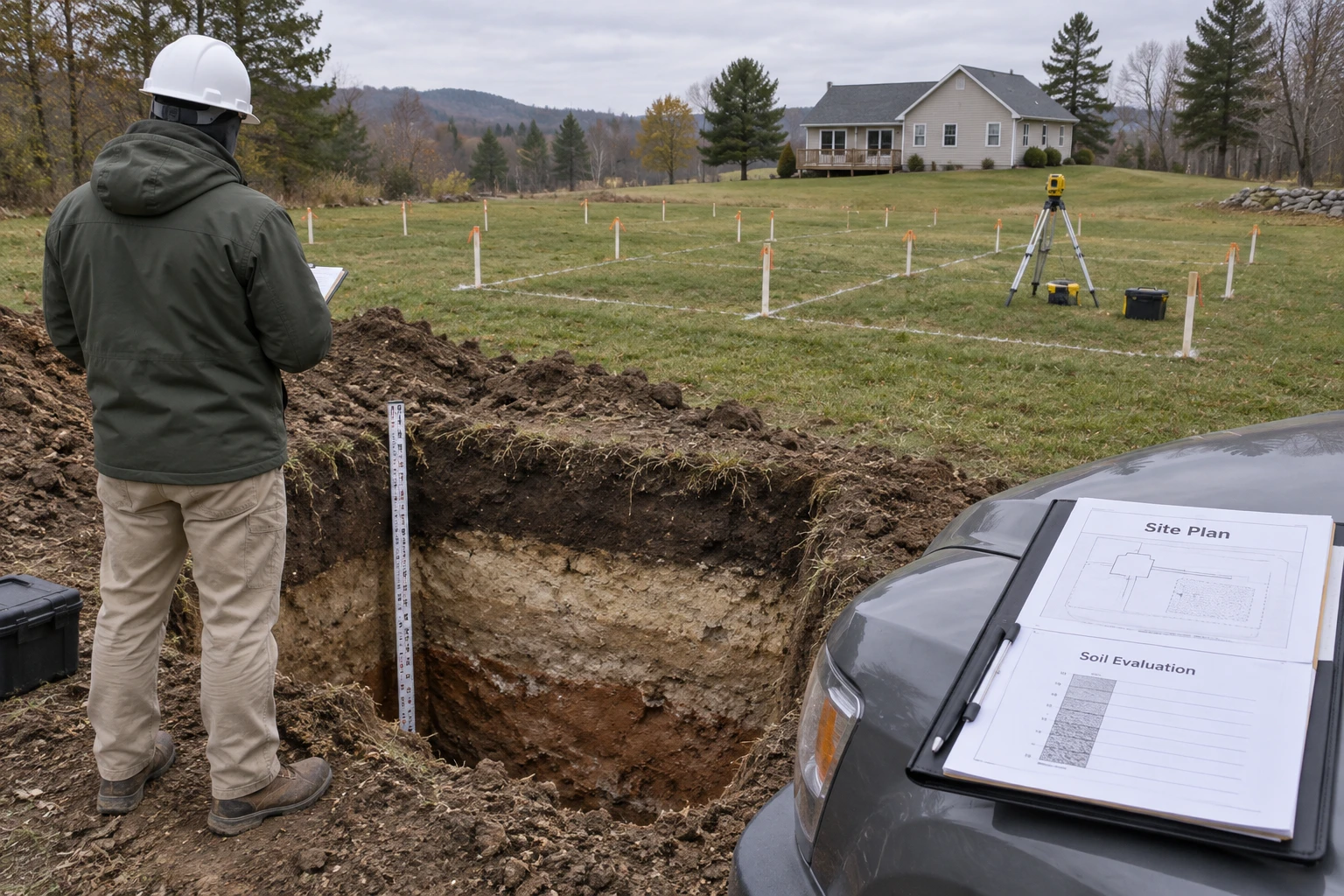
Neither system is allowed everywhere. Your county health department sets the rules and approves the design. Expect a soil percolation test (how fast water drains) and a check of groundwater depth, bedrock and slope.
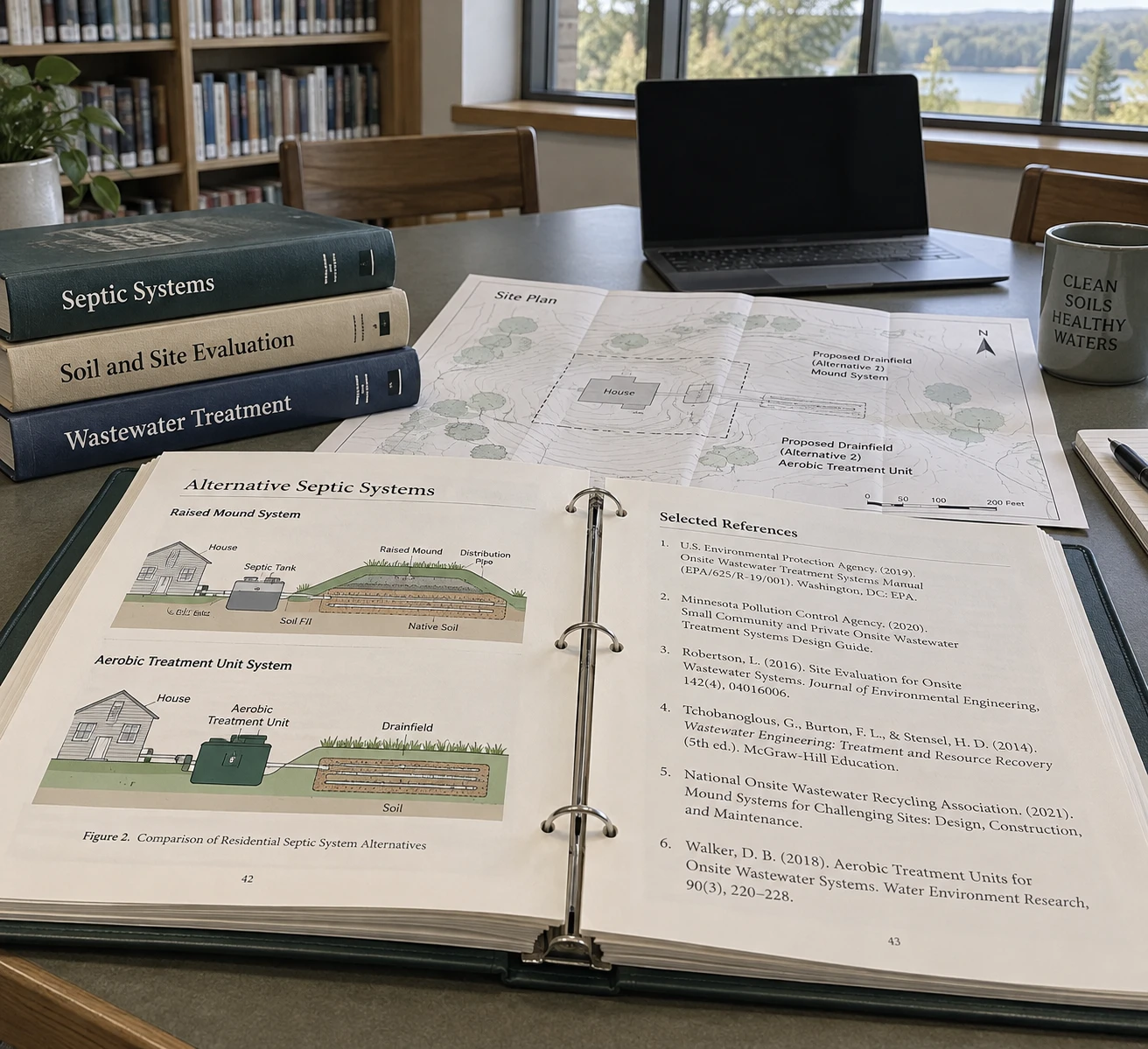
Call the department before you buy anything. Ask which systems they approve for your lot. Some states, like Washington, list both mound and ATU as accepted types. Many require a service contract for aerobic units as a permit condition.
Frequently Asked Questions
What are the downsides of a mound septic system?
Mounds need a lot of space and sand, cost more than conventional systems, and need periodic maintenance. You also can’t drive on them or plant trees there. A pump failure can stop the whole system.
Can an aerobic system work without grid power?
Yes, if you supply steady power from solar with batteries or a generator. The aerator runs constantly, so size your setup for that load. A mound with a small dosing pump is easier on limited power.
Can you combine an aerobic unit with a mound?
Yes. The ATU treats the wastewater and the mound disperses it. Together they can fit lots where soil is poor and space is limited, but your local health department must approve the design.