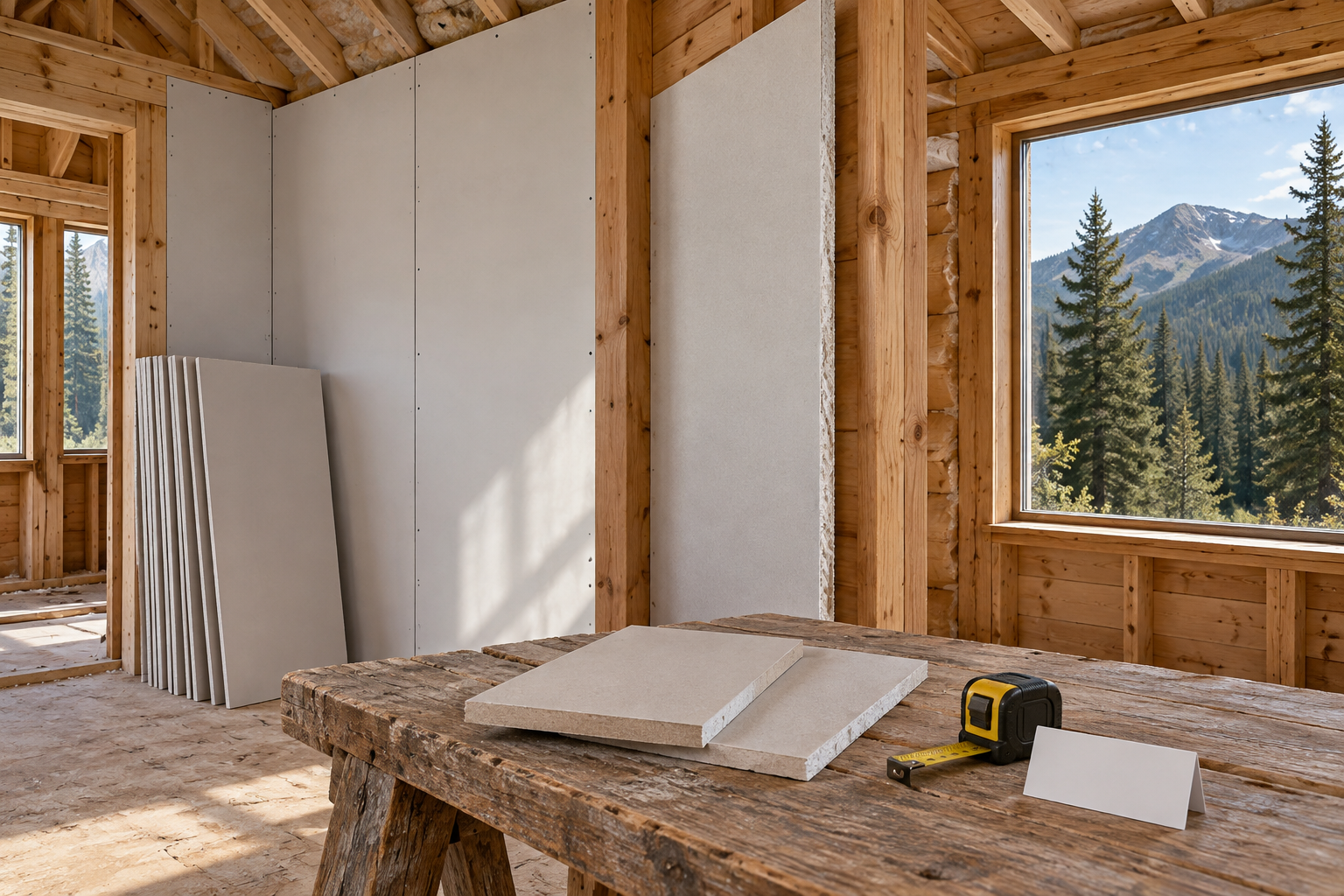
Drywall and Sheetrock are the same product. Sheetrock is a brand name from USG for gypsum drywall, like Kleenex for tissue. So the real cabin question isn’t the name. It’s what goes on your walls, how thick it is, and whether it survives damp and cold.
Half-inch board suits most walls. Five-eighths-inch suits ceilings and stove areas. Wood paneling is often the smarter choice. Let’s sort it out.
Your Real Options Side by Side
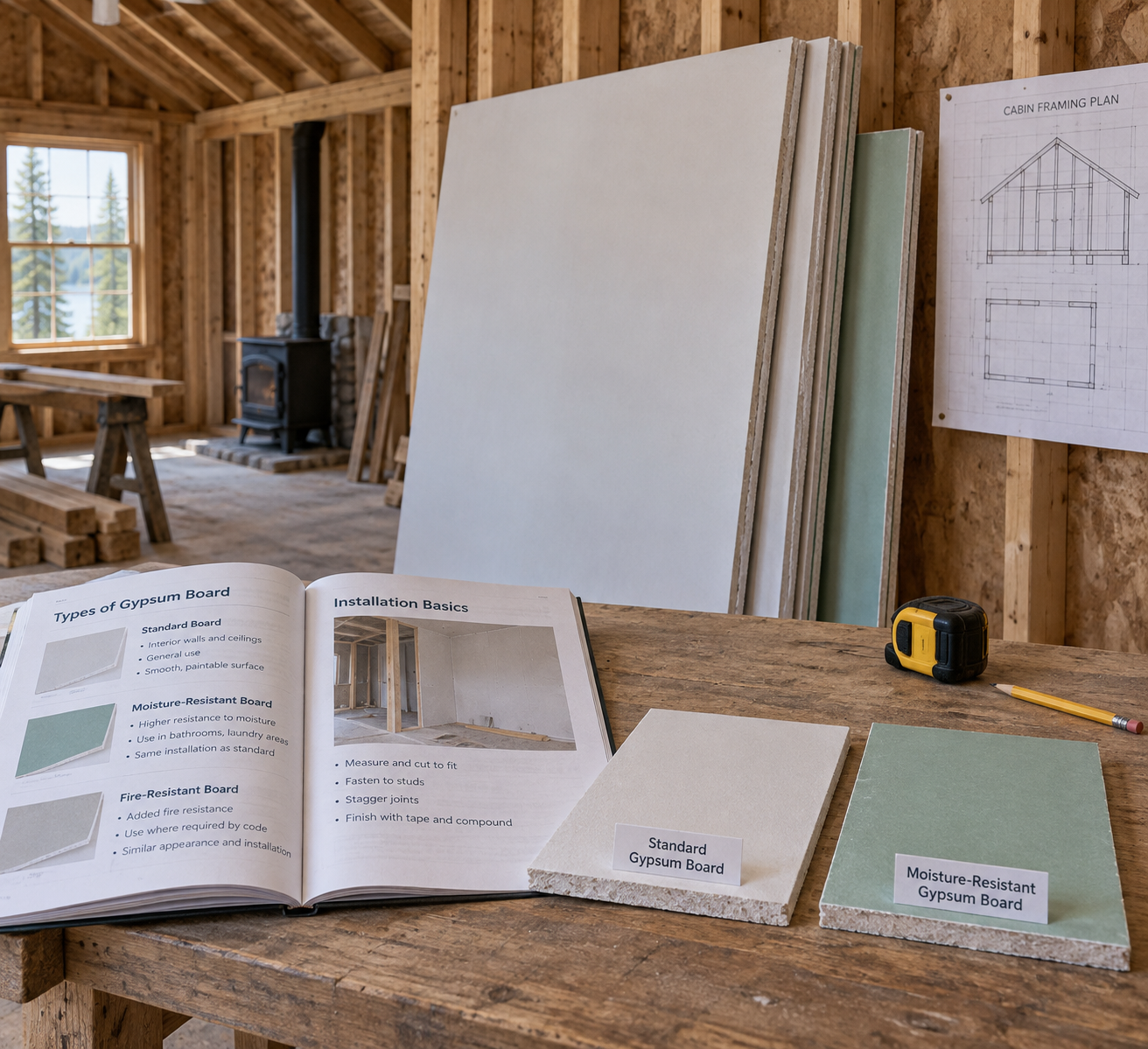
Gypsum board comes in a few types, and wood paneling competes with all of them. Here’s how they compare for a cabin.
Option
Best spot
Weight (4×8 sheet)
Main drawback
1/2-inch drywall
Most walls
About 50 lb
Cracks with movement and swings
5/8-inch Type X
Ceilings, stove walls
About 70 lb
Heavy to haul and lift
Moisture-resistant board
Bathrooms, laundry
About 50 lb
Not waterproof
Tongue-and-groove paneling
Any wall, unheated cabins
Varies by wood
Costs more per square foot in lumber
Weights are typical figures. Check the label on your sheets.
Type X means fire-resistant gypsum board, usually 5/8 inch. It doesn’t make a wall fire-rated alone. Framing, screws, and joints all have to follow the approved assembly.
The bottom line? Match each room to its job instead of using one board everywhere.
When Drywall Is the Wrong Choice
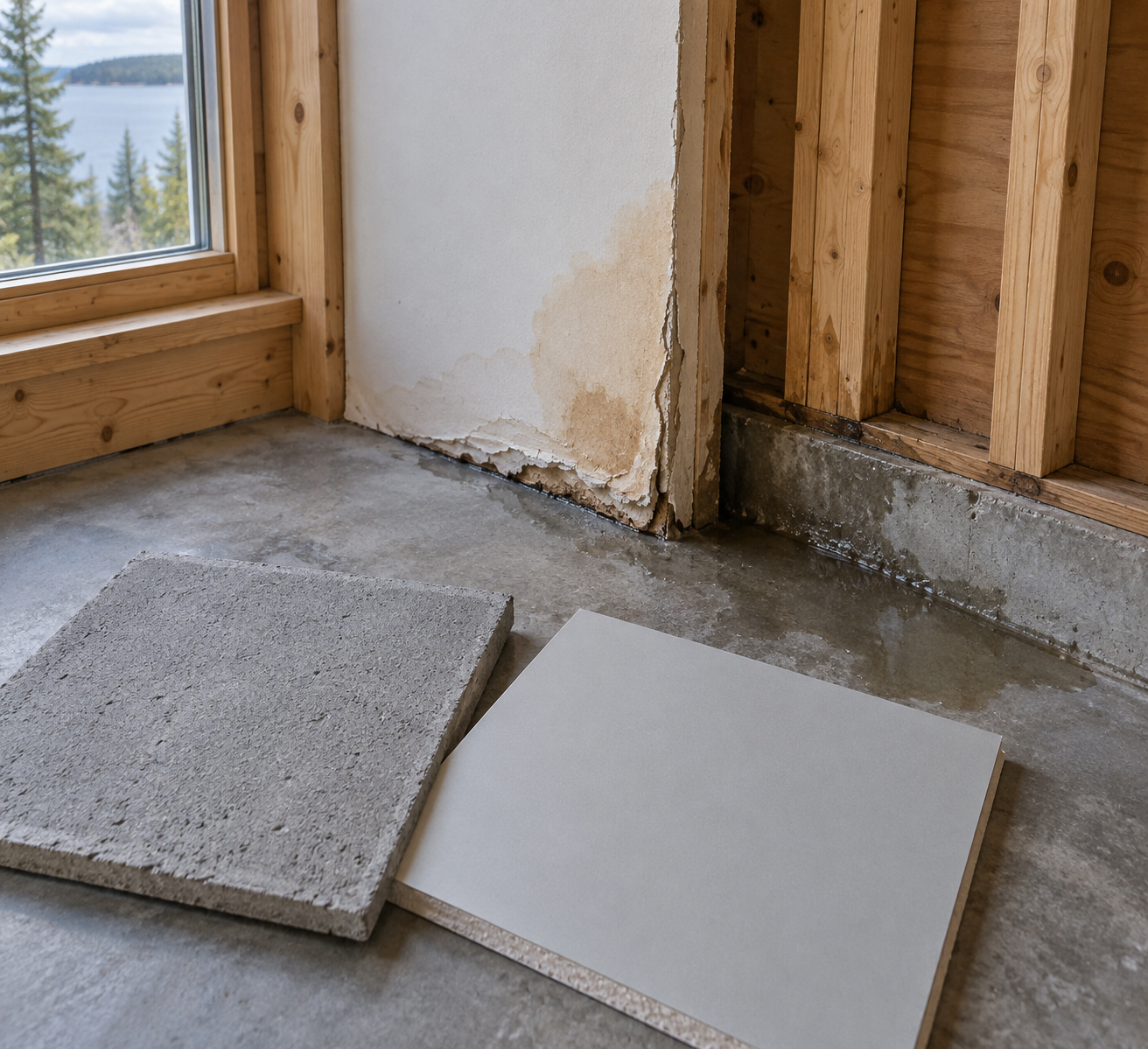
Drywall wants a stable, dry, heated building. Many cabins aren’t that. If yours sits empty all winter, the board takes on moisture, dries out, and swells and shrinks. Joints crack and tape lifts.
Unheated and Seasonal Cabins
Temperature swings are the enemy. Wood moves and drywall doesn’t forgive it. Tongue-and-groove pine or cedar boards flex with the cabin and need no taping. Cedar also resists insects and decay.
If you still want drywall, keep the cabin conditioned. Hang it only after the roof, windows and doors are on and the framing has dried. Hanging into a damp shell invites mold.
Remote Sites and Hauling
A 1/2-inch sheet weighs about 50 lb and is awkward to carry. A 5/8-inch sheet runs about 70 lb. A pickup bed holds a limited stack, and a 4×8 sheet won’t fit a small trailer or UTV. Ask the supplier about 4×12 or shorter sheets, and cover everything from rain on the way.
Paneling bundles are easier to carry by hand. Boards can ride in a truck, a UTV, or on your shoulder up a trail.
Moisture, Insulation, and Stove Safety
Moisture control matters more than board choice. Keep your vapor barrier on the warm side of the insulation in cold climates, and seal the seams. Vent the cabin when you cook or dry laundry.
Moisture-resistant board (often green or purple) helps in bathrooms and laundry corners. It isn’t waterproof. Never cover an active leak with it. Showers need tile backer board, not drywall.
Near a Wood Stove
Check your stove’s manual for required clearances to combustible walls. Gypsum board doesn’t burn, but the paper facing and the studs behind it can get hot. A noncombustible wall shield with an air gap is the usual fix. Use 5/8-inch Type X on the wall and ceiling nearby, and follow local code.
Log Walls and Mixed Finishes
Log walls need no covering. Many builders drywall only the interior partitions and leave logs exposed. Allow for log settling by leaving gaps where partitions meet logs and covering them with trim.
Cost, Labor, and Common Mistakes
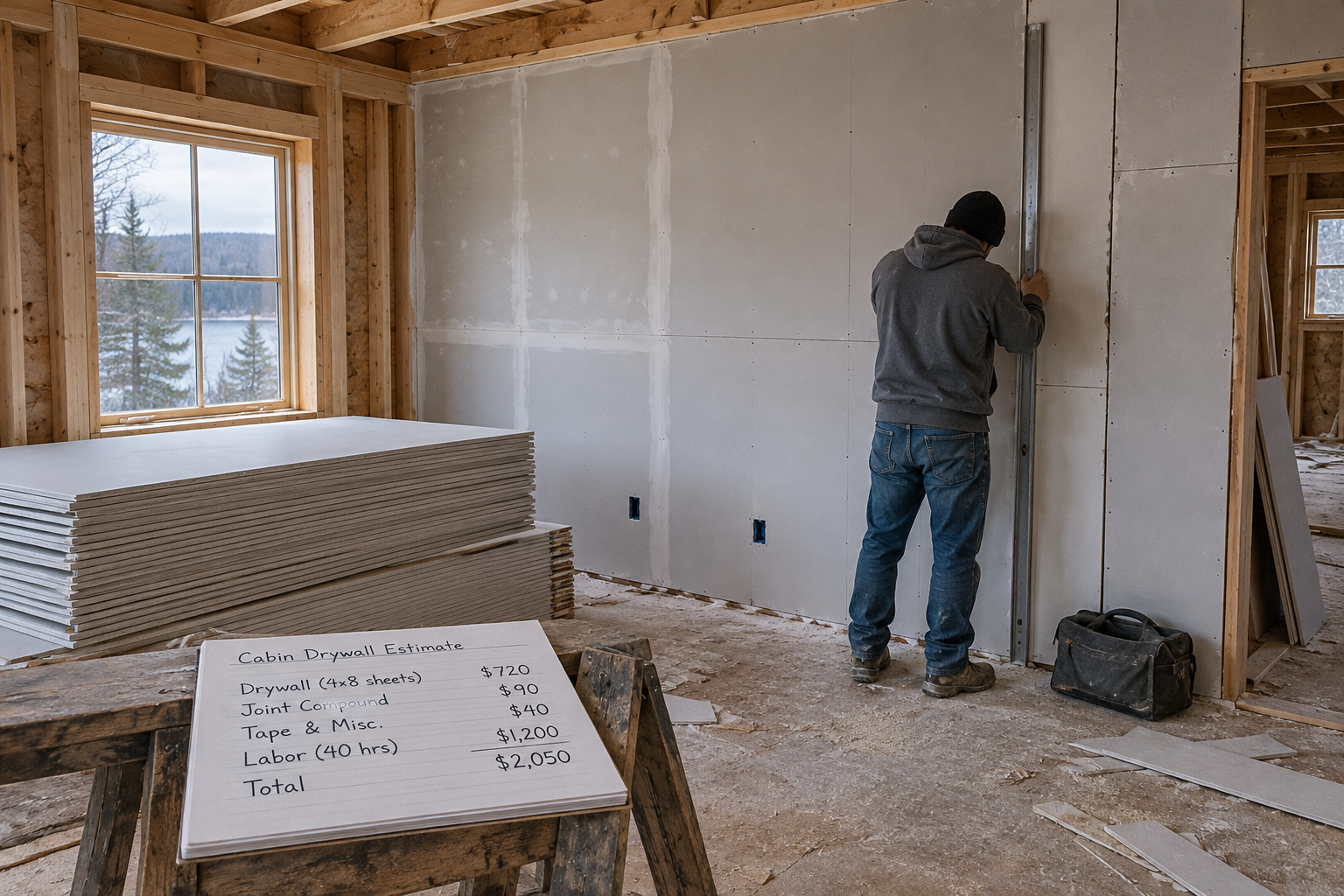
Installed drywall averages about $2.26 to $2.69 per square foot nationally (May 2026 prices from Homewyse). Take a 12×16 cabin with 8-foot walls. The walls total about 448 square feet before openings, so expect roughly $1,000 to $1,200 installed, plus ceiling. Doing it yourself cuts out labor, which is a big share of that price.
Paneling costs more in material. Pine tongue-and-groove often runs about $1.50 to $4 per square foot, and you’ll skip taping, mud, and sanding. These are typical figures, so price your local yard.
Finishing is where DIY builds fail. Avoid these:
Hanging board before the cabin is dry and weather-tight.
Using 1/2-inch board on every surface, including ceilings and stove walls.
Skipping a full taping and three-coat finish.
Leaving screws too proud or driven through the paper.
Ignoring humidity in a seasonal cabin.
Skimping on joints leaves visible seams and cracks. Plan on three thin coats of joint compound, each sanded lightly. Rent a drywall lift for ceilings, since one person can’t safely hold a 70 lb sheet overhead.
For more interior finishing steps, Cabin Lodger has guides on the rest of the cabin build.
Frequently Asked Questions
Is Sheetrock the same as drywall?
Yes. Sheetrock is a USG brand of gypsum drywall. Drywall is the generic name. Other brands make the same board, so choose by thickness and type, not name.
Should I use 1/2 or 5/8 drywall in a cabin?
Use 1/2-inch for most walls. Choose 5/8-inch for ceilings, where it resists sagging, and for walls near a wood stove, where Type X board adds fire resistance. Follow your stove’s clearance rules.
Can drywall be used in an unheated or seasonal cabin?
It can, but it often cracks and absorbs moisture as temperatures swing. Wood paneling handles seasonal cabins better. If you use drywall, control humidity and seal your vapor barrier well.