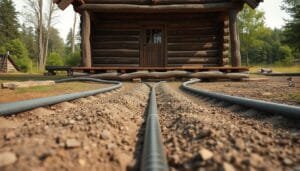
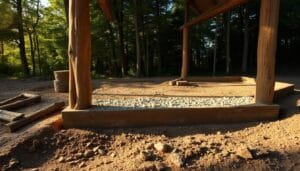
Your lot slopes hard toward the tree line, and the soil test came back with a shallow, wet layer six inches below grade. That’s the exact situation a mound type septic system was built to handle. If a standard gravity drain field won’t percolate right on your site, a mound system raises the whole drain field above the ground instead of burying it, using layers of sand and gravel to treat wastewater before it ever reaches native soil.
For cabin builders on rural, sloped, or rocky land, this isn’t a fancy upgrade. It’s often the only legal option that gets you a permit at all.
What Makes a Mound System Different From a Standard Drain Field
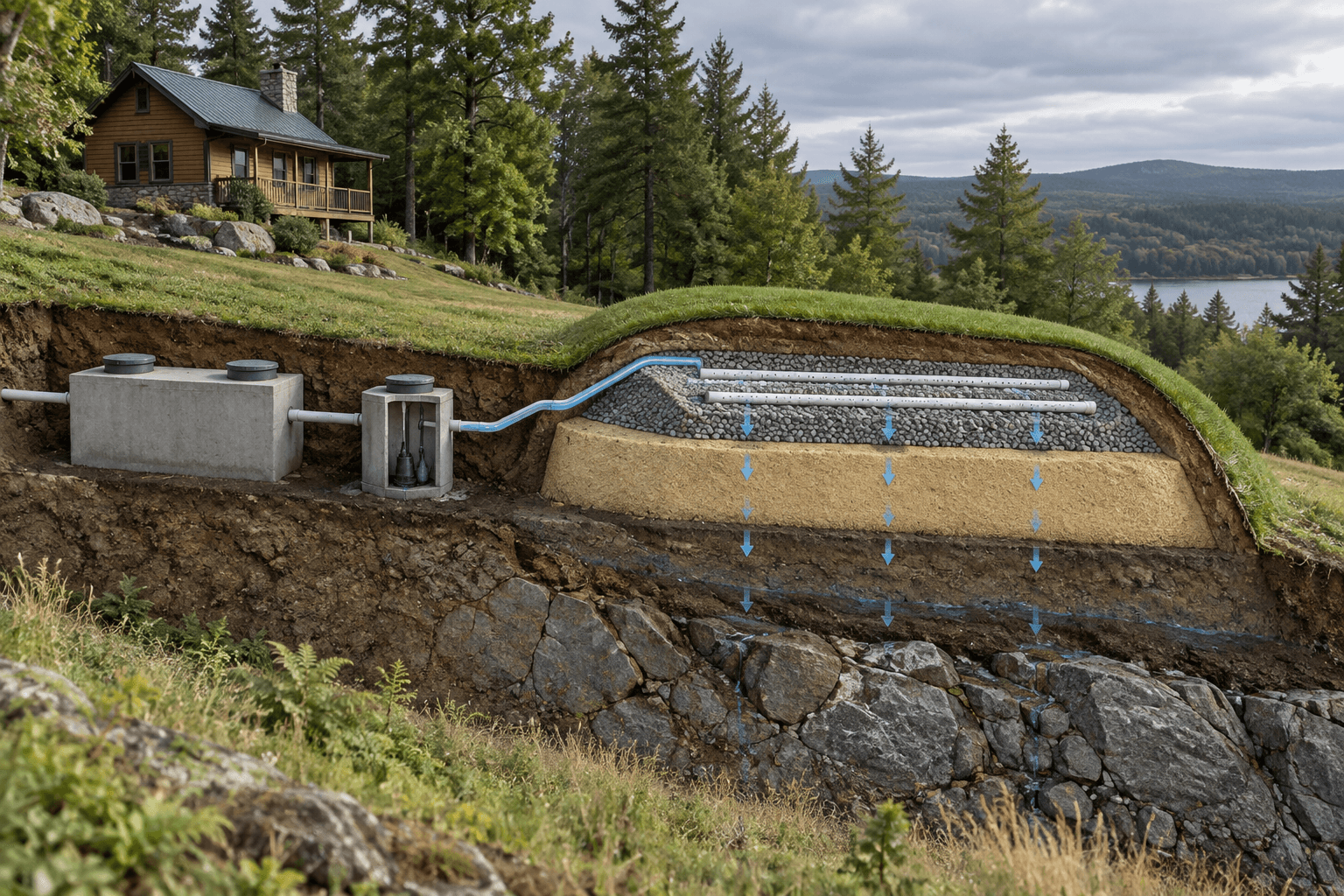
A conventional septic system relies on gravity and decent native soil to absorb effluent below grade. A mound system skips that requirement by building an artificial soil layer on top of the ground, usually 2 to 3 feet of sand fill capped with gravel and topsoil, sized specifically for sites where natural percolation fails.
Why Slopes and Shallow Soil Break the Standard Design
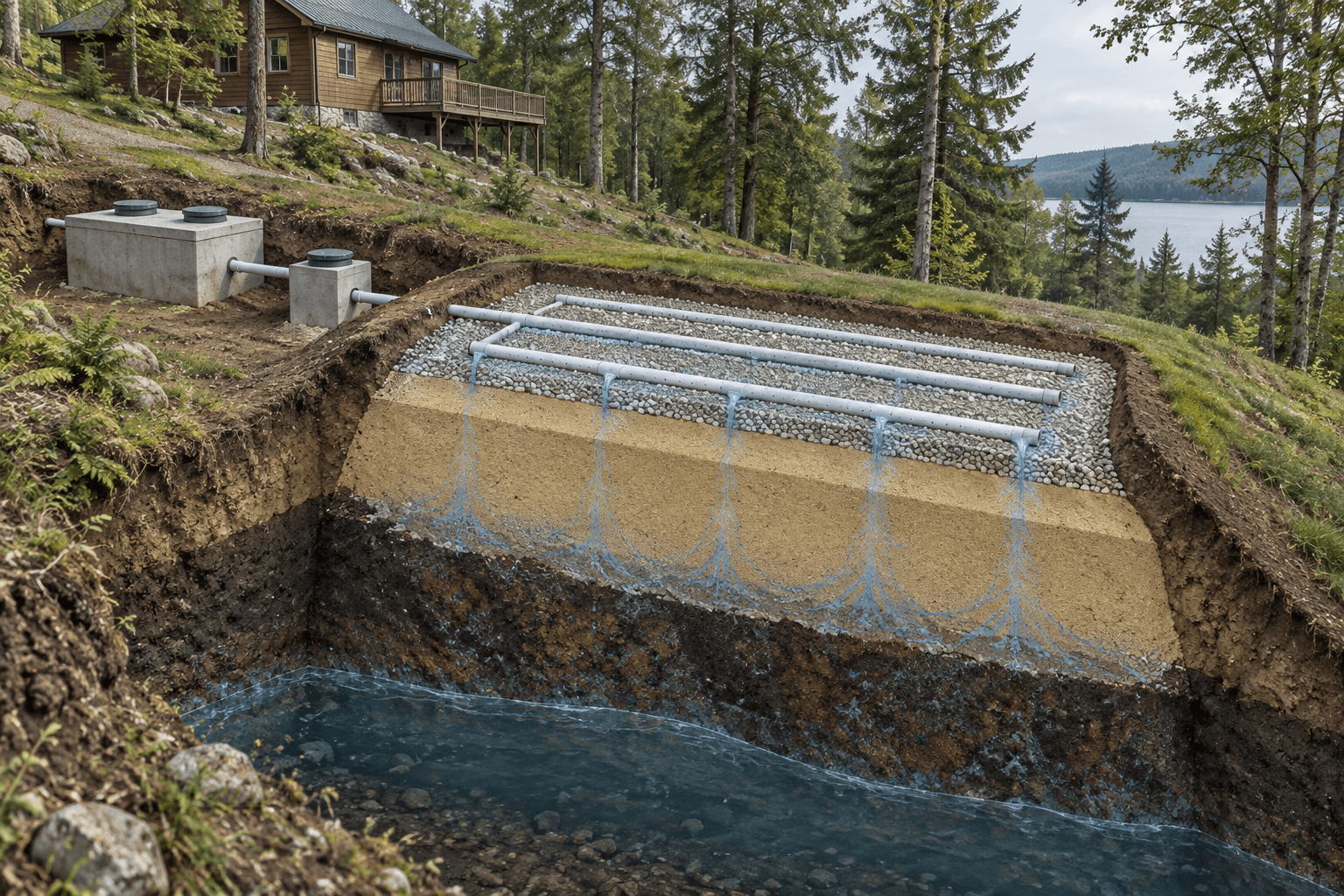
Steep grades cause effluent to break out at the surface downhill instead of soaking in evenly. Shallow soil (less than 4 feet to bedrock or groundwater) doesn’t give wastewater enough distance to filter naturally before hitting groundwater. Both problems show up constantly on wooded cabin lots where the topsoil is thin and the water table sits high in spring.
The Sand Fill Does the Real Work
The sand layer inside the mound acts as the replacement soil. Effluent gets pumped up into a network of small distribution pipes buried in gravel near the top of the mound, then trickles down through the sand, getting treated by bacteria along the way before reaching the natural soil underneath. This sand layer, not the native ground, is what actually treats the wastewater in a mound system.
Why You Need a Pump and Dosing Chamber
Gravity alone can’t push wastewater uphill into a mound sitting several feet above the septic tank. That’s why almost every mound system includes a dosing chamber and a small effluent pump, which is the single biggest cost difference from a standard system.
The pump doses the mound in scheduled bursts rather than a constant trickle, giving the sand time to rest and treat effluent between doses instead of getting flooded. A float switch in the dosing chamber triggers the pump once wastewater hits a set level, then shuts off after a set volume goes out. On a sloped cabin lot, that pump often has to lift effluent 8 to 15 feet vertically depending on how far the mound sits from the tank.
Skipping the dosing chamber isn’t an option on sloped ground. Without controlled dosing, effluent floods one section of the mound instead of spreading evenly across the distribution pipes, and the system fails years before it should.
Site Evaluation and Slope Limits You Can’t Design Around
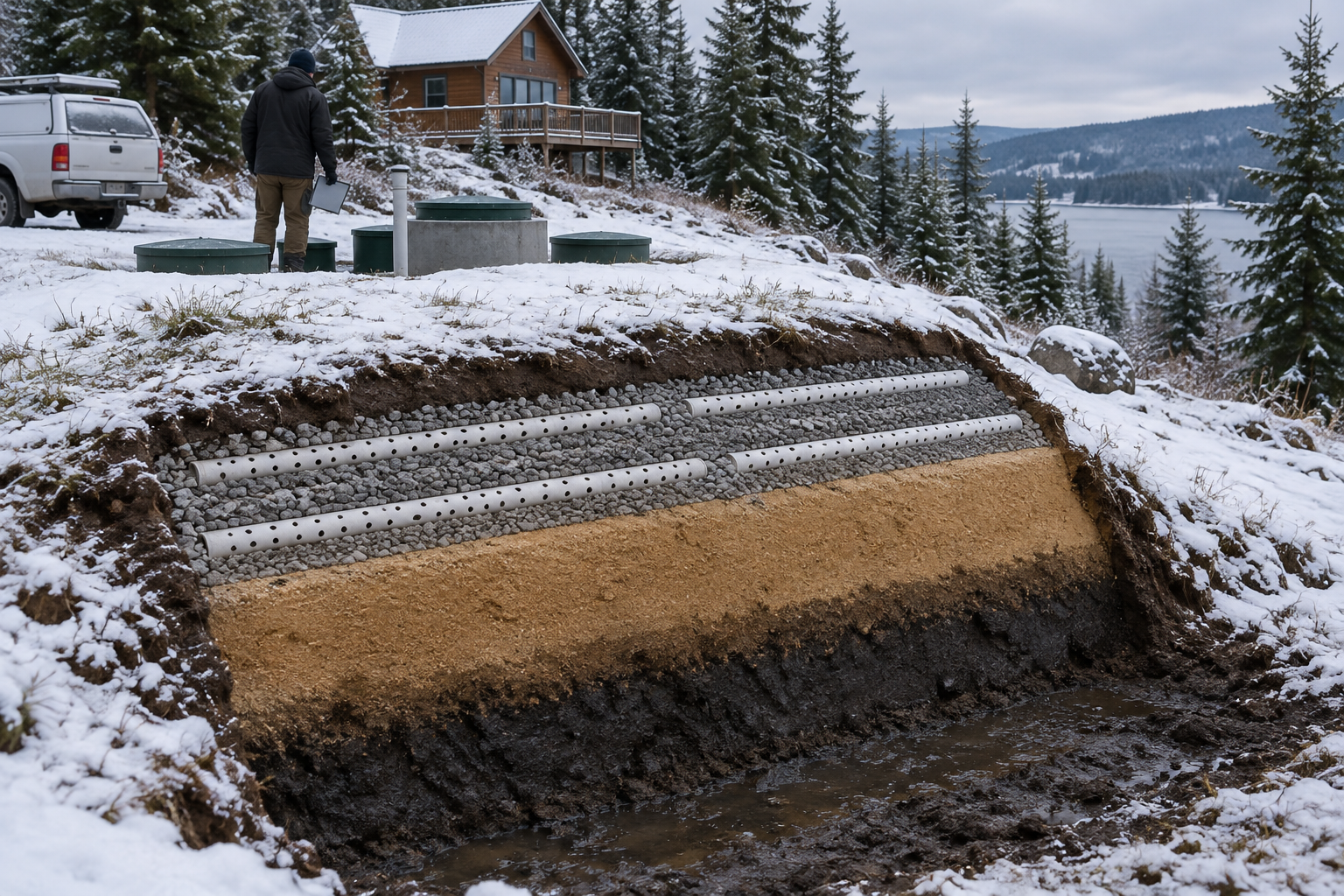
Most states cap mound systems at slopes around 12% to 25%, depending on soil type, and a licensed site evaluator has to run percolation tests before anyone draws up a design. This step gets skipped by DIY budgets more than any other, and it’s the one that determines whether a mound system is even legal on your land.
What the Evaluation Actually Checks
The evaluator digs test pits to check soil texture, depth to bedrock, depth to seasonal groundwater, and the actual slope percentage across the proposed area. These numbers set the mound’s size, height, and pump specs, they aren’t optional paperwork.
Grading and Perimeter Drainage
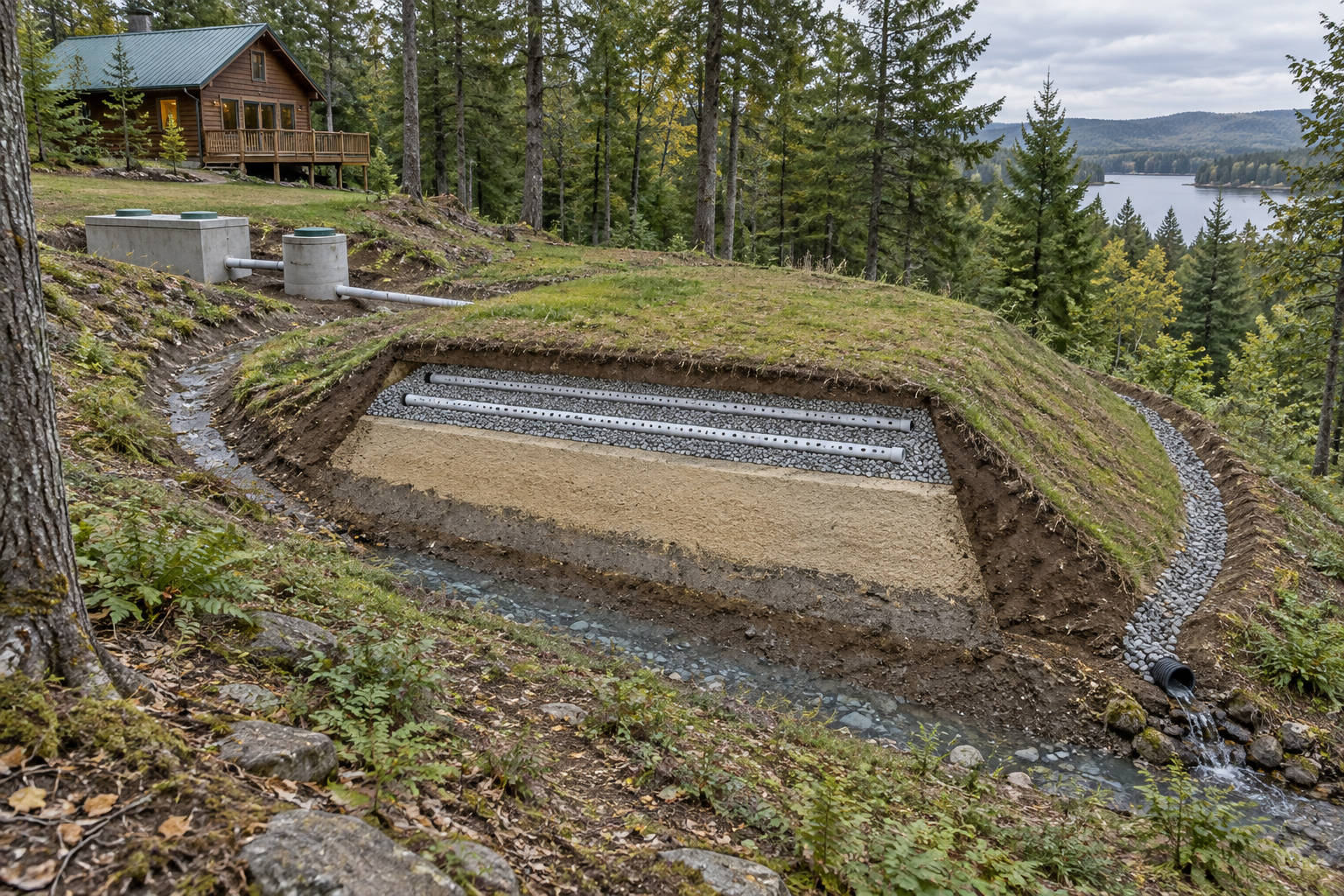
On a slope, the uphill side of the mound needs a diversion swale or perimeter drain to keep surface runoff from soaking into the sand fill and overloading the system. Grading has to route water around the mound, not through it. Skip this and you’ll see soggy ground and sewage odor on the downhill side within a couple of wet seasons.
Cost, Maintenance, and Cold-Climate Realities
A mound system typically runs $10,000 to $25,000 installed, compared to $5,000 to $15,000 for a standard drain field, with the pump, dosing chamber, and extra fill dirt driving most of the gap. Remote sites add trucking costs, since sand fill often has to be hauled in by the truckload.
Feature
Standard Drain Field
Mound System
Typical cost
$5,000-$15,000
$10,000-$25,000
Requires pump
Rarely
Almost always
Works on steep slope
No
Yes, within limits
Site evaluation required
Basic perc test
Full licensed evaluation
Maintenance frequency
Annual tank pump-out
Annual pump-out plus pump/float check
Maintenance doesn’t stop once the mound is built. Here’s the realistic upkeep schedule:
Pump the septic tank every 3 to 5 years, same as a standard system.
Inspect the effluent pump and float switch annually, since these fail more often than gravity components.
Check the mound surface each spring for settling, erosion, or wet spots.
Keep trees and deep-rooted plants off the mound, roots can crack distribution pipes.
Clear the perimeter drain of leaves and debris before the fall rains.
Have a professional check the dosing chamber alarm annually.
In cold climates, freeze protection matters too. A thick grass cover (not gravel exposed to air) insulates the sand fill, and some builders add a foot of extra topsoil on the mound’s crown specifically to keep pipes from freezing through a Minnesota or Vermont winter. If you’re planning other off-grid sanitation upgrades alongside your septic decision, it’s worth mapping water use and greywater separately before the mound design gets finalized, since that changes the daily gallon load the system needs to handle.
Frequently Asked Questions
Can I install a mound septic system myself?
Generally no, most states require a licensed installer and engineer-stamped design for mound systems, unlike simpler gravity systems some states allow homeowners to install. Permitting agencies inspect the sand fill depth and pump wiring before burial, and DIY work usually fails that inspection.
How long does a mound system last?
A well-maintained mound system lasts 20 to 30 years, similar to a standard septic drain field, provided the pump and dosing chamber get serviced regularly. Sand fill that gets overloaded or flooded by surface runoff fails much sooner, sometimes within 10 years.
Is a mound system the only option on a steep slope?
Not always, alternatives like aerobic treatment units or engineered gravity-fed systems on gentler grading sometimes work depending on soil and slope percentage. A licensed site evaluation is what actually determines which option your specific lot qualifies for.