A benchtop bandsaw will fight you on every cut until you set it up right, and cabin lumber makes that fight worse than furniture stock ever will. Most guides assume you’re slicing thin hardwood offcuts on a hobby bench. Cabin builders are usually resawing rough 2x construction lumber, thick cedar boards, or reclaimed timber, and a small machine wasn’t built for that without some real attention to tension, tracking, and blade choice.
That gap between “furniture bandsaw setup” and “cabin bandsaw setup” is where most DIY builders get stuck. Get the fundamentals dialed in first, and a $200-$400 benchtop machine can handle far more cabin work than its size suggests.
Blade Tension and Tracking: The Two Adjustments That Fix Most Bad Cuts
Wrong blade tension and bad tracking cause the majority of crooked, wandering cuts on a benchtop bandsaw. Fix these two things before touching anything else, because every other adjustment downstream depends on them being right.
Setting Tension Without a Gauge
Most benchtop bandsaws don’t ship with a tension meter, so you’re stuck deflecting the blade about a quarter inch to the side with moderate hand pressure at the midpoint between guides. Too loose and the blade flutters, drifting off your line mid-cut. Too tight and you’re stressing the tires and bearings for no real gain in accuracy. If you’re cutting a lot of 2-inch cabin stock, err toward slightly higher tension than the “furniture” recommendation, since thick material needs the blade to resist deflection under load.
Tracking Adjustment
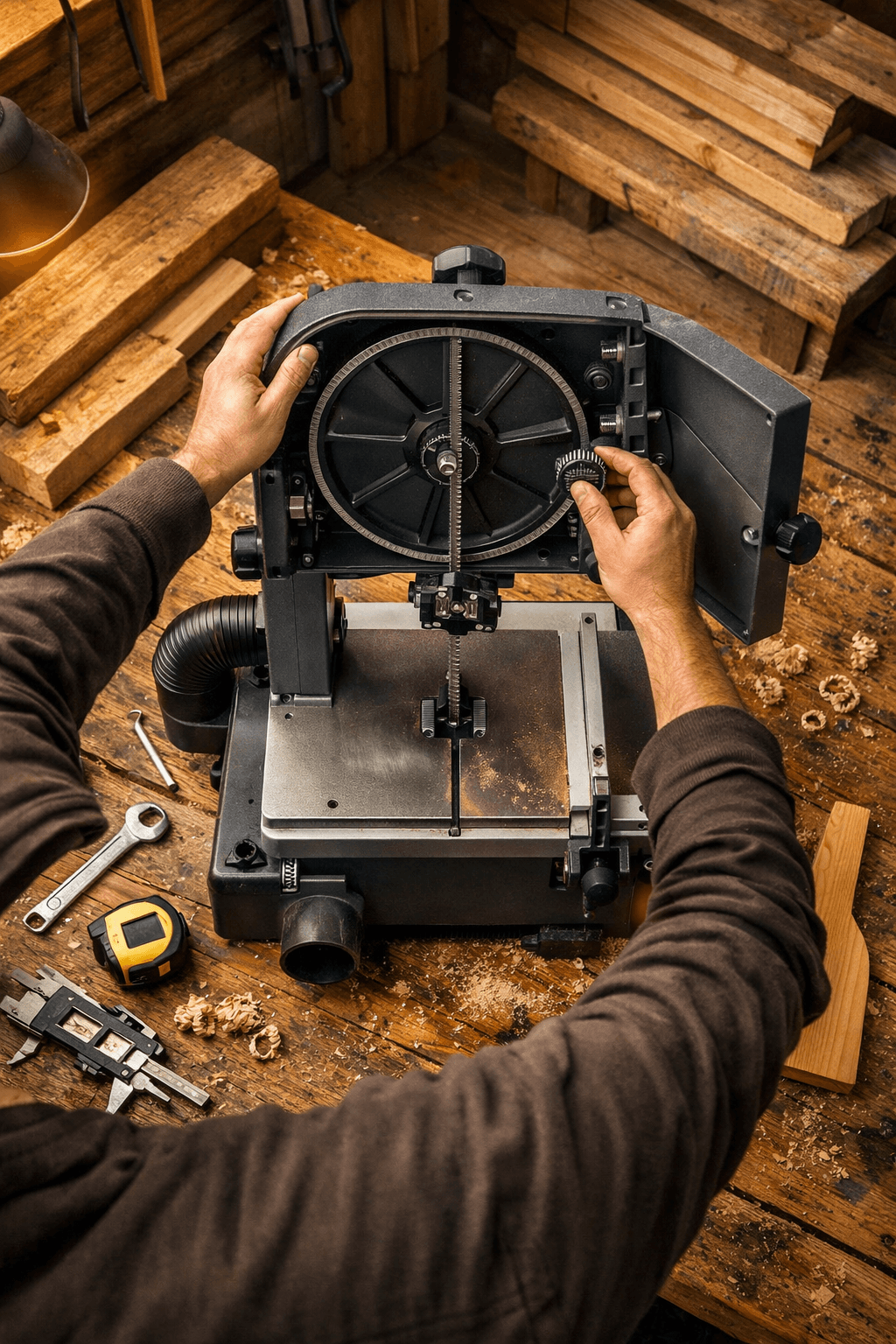
Spin the wheel by hand with the guard open and watch where the blade rides on the tire. It should sit just forward of center, not climbing toward the edge or falling toward the frame. Turn the tracking knob in small increments, a quarter turn at a time, and recheck after each adjustment. A blade riding the edge of the tire will wear a groove into the rubber within a few dozen cuts, and that’s an expensive tire replacement you didn’t need to pay for.
Blade Selection for Cabin Wood: Match Width and TPI to the Cut
The biggest mistake cabin builders make is assuming any blade works for any wood. It doesn’t. A fine-tooth blade meant for plywood will bog down and burn in thick fir, while a coarse resaw blade will tear up thin trim stock.
For general cabin work, a 1/2-inch, 3 TPI (teeth per inch) blade handles resawing 2x lumber and thicker boards well, since the wide gullets clear sawdust fast enough to keep the blade cool. Drop to a 1/4-inch, 6 TPI blade for tighter curves, like scroll cuts on brackets or fascia trim. Going wider isn’t always better either. Benchtop machines often can’t tension a 3/4-inch blade properly, so you’re better off staying at 1/2 inch max on most 9-inch and 10-inch models.
Blade Width
TPI
Best For
Cabin Use Example
1/4 in
6
Tight curves, detail work
Scroll cuts, decorative trim
3/8 in
4
General purpose
Framing scraps, shelving
1/2 in
3
Resawing thick stock
2x lumber, cedar siding boards
Fence, Miter Gauge, and Guide Bearings: The Alignment Chain
A crooked fence undoes everything else you just adjusted. Cabin builders resawing boards for siding or paneling need the fence dead parallel to the blade, because even a 1/16-inch drift over 6 feet of board shows up as a visible taper once you stand the pieces side by side.
Squaring the Fence to the Blade
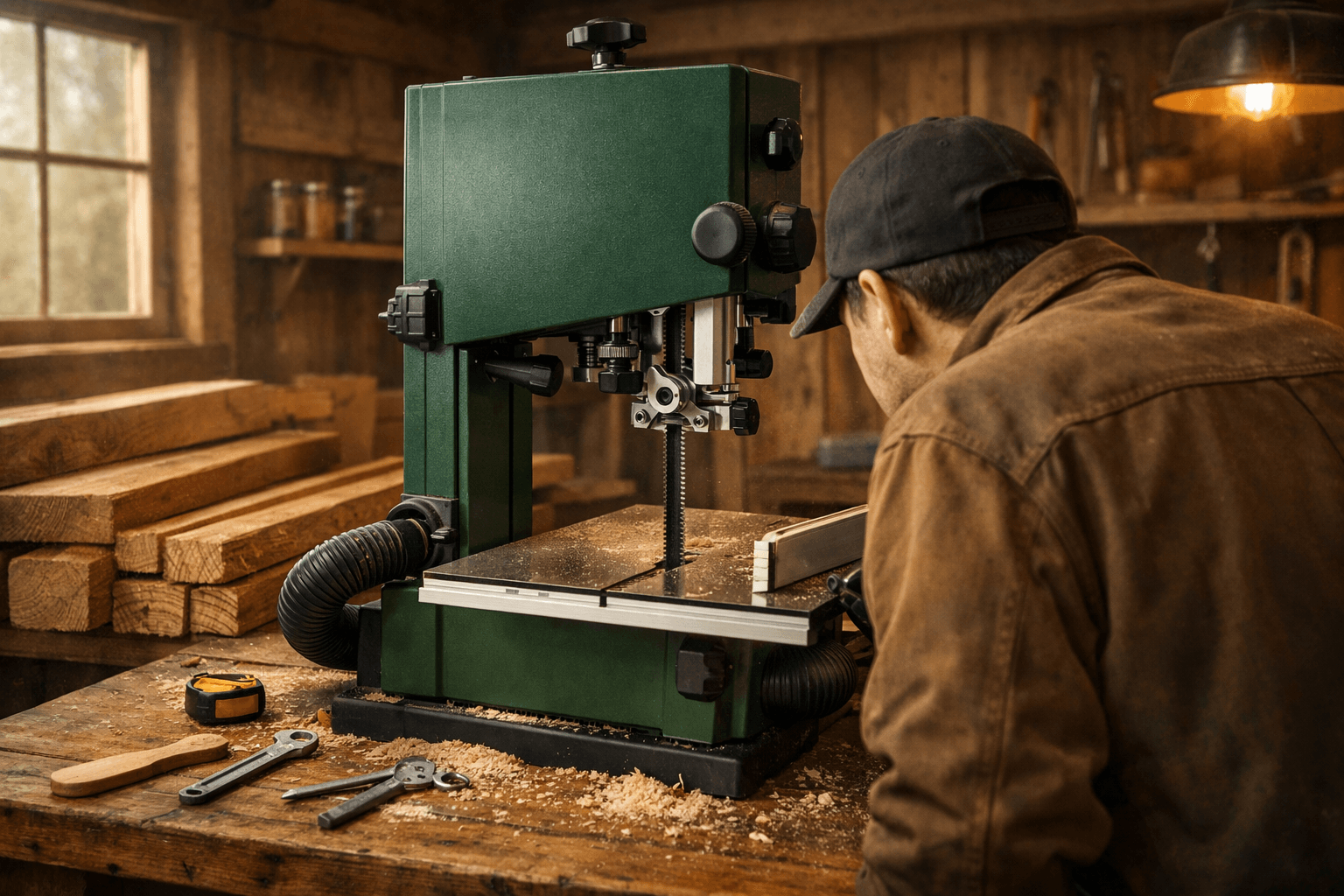
Loosen the fence, then measure the distance from blade to fence at the front and back of the table. Adjust until both numbers match, then lock it down and recheck with a test cut on scrap. Some benchtop fences drift when you tighten the clamp, so it’s worth rechecking after locking, not just before.
Guide Bearings and Blade Guides
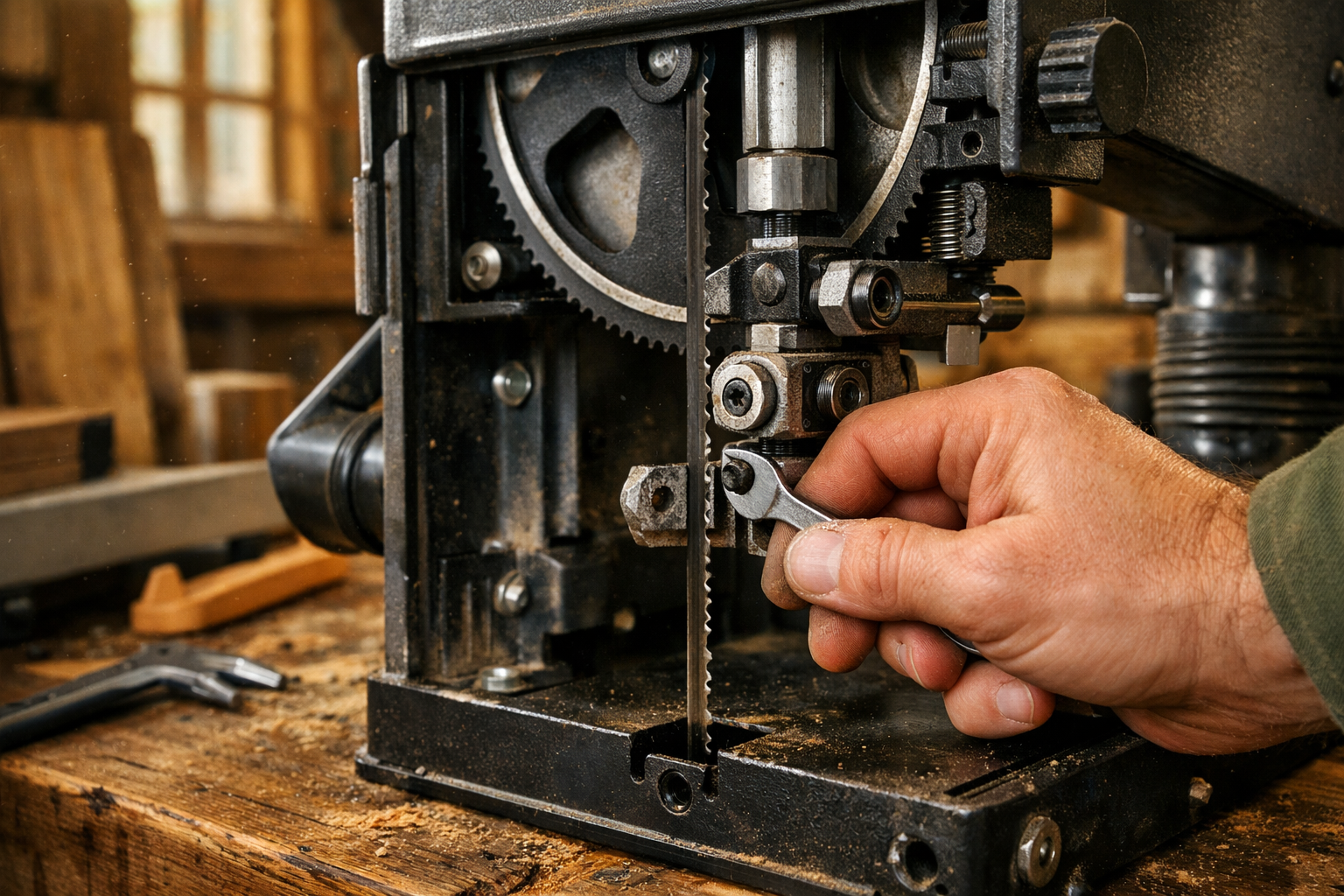
Set the guide bearings so they almost touch the blade body, just behind the tooth gullets, with enough clearance that the blade spins freely without rubbing. Bring the thrust bearing up until it’s a hair’s width from the blade’s back edge. This support is what keeps a resaw cut from bowing halfway through a thick board, since unsupported blade flex is the real cause of barrel-shaped cuts in tall stock.
Miter Gauge for Crosscuts
The miter gauge matters less for resawing but a lot for crosscutting rafters, blocking, or trim to length. Check it against a machinist square rather than trusting the factory-stamped 90-degree mark, since those marks are often off by a degree or more on budget models.
Bench Mounting, Dust Collection, and Long-Board Support
A benchtop bandsaw that isn’t bolted down will walk across your workbench the moment you push a heavy board through it. Bolt the saw to a dedicated stand or a section of plywood clamped to sawhorses, and don’t rely on rubber feet alone once you’re resawing anything over 6 feet long.
Dust collection on these small machines is often an afterthought from the factory, with a 2 1/2-inch port that barely keeps up with fine sawdust, let alone the volume you generate resawing rough lumber. A basic shop vac hooked to that port handles most of it, but expect to still sweep up a fair amount of chips that miss the opening entirely.
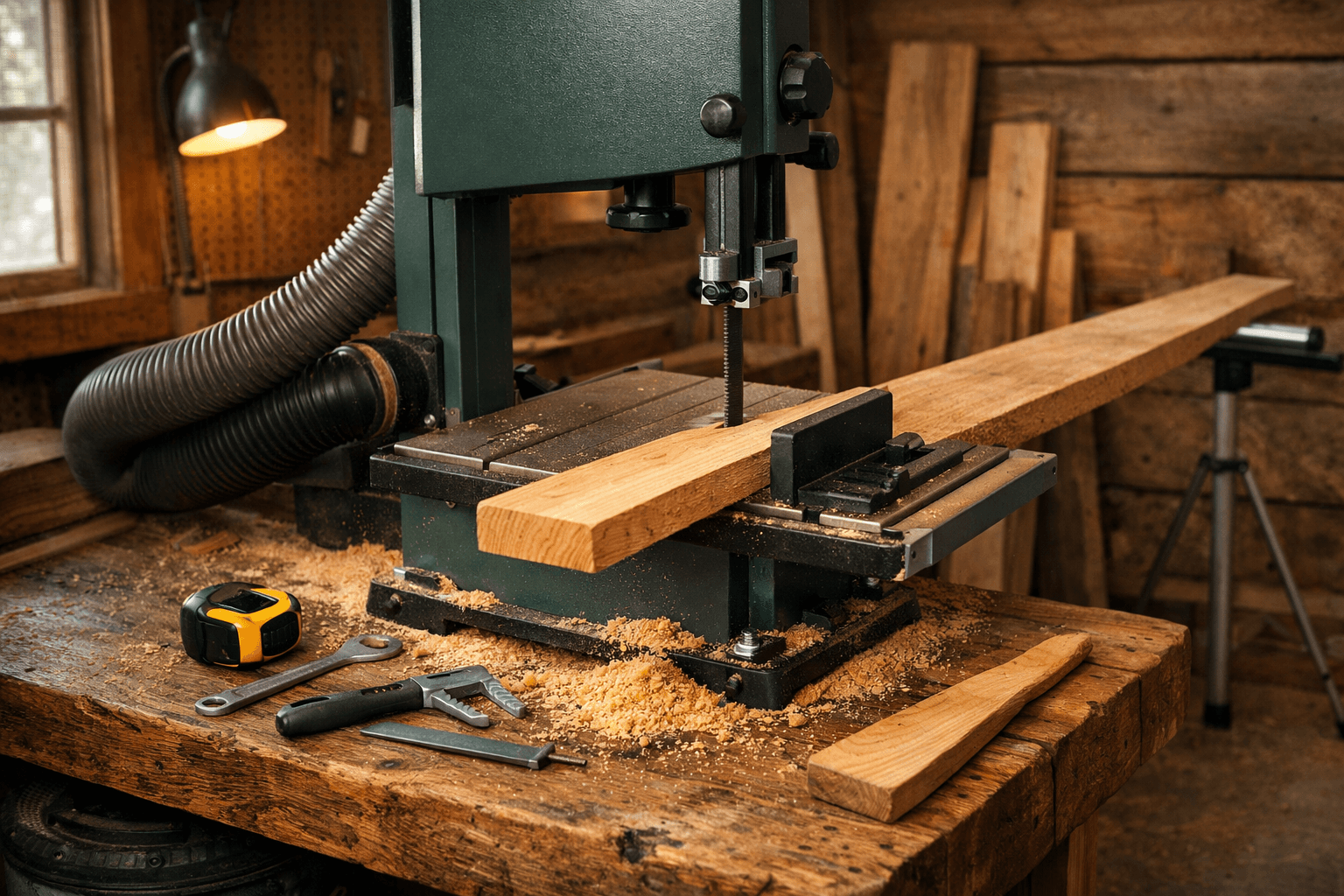
Long boards need support on both sides of the table, not just the infeed side. Here’s a practical setup sequence for resawing an 8-foot cedar board on a benchtop machine:
Bolt the bandsaw to a stable stand or plywood base.
Set roller stands or a helper table at table height on both infeed and outfeed sides.
Mark your cut line on the board with a pencil and straightedge.
Feed the board slowly, letting the blade do the work instead of pushing hard.
Watch the far end of the board so it doesn’t dip as it clears the outfeed side.
Release blade tension as soon as the cut is done.
That last step matters more than people think. Leaving tension on after every session shortens blade life and stretches out the rubber tires, and a tire that’s gone soft from constant tension will cause tracking problems that seem to come out of nowhere weeks later. Back the tension off, even if you’re cutting again tomorrow. If you’re building out a full cabin workshop, cabinlodger.com has more on which hand and power tools actually earn their spot in a small build shed versus which ones just take up bench space.
Frequently Asked Questions
Can a benchtop bandsaw actually resaw 2-inch lumber?
Yes, most 9-inch and 10-inch benchtop models can resaw 2-inch stock, but only with a 1/2-inch, 3 TPI blade, correct tension, and a slow feed rate. Underpowered motors (under 1/3 horsepower) will stall or bog down in dense wood like oak.
Why does my blade keep drifting to one side during a cut?
Drift usually means bad tracking or a dull blade, not user error. Recheck tracking so the blade rides just forward of center on the tire, and replace the blade if it’s cut more than 50-75 linear feet of dense lumber.
How often should I release blade tension?
Release tension after every session, even short ones. Leaving a blade tensioned overnight or between cuts stretches the rubber tires and shortens blade life, and it’s a five-second fix with the tension lever or knob.