A log kit price tag can look like a full house until you read the fine print. Golden Eagle Log Homes has been selling log and timber packages out of Pennsylvania since the 1970s, and the brand shows up on almost every serious shortlist for cabin buyers. But the real question isn’t whether they build a good log wall — it’s whether their package actually gets you into a finished cabin, or just gets you a very expensive pile of lumber on your lot.
That distinction matters more than most buyers realize until they’re three months into a build with no roof on. So let’s look at what you’re actually paying for, what it doesn’t cover, and how it stacks up against building the thing yourself.
What Golden Eagle Log Homes Actually Sells You
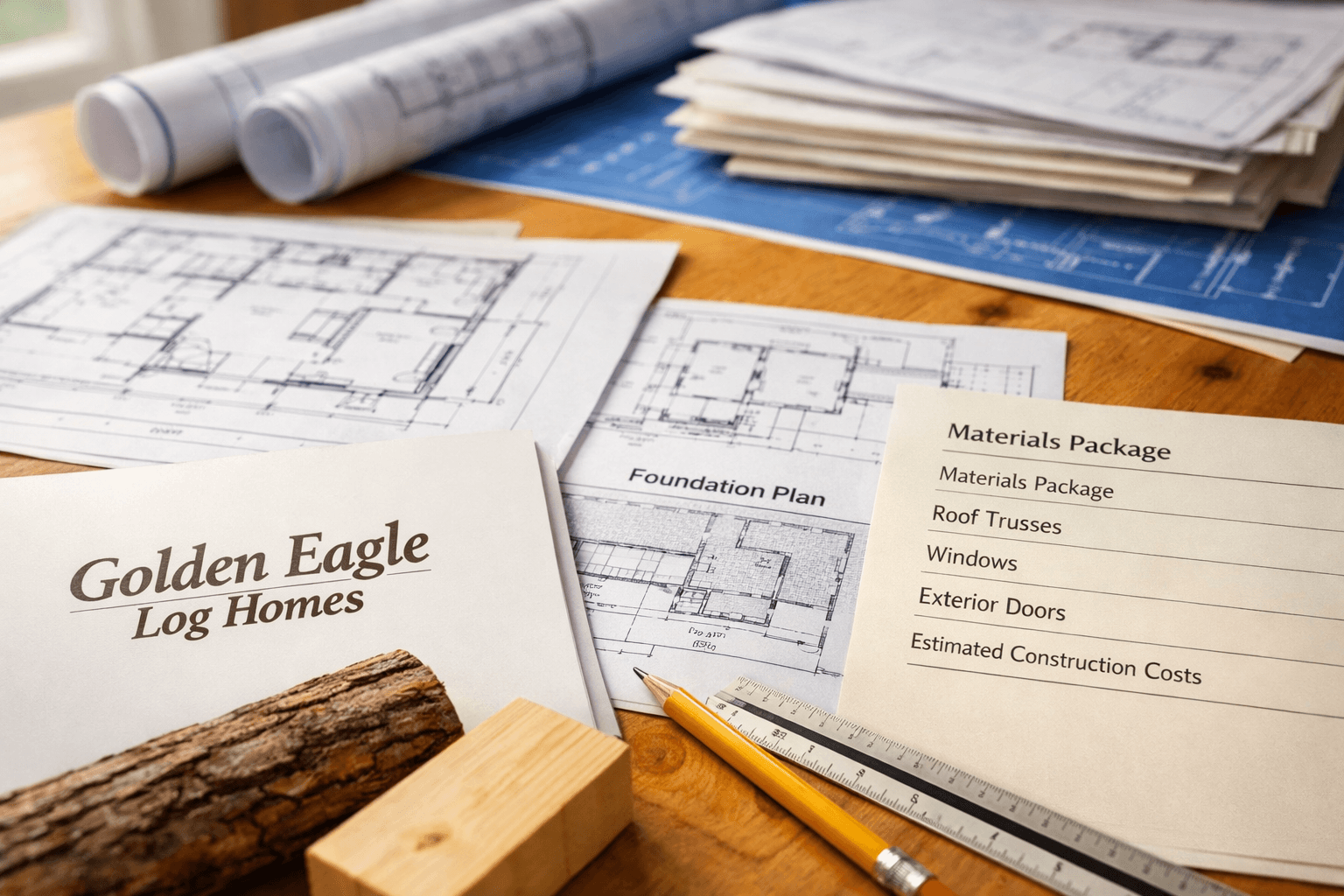
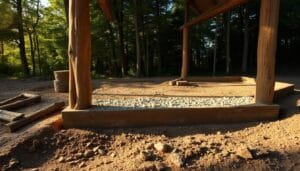
Golden Eagle sells a materials package, not a turnkey house. Depending on the tier you pick, that package can run from a basic shell kit to a nearly-complete “weathered-in” package, but none of them include your foundation, septic, well, or electrical hookup.
The Package Tiers
Most manufacturers, Golden Eagle included, break their offerings into a few standard levels:
Dry-in shell — logs, roof system, windows, and exterior doors, but no interior finish.
Weathered-in package — adds roofing material, exterior trim, and sometimes a subfloor.
Full construction package — includes interior partition walls, staircases, and some electrical rough-in materials.
Turnkey through a dealer-builder — the company or an affiliated builder handles the whole job, foundation to finish, for an added fee.
Where the Price Confusion Starts
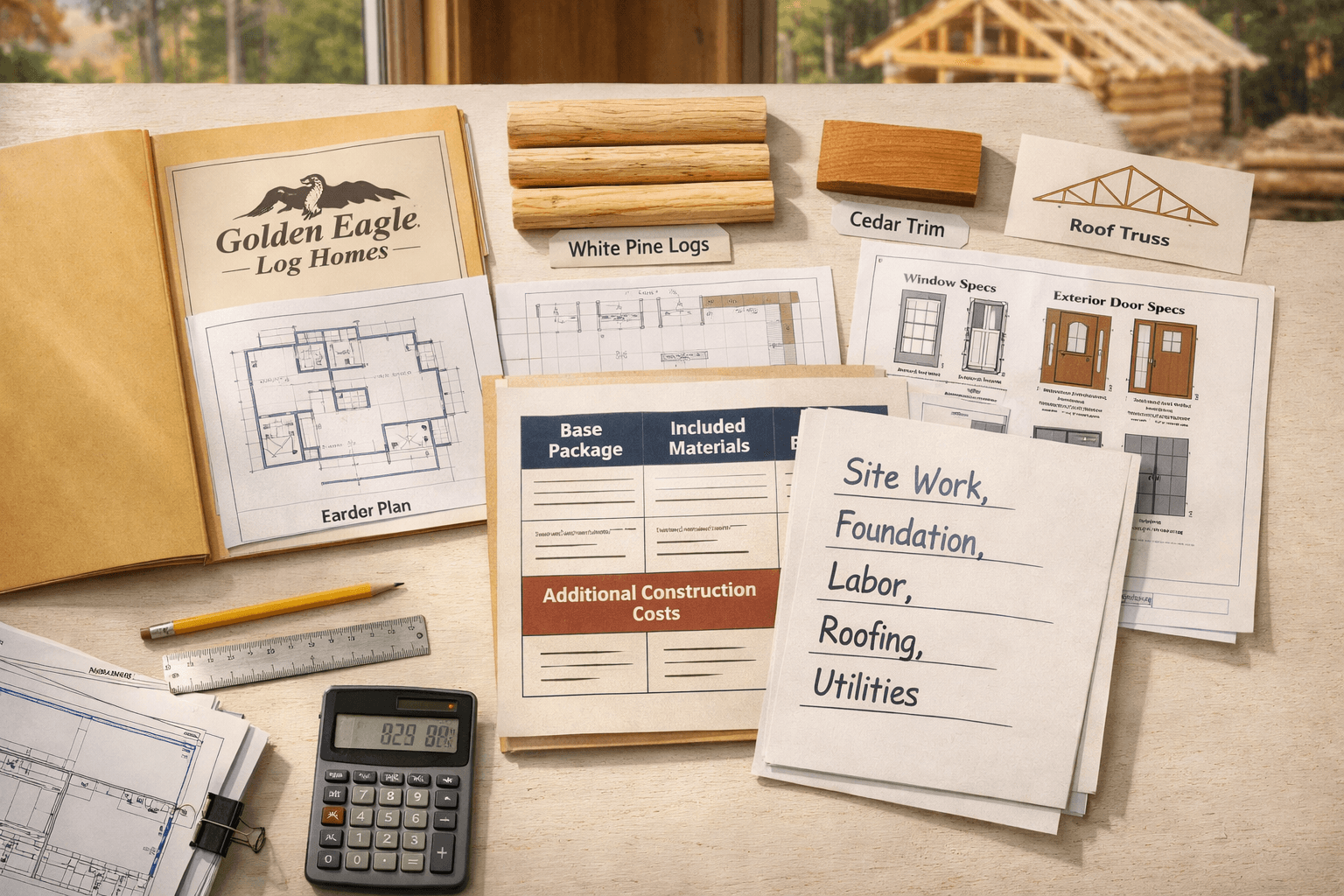
Buyers often see a number like $80 to $150 per square foot quoted for a materials package and assume that’s the finished cost. It isn’t. Add foundation work, septic and well, electrical and plumbing labor, interior finishing, and appliances, and your real all-in cost often lands between $180 and $280 per square foot once everything is done. That gap is the single biggest source of buyer regret in the log home world, and it’s not unique to this brand.
Log Species and Build Method: White Pine, Cedar, and Timber Frame Explained
Golden Eagle primarily works with Eastern white pine and cedar, two species with real performance differences that affect both your budget and your maintenance schedule for decades. Picking the wrong one for your climate is a mistake you’ll be repainting and recaulking for years.
White Pine vs. Cedar
White pine is lighter, less expensive, and takes stain evenly, but it’s softer and more prone to insect issues if you skip regular sealing. Cedar costs more up front — often 15% to 25% more per log — but it has natural rot and insect resistance that holds up better in humid climates like the Southeast or Pacific Northwest. If you’re building somewhere with hard winters and dry summers, like the Rockies or Upper Midwest, white pine with a good finish schedule performs fine and saves money.
Kiln-Dried vs. Green Logs
Kiln-dried logs, which Golden Eagle offers as an upgrade, hold their shape better and shrink less after the walls go up, meaning less settling and fewer gaps at windows and doors. Green (undried) logs cost less but will keep drying and shrinking for a year or two after construction, so your chinking and caulking need a follow-up pass. I’d pay the kiln-dried premium if your budget allows it — the callback repairs on a green-log build aren’t cheap in time or materials.
Log Homes Are Not Timber Frame Homes
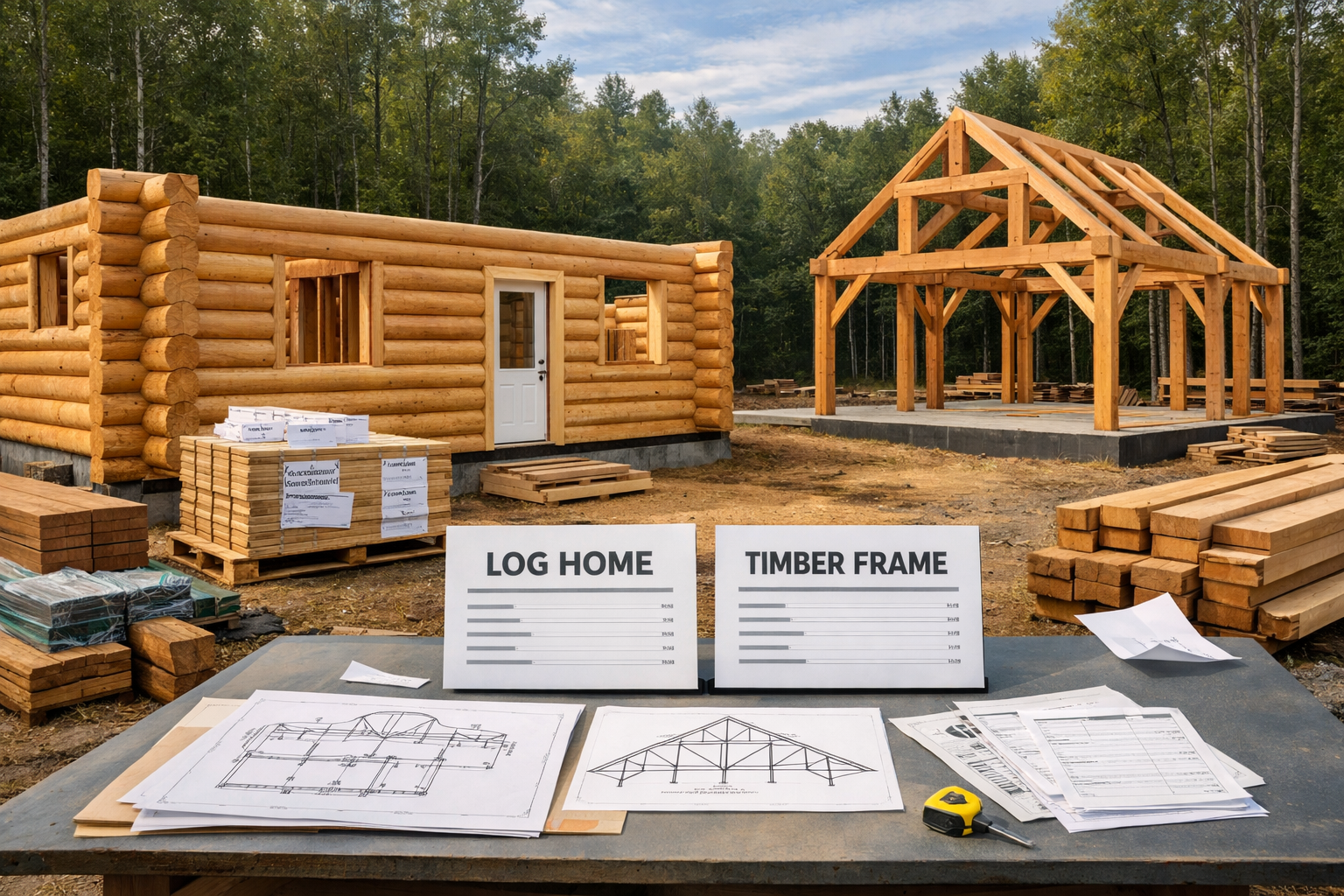
These get confused constantly. A log home uses stacked, interlocking logs as the actual wall structure. A timber frame home uses a post-and-beam skeleton with separate wall infill (often SIPs panels), leaving big open interiors and exposed beams. Golden Eagle offers both product lines, so make sure your dealer quote is for the one you actually want.
Cost, Customization, and the Dealer Network
Golden Eagle works through a network of regional dealer-builders rather than one national crew, and your experience depends heavily on which dealer you’re assigned. Floor plans are customizable, from small 700-square-foot cabins up to multi-story lodge-style homes over 3,000 square feet, and the design team will modify stock plans for an added drafting fee, usually a few hundred dollars.
Package Type
Typical Materials Cost/sq ft
What’s Included
Dry-in shell
$80–$110
Logs, roof structure, windows, exterior doors
Weathered-in
$110–$135
Above plus roofing, exterior trim
Full construction package
$135–$150
Above plus interior framing, stairs, rough electrical materials
All-in finished cost (with site work, utilities, labor)
$180–$280
Complete livable home
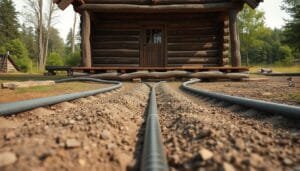
Financing a log package works differently than a standard mortgage in one important way: many lenders treat it as a construction loan, released in draws as the build progresses, and some won’t finance a materials-only kit without a general contractor attached. Site prep — clearing, grading, a driveway, and utility trenching — can add $10,000 to $40,000 before a single log gets stacked, depending on how remote and sloped your lot is.
Kit-Built vs. DIY Self-Build: The Honest Time and Skill Tradeoff
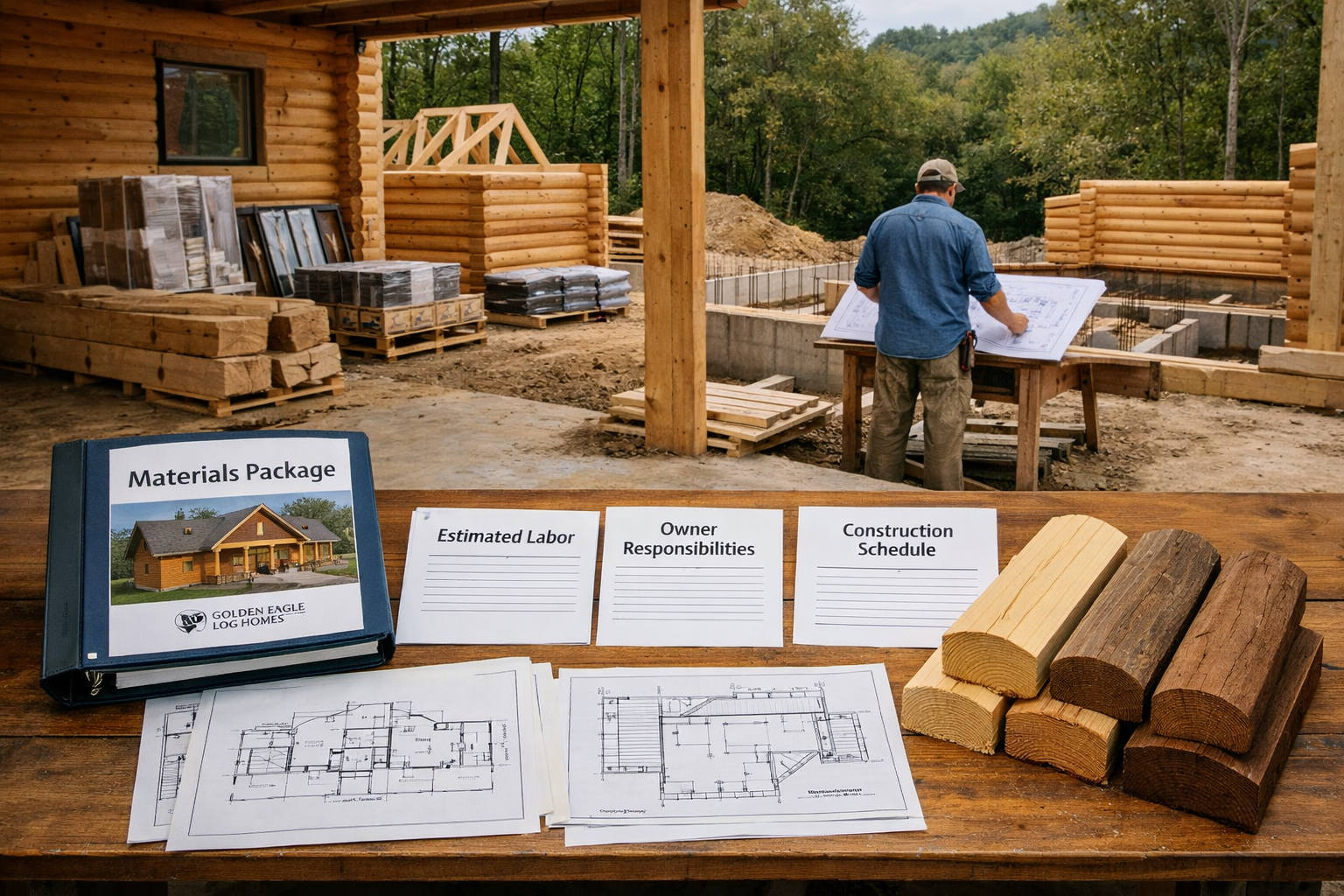
A Golden Eagle kit saves you the engineering and sourcing headache, but it doesn’t save you the labor unless you pay for the turnkey option. A crew of three experienced builders can typically stack a mid-size shell in 2 to 4 weeks; a DIY-minded owner working weekends might take 4 to 6 months just to get weathered-in.
Building your own log cabin from scratch, milling or buying your own timber, costs less in materials but demands skills most first-timers don’t have: scribing joints, calculating settling allowances, and running your own roof system. If you’re documenting a build yourself, sites like cabinlodger.com are full of exactly that kind of ground-level detail on what a self-build actually takes in tools, time, and mistakes to expect.
Maintenance is where the two paths diverge for good. A kiln-dried cedar kit home might need restaining every 3 to 5 years; a green white pine self-build in a wet climate could need attention every 1 to 2 years until it fully settles. Golden Eagle’s warranty typically covers structural defects in the materials for a set term (confirm the exact years with your dealer, since terms have changed over the company’s history), but it won’t cover chinking failure caused by skipping annual inspections. Skip that inspection and you’re looking at water intrusion repairs that cost far more than the maintenance would have.
Frequently Asked Questions
Does the Golden Eagle Log Homes price include the foundation?
No. The quoted price per square foot covers the log and structural materials package only. Foundation, septic, well, electrical, plumbing labor, and interior finishing are separate costs, often adding $60,000 to $150,000 or more depending on lot conditions and finish level.
How much does a Golden Eagle log home cost per square foot to actually build?
Materials packages run roughly $80 to $150 per square foot, but total finished cost including site work and labor typically lands between $180 and $280 per square foot. A 1,500-square-foot cabin can realistically cost $270,000 to $420,000 fully built.
Is a Golden Eagle log home the same as a timber frame home?
No. Log homes use stacked logs as load-bearing walls, while timber frame homes use a post-and-beam skeleton with separate insulated wall panels. Golden Eagle sells both product types, so confirm which one your dealer quote actually describes.