
Your firewood stack is going to weigh a ton or more once it’s full, and that weight sits on four small feet through every rain, thaw and windstorm. Build the rack for that load, not for how it looks empty.
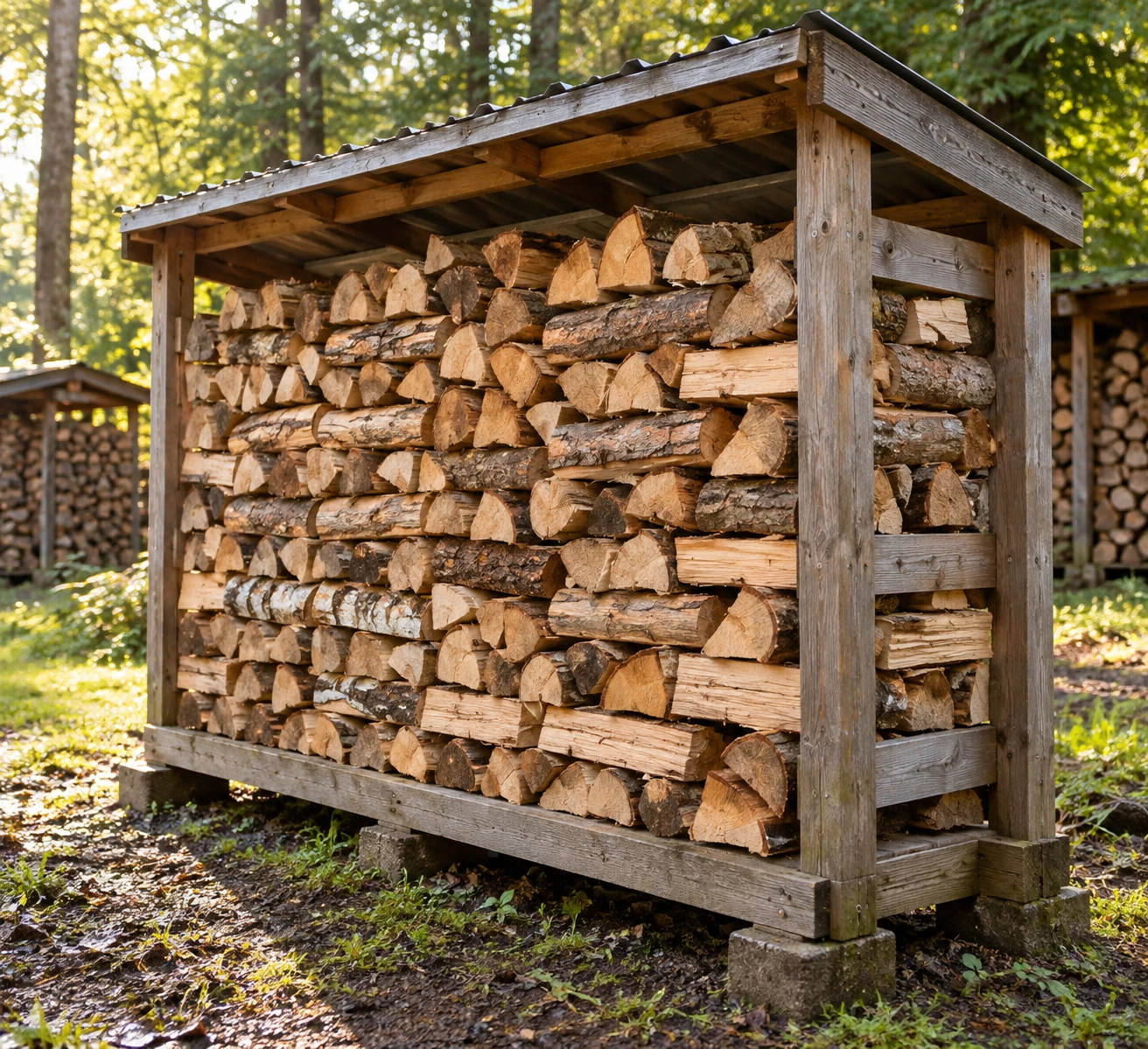
Here’s the short answer. Set the rack on firm, level supports. Raise the base off the ground, brace the end posts, and keep the frame open. Stack split wood in one stable row with gaps for air. Cover only the top, and check the loaded rack for leaning, settling and loose bolts.
The Rack Plan: 8 Feet Long, 4 Feet High, One Row Deep
Let’s size the rack around your wood. Most stoves take 16-inch splits, so a rack about 16 inches deep holds one row with the ends just inside the rails. Keep the height at no more than 4 feet, since taller stacks get harder to control in wind and wet weather. An 8-by-4-foot face of 16-inch wood is about 32 cubic feet, or a quarter cord (a full cord is 128 cubic feet).
Materials and Fasteners
Use pressure-treated lumber rated for ground contact on anything near the soil. For hardware, go with hot-dipped galvanized or stainless carriage bolts, nuts and washers. Interior screws rust and lose their grip, and bolts resist shear far better.
Cut List
| Part | Size | Qty | Length |
|---|---|---|---|
| Base rails | 2×4 treated (ground contact) | 2 | 96 in |
| Base cross members | 2×4 treated | 3 | 13 in |
| End posts | 4×4 treated | 4 | 48 in |
| Diagonal braces | 2×4 treated | 2 | about 40 in |
| Top ties | 2×4 treated | 2 | 16 in |
| Carriage bolts with nuts and washers | 3/8 x 5 in galvanized | 16 | — |
The 13-inch cross members sit between the rails, so the outside width works out to 16 inches. Cut the brace length to fit your posts. Measure it on the assembled frame rather than trusting the number.
Footings to Cover: Build It Step by Step
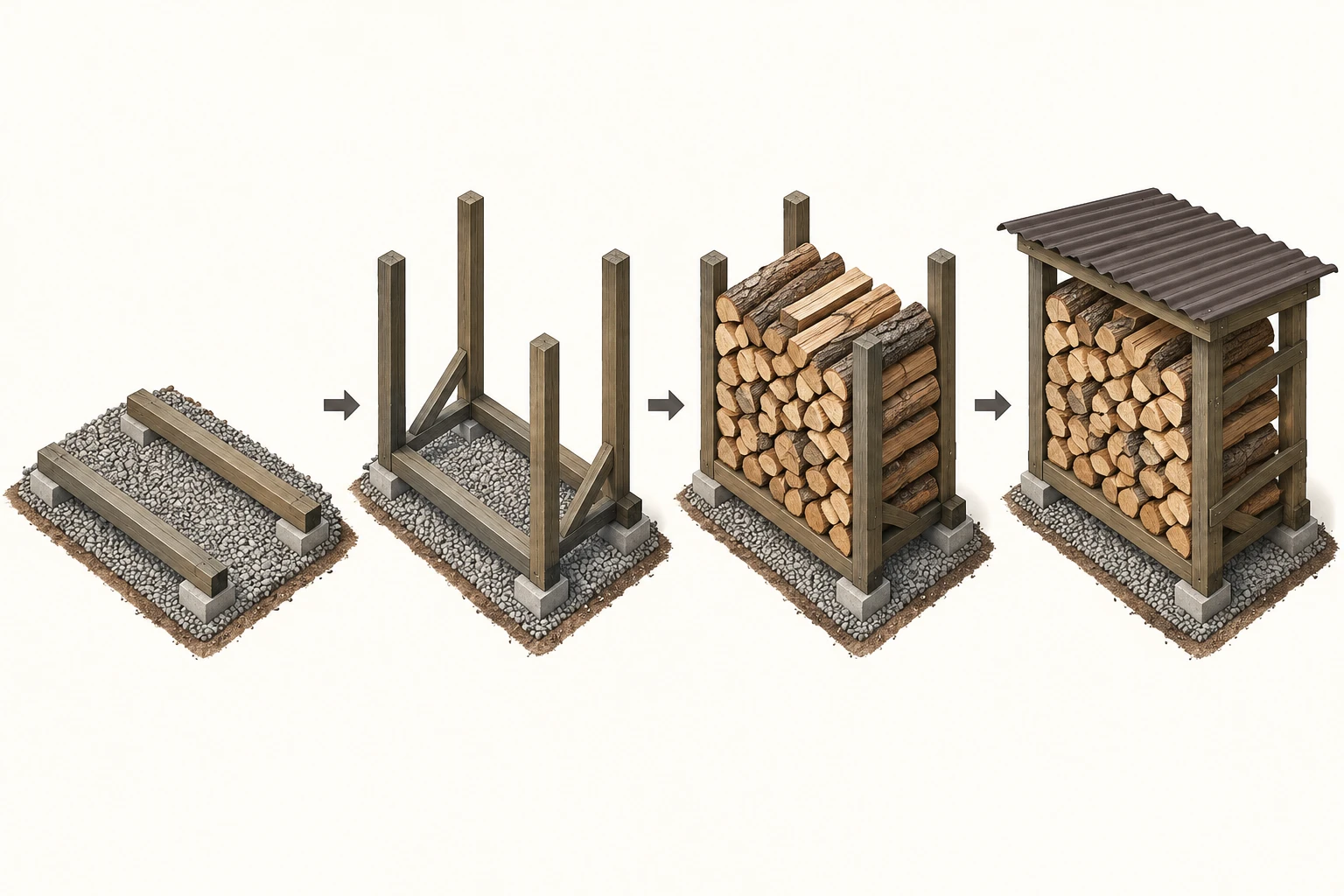
Soft soil is the main reason racks lean. One leg sinks a half inch, the stack shifts, and every layer above makes it worse. So we start at the ground.
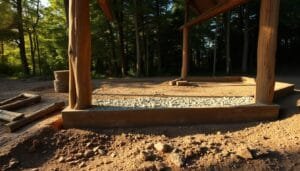
- Prep the footing. Pick a spot with drainage. Set concrete pavers or cinder blocks on a few inches of compacted gravel under each corner and the middle of each rail. Never set legs straight on dirt or grass.
- Level it. Check across the blocks with a 4-foot level in both directions. Shim with flat stone, not wood scraps that will rot.
- Frame the base. Bolt the cross members between the rails. Aim for 6 to 12 inches of clearance under the bottom logs so air moves and rodents can’t nest.
- Stand the end posts. Bolt two 4×4 posts to each end, one on each rail, and join each pair with a top tie.
- Add diagonal braces. Run one brace from the base to the post on each end. Without it, the frame racks, which means it leans sideways under load.
- Anchor if you’re exposed. In loose soil or open, windy ground, cable each end to an auger-style ground anchor about 30 inches long.
- Add the top cover last. A short roof or a breathable cover goes over the top only.
Total build time is typically an afternoon. The bottom line? Level blocks and one brace per end do more for stability than heavier lumber.
How to Stack Split Wood So It Dries Fast
Stack split wood, never rounds. Splitting opens up the wood so moisture can escape, and the bark-covered rounds can sit wet for years. Lay the first row with your straightest, longest pieces, tight and level across the rails. A crooked first layer only gets worse.
Single Row, Bark Up on Top
Keep the row one piece deep so air reaches every split. Leave small gaps instead of packing tight. On the top layer, lay pieces bark side up so they shed light rain.
Pile or Stack?
A stack wins. A loose heap traps moisture in the middle and dries unevenly. A single-row stack in a sunny spot that catches the wind seasons most wood in about six to twelve months.
Keep Your Distance
Place the rack about 15 feet from the cabin and never against a wall. That stops wood from trapping damp against siding and keeps insects from using the pile as a bridge inside.
Test before you burn. A pinless moisture meter on a freshly split face should read about 20 percent or lower.
Cover the Top, Not the Sides
A roof isn’t a substitute for airflow. Wrap a whole stack in a plastic tarp and you trap condensation, which slows drying and invites mold and rot. Cover only the top with a breathable tarp or a small roof, and leave the sides open.
Secure the cover with bungee cords or weights so it can’t act like a sail. Brush off heavy snow after storms, since that extra load presses straight down on your footings.
If you’re heating a cabin through a full winter, this ties into the bigger picture of off-grid heat. Cabin Lodger covers off-grid living in its guides.
Check the Loaded Rack Every Few Weeks
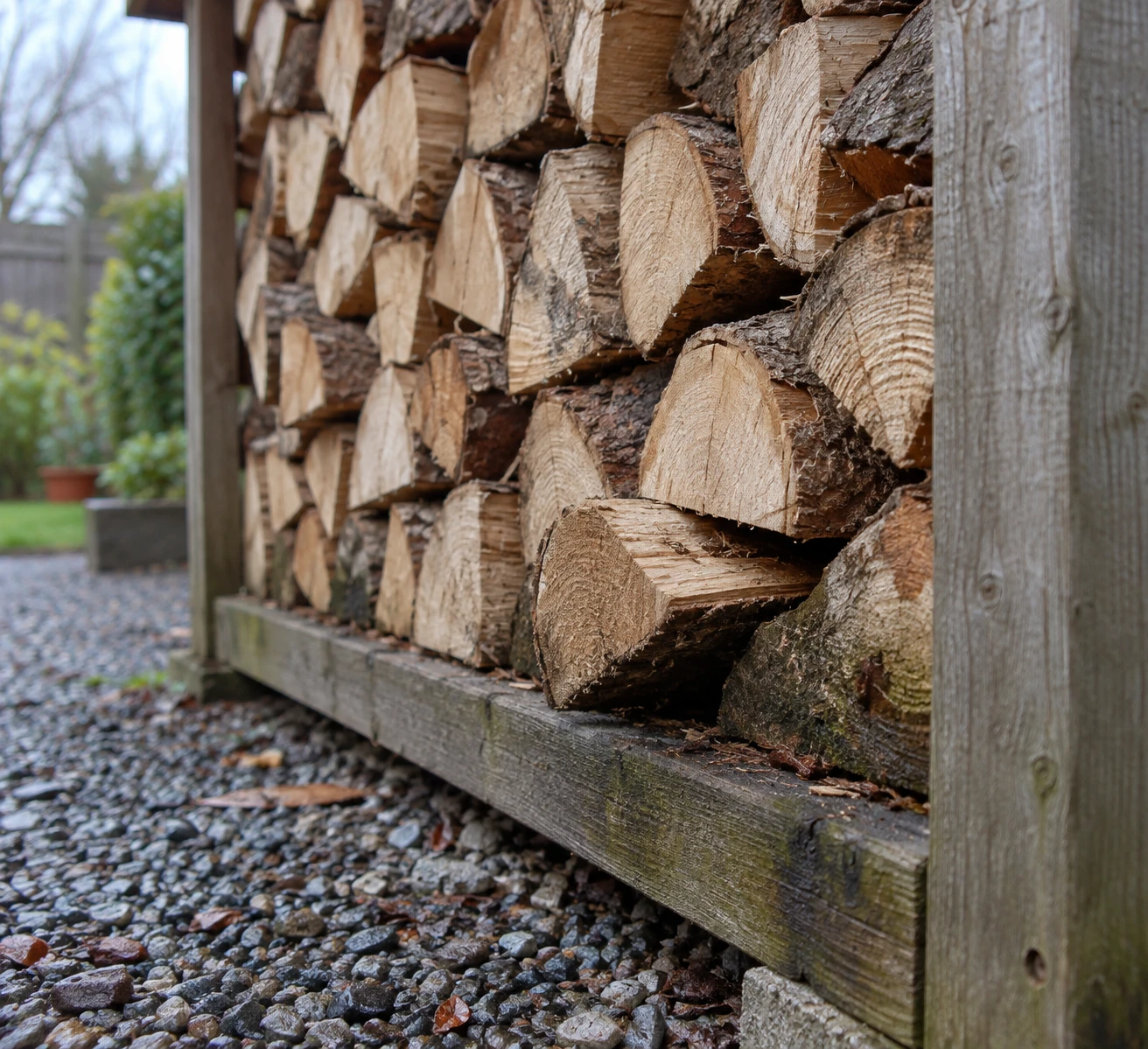
Empty racks never fail. Loaded ones do, usually after a thaw or a storm. Walk around yours with these checks:
- Sight down the end posts. Any lean means a footing has settled.
- Put a level on the base rails and reshim low corners.
- Tighten carriage bolts. Wood shrinks as it dries, and nuts loosen.
- Look for bulging at the ends, which shows end pressure is beating the braces.
- Check under the rack for nests, standing water or rot.
Fix lean while it’s small. Unload the high end first, then reset the footing.
Frequently Asked Questions
How do you stack firewood on pallets?
Inspect each pallet first, then set it on level blocks or gravel and stack one row on the slats. Reject pallets with cracked stringers, soft boards or popped nails. Two pallets end to end hold an 8-foot row nicely.
What is the Amish method of stacking firewood, and is it the same as a Holzhausen?
Mostly, yes. Both are round stacks built a few feet across, with pieces angled slightly inward around a center column. The shape sheds rain and pulls air up through the middle like a chimney. A cross-stacked log cabin end on a straight row is a different method.
Should you cover a firewood stack?
Yes, but only the top. A top cover keeps rain and snow off while open sides let wind carry moisture away. Full wraps trap condensation and slow seasoning.
References
- How to Stack Firewood on a Rack for Safe, Dry Storage
- How to Stack Firewood: Keep Wood Dry and Ready to Burn
- Tips for Building an Outdoor Firewood Rack
[4]
[5] Making a DIY Covered Firewood Rack Holder – Building Strong
[6]
[7] Build Firewood Storage | US EPA
[8] How To Build A DIY Outdoor Firewood Rack