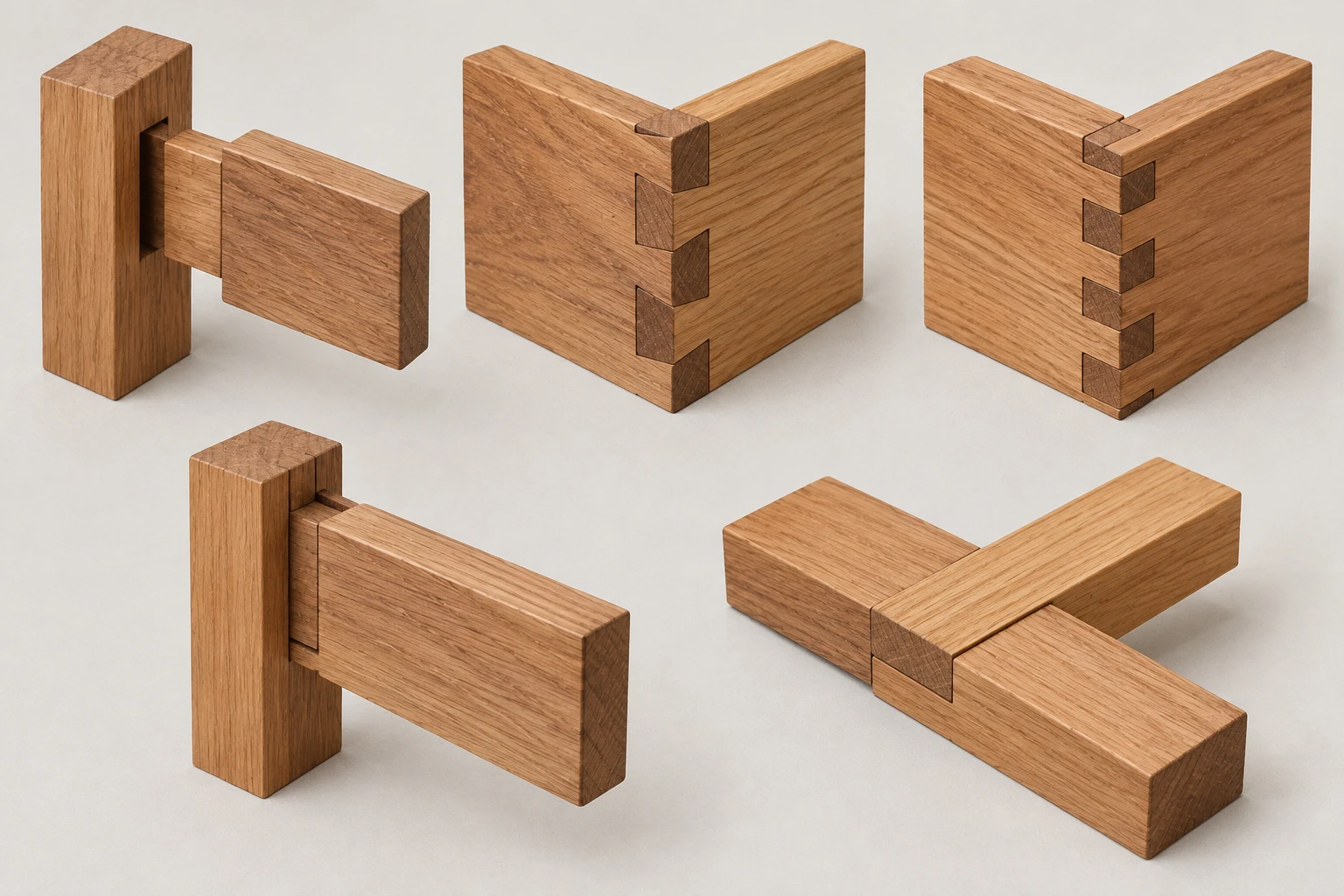

Which joints do wooden projects need most? Five cover nearly everything: mortise and tenon, dovetail, dado, rabbet and pocket hole. Mortise and tenon and dovetails suit frames, tables and drawers. Dados and rabbets suit shelves and cabinets. Pocket holes are the fastest option for beginners. Pair every one with good wood glue.
We’ll go through each joint, then look at how a cabin’s damp air and heavy loads change your pick.
1. Mortise and Tenon: Strongest for Frames, Tables and Workbenches
A mortise is a square hole. A tenon is the matching tongue cut on the end of another board. Glued together, they resist racking (the sideways wobble that kills tables and doors) better than any other joint here. Use it for table legs and aprons, workbench frames and door frames.
In shop tests on spruce, glued mortise and tenon joints failed at an average of about 172 pounds, while dowel joints averaged about 135 pounds. That’s roughly 25% stronger. The surprise is that a slightly loose or tight fit made no measurable difference, as long as glue covered every surface.
Difficulty is medium. You can chop mortises with a chisel and mallet, or use a drill press and a router. A hand-tool kit works fine; it just takes more time.
2. Dovetail: Best for Drawers and Boxes That Get Pulled Apart
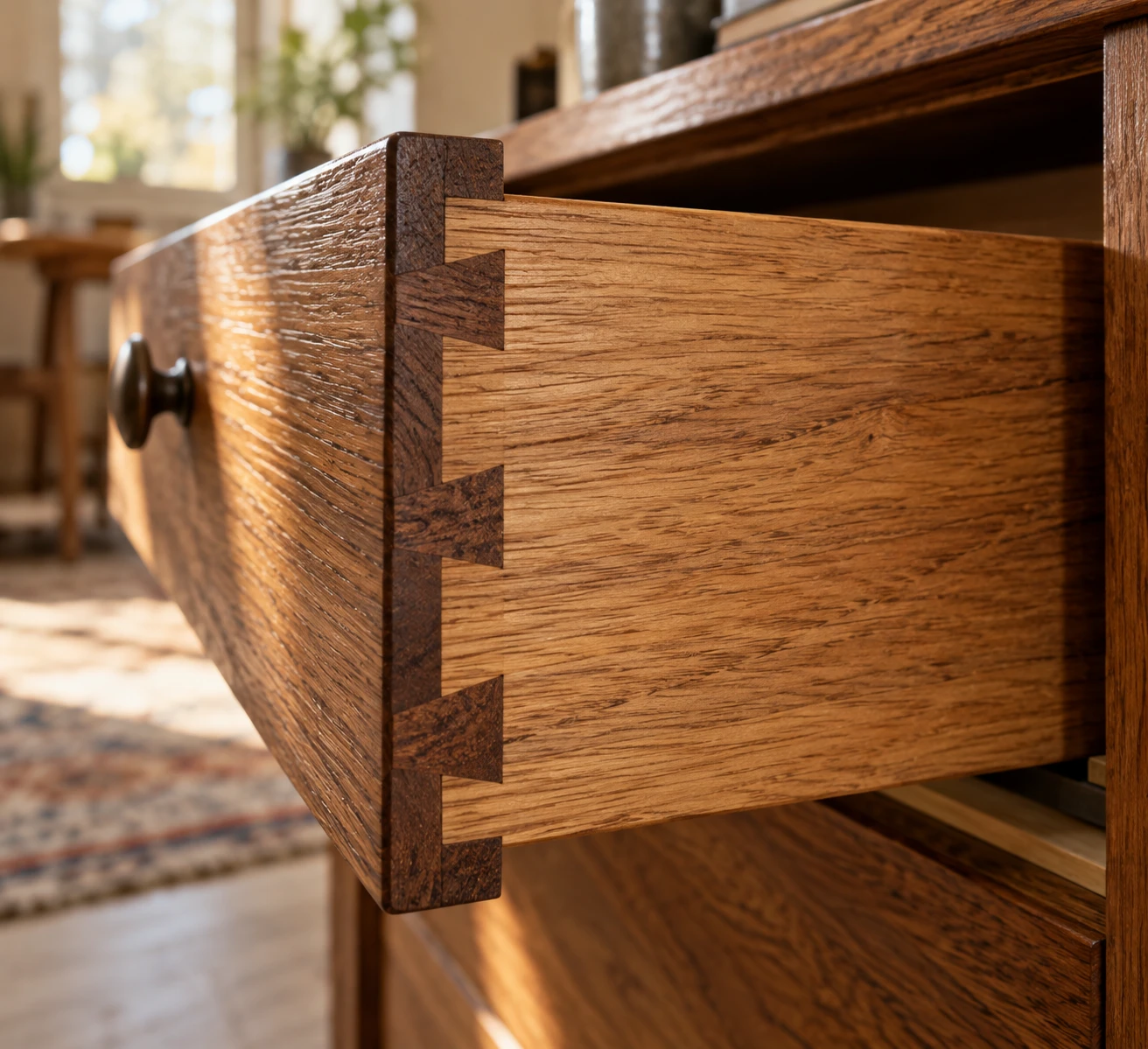
Dovetails lock boards together with interlocking wedge shapes, so the joint resists being pulled apart even before the glue sets. That makes it the classic choice for drawer fronts and storage boxes. It’s also very strong, but it’s rarely the joint a table or shelf needs.
You don’t need special tools. A dovetail saw, a marking gauge, a chisel and a sharp pencil will do. A router jig is faster. Expect to practice on scrap first, since gaps show.
If you’re cutting dovetails in softwood like pine or cedar, make them slightly larger. The wood compresses over time and tightens the joint. Difficulty is high. For a cabin drawer that only holds tools or cutlery, ask yourself if a rabbet will do the job.
3. Dado: Best for Fixed Shelves That Carry Weight
A dado is a channel cut across the grain. The shelf drops into it, and the wood itself carries the load, not the glue or the screws. That’s why dados are the standard for bookcases, pantry shelves and cabinet dividers.
Cut the groove about one third of the board’s thickness deep. For a ¾-inch shelf, that’s roughly ¼ inch. A router with a straight bit and a guide fence cuts clean dados. A circular saw with repeated passes works too, and so do a handsaw and chisel.
Dados beat a showy dovetail here. A dado shelf keeps its load path simple and gives you a wide glue surface. The weak spot is the wide-board shrink: let the shelf run the full width of the cabinet side, and keep the shelf’s grain running left to right.
4. Rabbet: Best for Cabinet Corners and Back Panels
A rabbet is a step cut along the edge of a board. The second board sits in the step, which gives you extra glue area and a built-in guide for assembly. It’s a quick upgrade over a plain butt joint.
Use rabbets for cabinet corners, drawer boxes and the back panel of a cabinet. The back sits in a rabbet and also squares up the whole case. Cut it with a router, a table saw or a rabbet plane.
Strength is good, not great. Add glue and a few brad nails or screws to hold things while the glue sets. Difficulty is low, so this is a fine second joint to learn after the dado.
5. Pocket Hole: Fastest Joint for Beginners
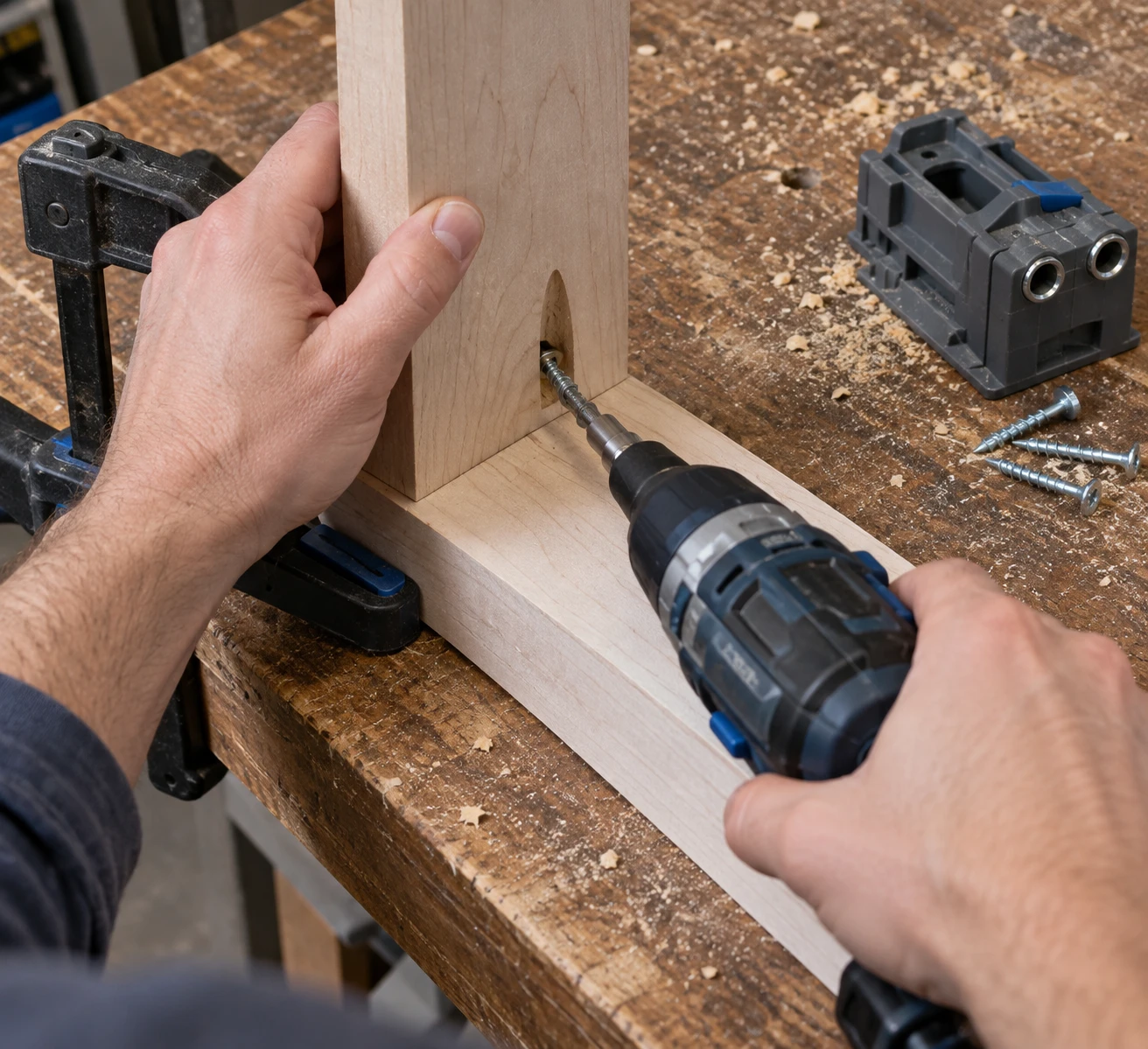
A pocket hole joint is a butt joint reinforced with an angled screw. You drill the hole with a jig, then drive the screw through it into the neighboring board. It takes minutes, needs only a drill and a jig, and works well for face frames, benches and plain furniture.
It’s less rigid than a mortise and tenon. In the same shop tests, pocket hole joints in spruce failed around 110 to 140 pounds, and they flexed noticeably before that. For furniture, that’s fine with glue and two screws per joint, driven into face grain. Space holes about 2 inches from the end and about 6 inches apart along a board.
Dowels are a close cousin. Two or more glued dowels line up a butt joint and hide the hardware.
How to Choose a Joint for a Cabin Project
Cabins swing between damp and dry air, and wood swells and shrinks across its width as it does. Pick the joint with that in mind.
Match the Joint to the Load
| Joint | Strength | Difficulty | Best use |
|---|---|---|---|
| Mortise and tenon | Highest | Medium | Tables, workbenches, frames |
| Dovetail | Very high | High | Drawers, boxes |
| Dado | High (shelf loads) | Low to medium | Fixed shelves |
| Rabbet | Good | Low | Cabinet corners, backs |
| Pocket hole | Moderate | Low | Fast frames, beginners |
These rankings aren’t absolute. Wood species, glue, fit and the direction of the load all change the result.
Respect Grain and Wood Movement
Glue long grain to long grain. End grain soaks up glue and makes a weak bond, so never rely on it alone. Let wide boards move: don’t lock a wide panel tight in all directions.
Dry-Fit and Clamp Every Time
Test every joint without glue first. Then clamp it. Typical wood glue needs about 30 minutes to an hour under clamps, and it reaches full strength in about 24 hours. If you have to crank the clamps, the fit needs work.
Never trust a butt joint with nails or screws alone. That’s the mistake that loosens in the first humid summer.
Frequently Asked Questions
What are the strongest joints in woodworking?
Mortise and tenon is widely seen as the strongest traditional joint, especially against racking. Dovetails are also very strong and resist pulling apart. Strength still depends on the wood, the glue, the fit and which way the load pushes.
Are pocket hole joints strong enough for furniture?
Yes, for most furniture. Use glue and at least two screws per joint, driven into face grain. They flex more than a mortise and tenon, so choose a tenon for tables and benches that take hard use.
Do I need special tools to cut dovetails?
No. A dovetail saw, a marking gauge and a sharp chisel are enough. A router jig speeds things up, but it isn’t required. Practice on scrap wood first.
References
[1]
[2]
[3] 12 Essential Wood Joints for Your Next Project
[4] 10 Essential Woodworking Joints Every Beginner Must Know
[5] 10 Essential Woodworking Joints Every Beginner Must Know
[6] Cabinetmaking School: The 5 Most Common Woodworking .
[8] Wood joint strength testing