To get the darkest, most even finish, sand to 120-180 grit and add pre-stain conditioner on blotch-prone wood. Then build color with several thin coats of a dark oil-based stain (espresso, ebony or black), wiping off the excess each time. On dense woods, switch to a dye and seal it with a topcoat.
That’s the short version. Let’s walk through which stain to buy, how to apply it, and how to rescue a pale or patchy job.
Pick the Wood and Stain Type Before the Color
Color is the last thing to choose. The wood species and the stain type decide whether you get deep black or a gray smear.
How Your Wood Takes Stain
Red oak and white oak have open pores and soak up oil stain well. They’re the easiest woods to take dark. Pine, birch and maple are another story. Pine and birch blotch because soft and hard patches absorb unevenly. Maple is so dense that stain just sits there and looks pale.
For cabins, this matters. Pine paneling is blotch-prone, so it needs conditioner. Oak beams take dark stain with little fuss.
Dye is the aniline dye option: a coloring that dissolves in liquid and soaks in, instead of lying on top like pigment. It never blotches the way pigment stain does. You make it darker by using more dye or more coats.
The bottom line? Dense wood plus pigment stain equals pale. Use dye.
How to Stain Dark in Six Steps
Thin coats beat one heavy coat every time. A thick coat dries sticky and blotchy, and it never cures properly.
Sand to 120-180 grit. Going finer than that closes the pores, and dark color can’t get in. Wipe off dust with a tack cloth.
Condition blotch-prone wood. On pine, birch and maple, brush on pre-stain conditioner and wait the time on the can (usually 5-15 minutes). Then stain within two hours.
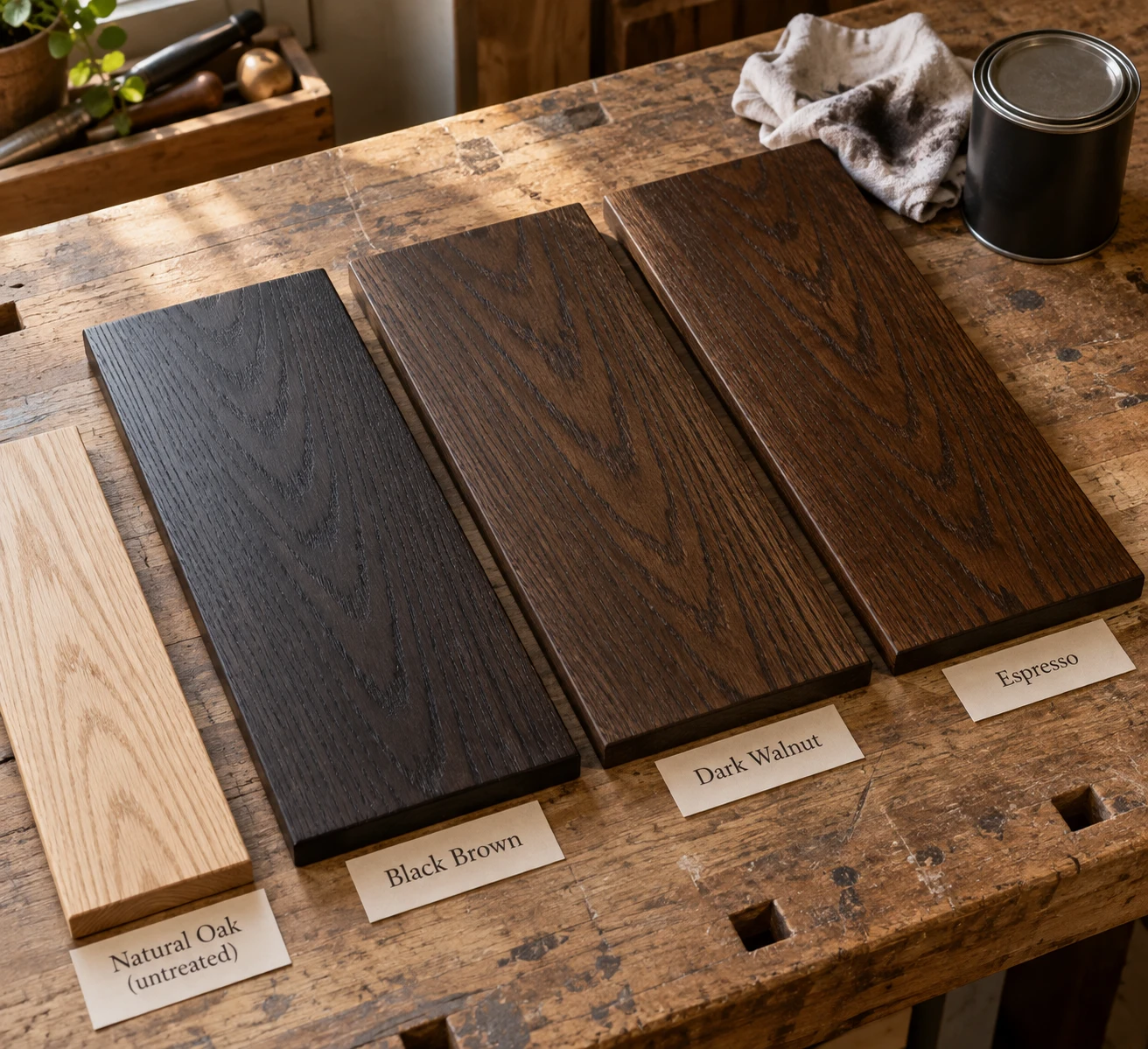
Test on scrap. Use an offcut of the same board. Colors look different on every species.
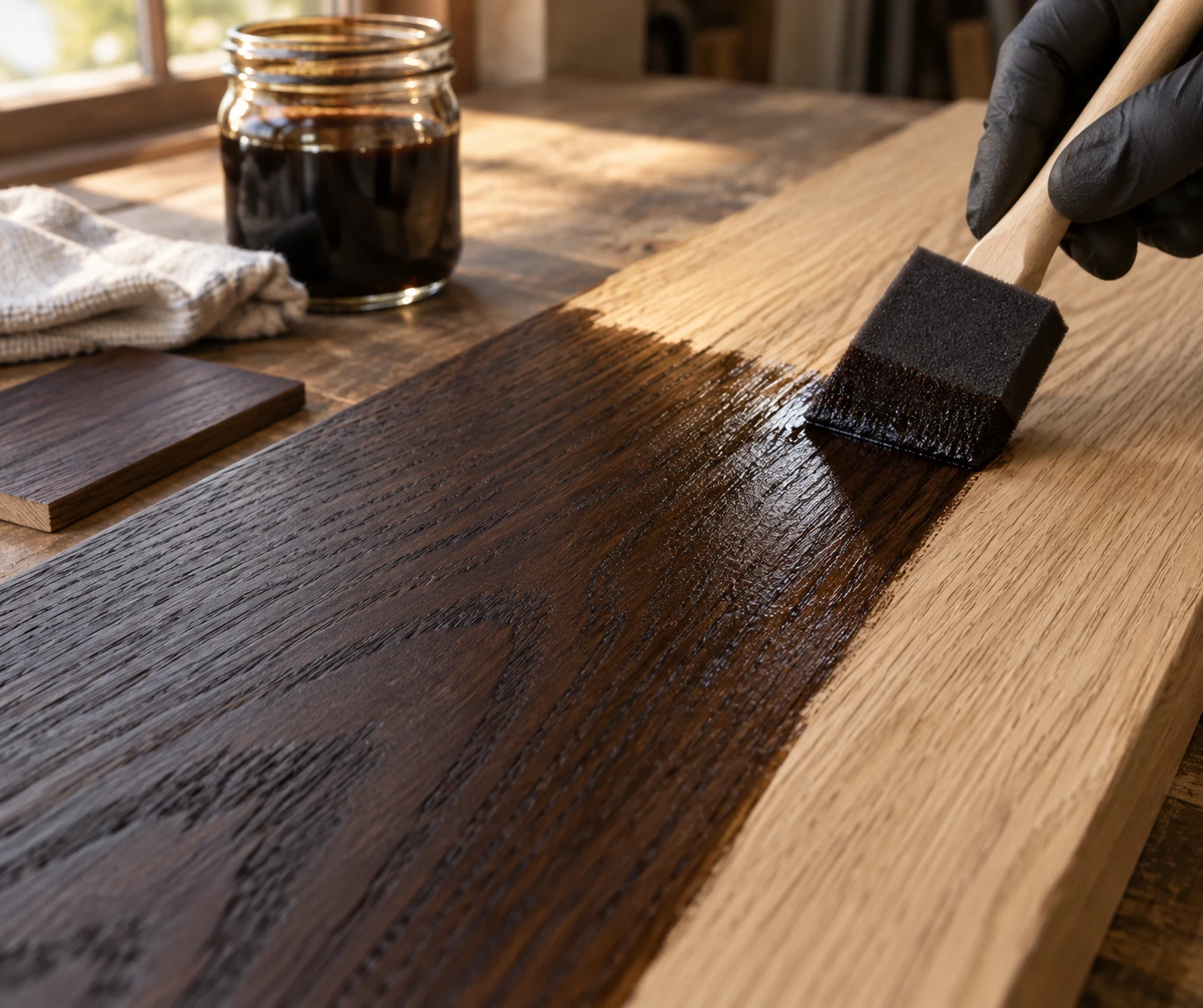
Apply a thin coat. Brush or rag it on with the grain. Let it sit a few minutes.
Wipe off all the excess. Leftover stain dries as a tacky film on the surface. Wipe until the rag comes away nearly clean.
Repeat after it dries. Let each coat dry fully (overnight for oil) and add coats until you like the depth. Two or three usually do it.
Want it darker without a second coat? You can leave a slight dampness of stain on the wood, but that takes practice to keep even across big surfaces. Gel stain also holds more pigment, though it sits closer to the surface. Don’t count on it to soak in deep.
Fixing Stain That’s Blotchy, Pale or Too Dark
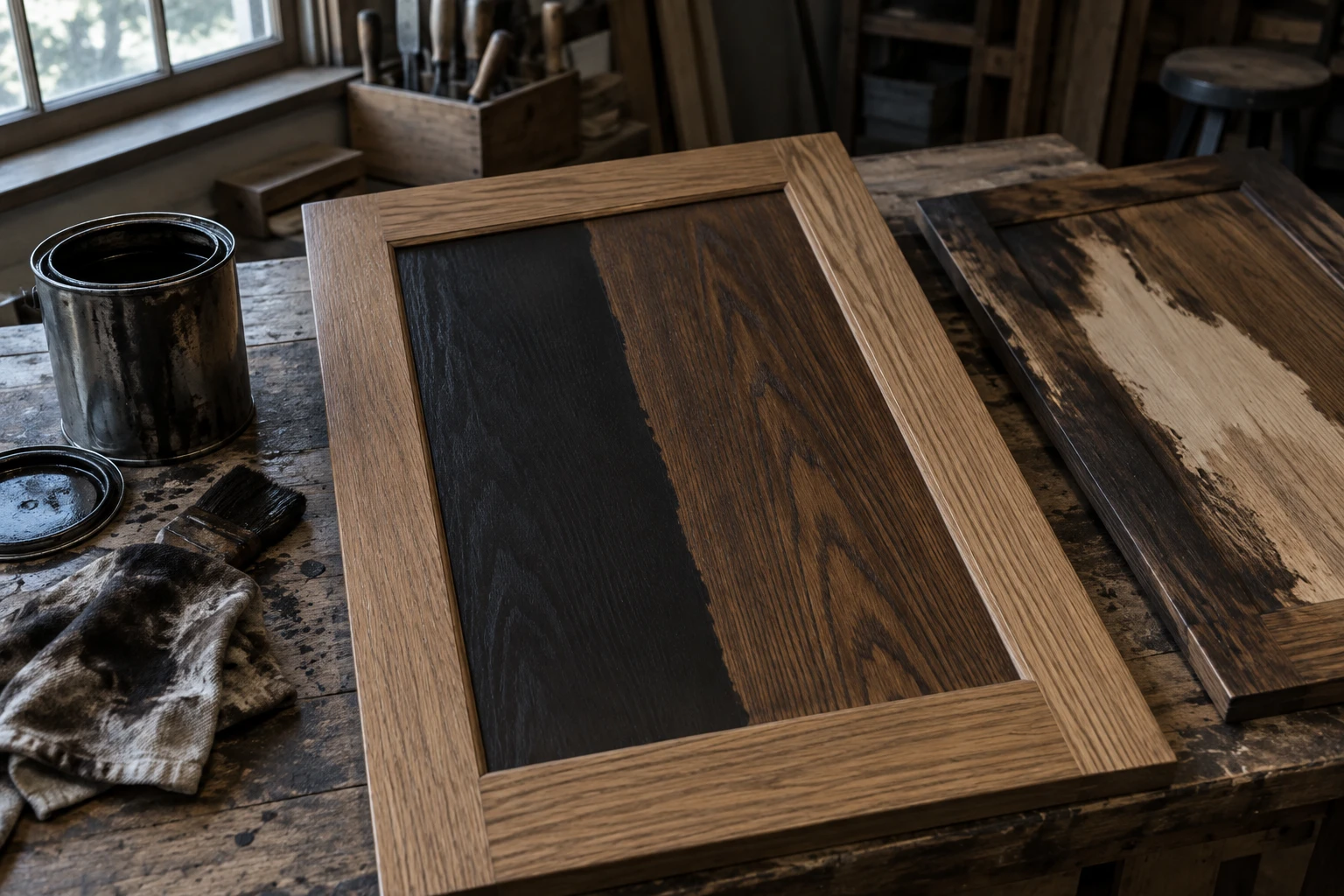
Will a second coat even out the color? Not by itself. It deepens everything, so blotches stay. Fix the cause first.
Blotchy or Light Spots
Sand the patchy area lightly with fine paper and clean off the dust. Brush on conditioner, then restain and wipe off the excess. For light spots only, sand them and add a coat just there, feathering the edges. If the wood is stubborn, a dye is the better rescue, since it doesn’t blotch.
Too Dark
If the stain is still wet, wipe it hard with a rag dampened with mineral spirits (for oil stain). If it has dried, sand back through the color with 120 grit and start over. Once a topcoat is on, you’re sanding that off too.
Sealing and Cabin Surfaces
Wait until the stain is fully dry, typically 24 hours or more for oil in cool or humid air, before you seal. Wet stain under polyurethane stays cloudy and tacky. An oil finish also works and keeps the grain looking natural.
One builder’s note: dark color soaks up sun and heat. On exterior timber, a black stain runs hotter and weathers faster. Use an exterior-rated stain with UV protection and expect to recoat sooner than you would with a lighter shade. Our wood treatment guides at Cabin Lodger cover rot protection that goes under that color.
Frequently Asked Questions
What is the darkest wood stain I can get?
Black and ebony oil stains are the darkest widely sold, and a black dye goes darker still. Among black stains tested side by side, India Ink looked the blackest, with Minwax True Black close behind and showing a bit more grain.
Do I need pre-stain conditioner for dark stain?
Yes, on pine, birch and maple. It stops the uneven soaking that causes blotches. You can skip it on oak, or when you use a dye.
Can I stain wood darker without sanding?
Not reliably. Old finish blocks the stain, so strip or sand it first. On bare wood, extra thin coats can deepen the color. Don’t sand finer than 180 grit, or the pores close.