A cabin joint that fails isn’t usually cut wrong. It’s cut right for the wrong conditions. Hardwood joints that look tight and clean in a heated garage in January can split wide open by August once humidity swings hit, and that’s the exact failure I see most often in field builds where nobody accounted for wood movement before the glue went on.
If you’re building a cabin bunk frame, a loft ladder, or structural framing members out of oak, hickory, or maple, you need joints that survive weather exposure, rough-cut lumber, and zero clamping fixtures beyond what you brought in the truck. This isn’t furniture-shop joinery. It’s joinery that has to work outdoors, on uneven ground, with a circular saw and a chisel instead of a table saw and a mortiser.
Which Joint Actually Holds Weight in a Cabin Frame?
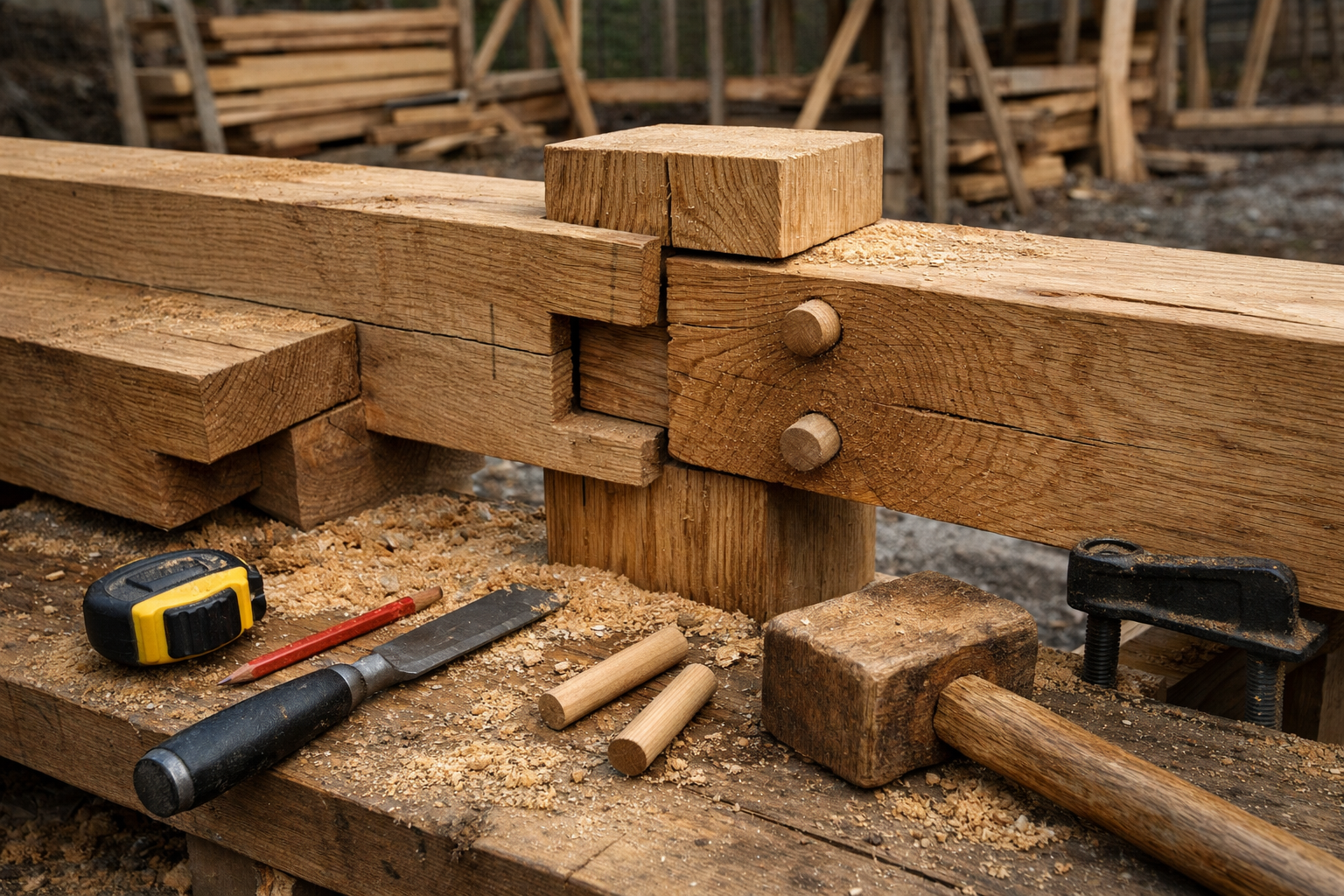
For load-bearing cabin work, the mortise-and-tenon joint is the strongest option you can cut without a shop, and it’s the one I reach for on bed frames, porch railings, and interior partition framing. It resists racking (side-to-side twist) far better than a butt joint or a simple lap joint because the tenon locks into the mortise on multiple faces instead of relying on glue surface alone.
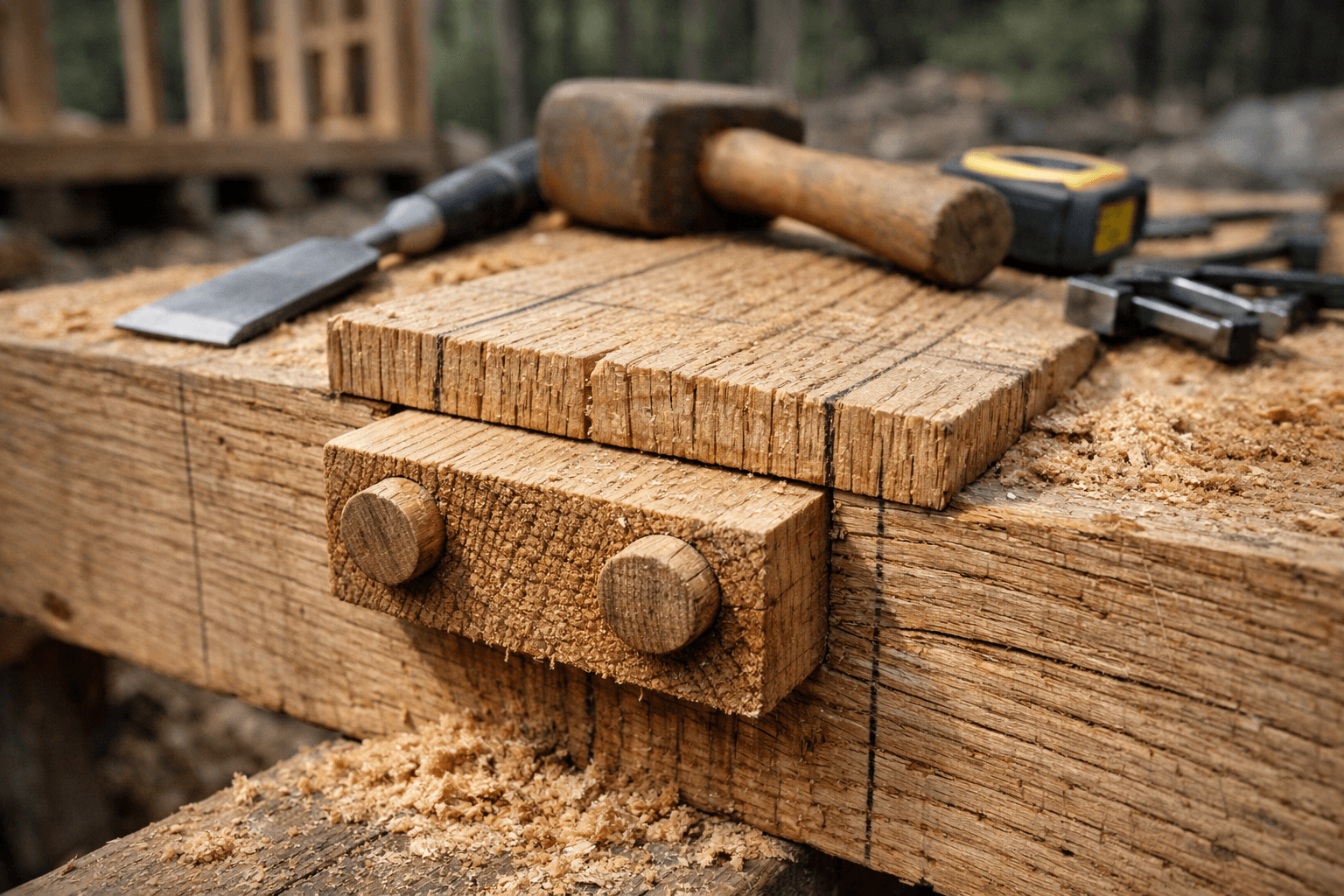
A through-tenon pinned with a hardwood dowel doesn’t depend on adhesive to stay together. That matters a lot once you’re dealing with seasonal humidity: glue bonds can weaken as wood shrinks and swells, but a pinned mechanical joint keeps working even if the glue line eventually fails. I’d cut the tenon about one-third the thickness of the stock (so a 1.5-inch-thick oak board gets a roughly 0.5-inch tenon) and leave a hair of extra length for trimming flush once it’s driven home.
Where Lap Joints and Dovetails Fit In
Lap joints are your fallback when you don’t have room or time to chop a full mortise. Half-lap joints on cross members are fast to cut with a circular saw and chisel, and they hold up fine on non-load-bearing shelving or bracing. Dovetails look great and resist pulling apart, but hand-cutting tight dovetails in rough hardwood, outdoors, without a vise, eats a full afternoon for a drawer-sized box. Save dovetails for cabin furniture you build back at a workbench, not framing you’re racing to close in before rain.
Picking a Hardwood Species That Won’t Fight You
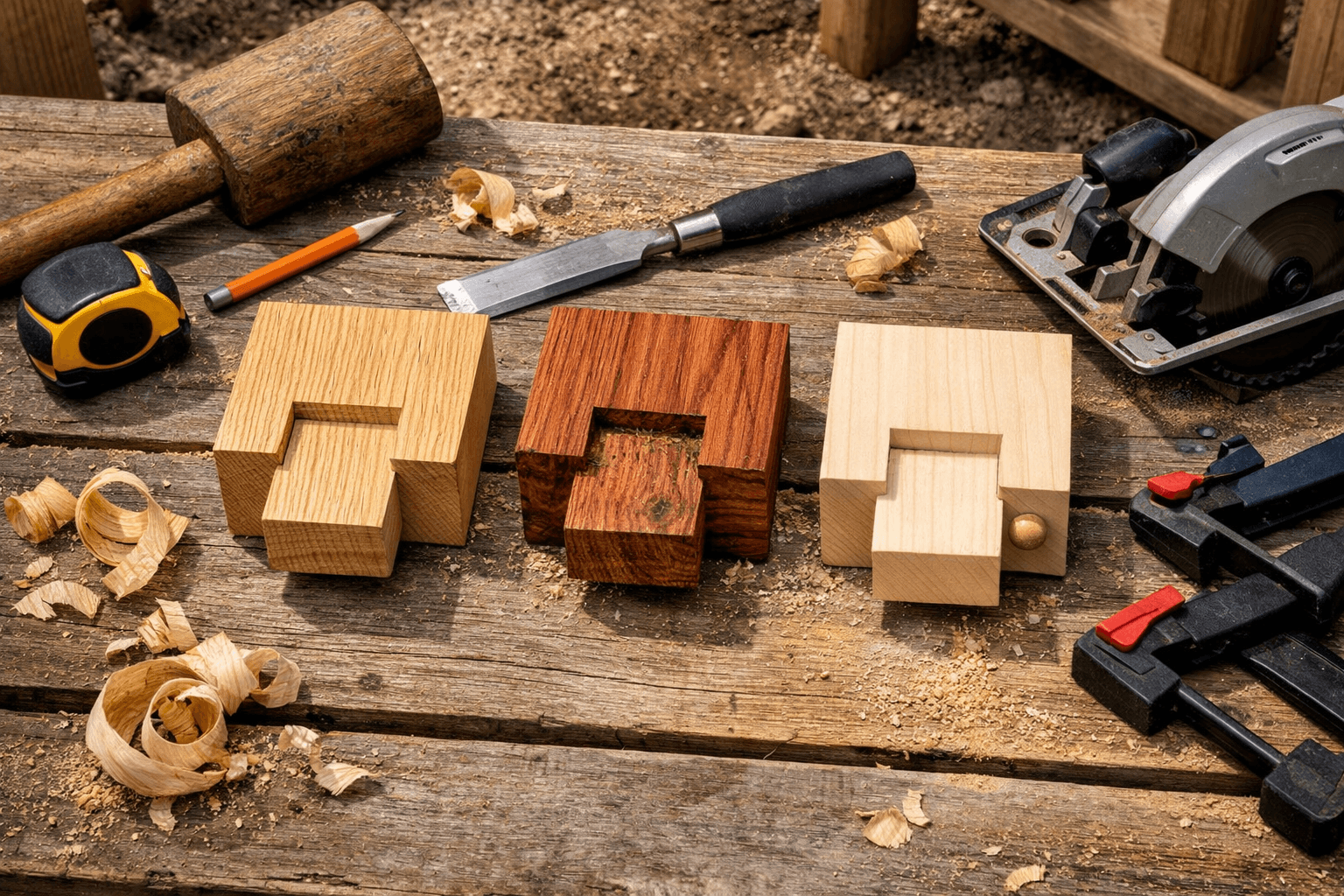
Not every hardwood behaves the same under a chisel or in changing weather, and picking wrong adds hours to every joint you cut. White oak is the workhorse choice for cabin joinery because it’s strong, resists rot better than red oak, and takes a mortise cleanly without tearing out.
Hickory is even harder and stronger, which sounds great until you’re the one swinging a mallet at 4 p.m. after a full day of framing; it dulls chisels fast and needs sharper tools than most DIYers keep on hand. Maple splits the difference: strong, workable, and widely available at lumberyards, though it’s more prone to movement than oak if you don’t seal the end grain.
Softer species like poplar or aspen are easier to joint but shouldn’t carry structural load in a cabin. Save those for interior trim, not the joints holding up your loft.
Species
Workability
Best Use in a Cabin
Movement Risk
White oak
Moderate
Framing, structural joints
Low
Hickory
Difficult
Heavy load-bearing joints
Low
Hard maple
Moderate
Furniture, shelving joints
Moderate
Poplar
Easy
Trim, non-structural joints
Moderate
Glue, Clamping, and the Wood Movement Problem
Glue alone is never enough for a load-bearing hardwood joint in a cabin. That’s the single most common mistake I see: someone glues a lap joint or a butt joint, skips the mechanical fastener, and wonders six months later why it’s racking. Always pair glue with a mechanical connection — a dowel, a pin, a lag screw, or the joint geometry itself — on anything carrying weight.
Picking the Right Adhesive
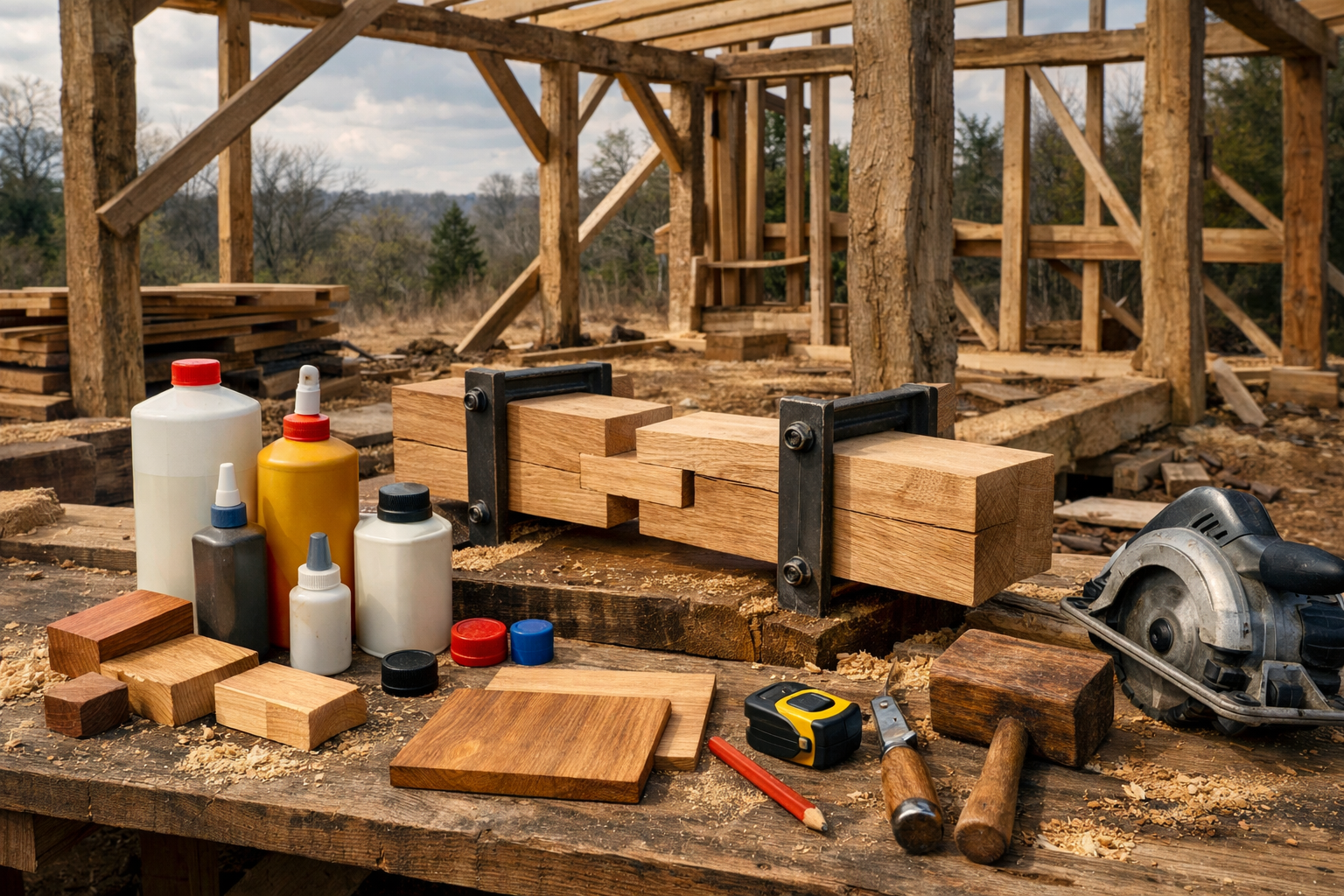
Standard PVA wood glue (yellow glue) works fine indoors, but for cabin joints exposed to swings in humidity or occasional moisture, a Type III waterproof PVA (Titebond III or similar) is worth the extra few dollars a bottle. Polyurethane glue bonds well on rough or slightly damp lumber, which matters when you’re working with green or partially seasoned stock straight off a trailer.
Clamping Dense Hardwood Correctly
Hardwood needs longer clamp time than softwood, full stop. Where pine might set in 30 minutes, oak or hickory joints often need 45 to 60 minutes of clamp pressure before you can move the piece safely, and a full 24 hours before loading it. Skipping that step because you’re in a rush to frame the next wall is how joints fail down the line.
Dry-fit every joint before glue touches it, checking for gaps you can see daylight through.
Apply glue to both mating surfaces, not just one.
Clamp with even pressure, using cauls (scrap wood pads) to protect the hardwood face.
Hold clamp pressure for at least 45 minutes on dense hardwood.
Let the joint cure a full 24 hours before it bears any load.
Drive a mechanical pin or dowel through the joint once cured, for insurance against glue failure.
Grain Direction and Seasonal Movement Nobody Warns You About
Cutting with the grain instead of against it is the difference between a joint that lasts and one that splits the first winter. Hardwood moves across the grain (width-wise) far more than along it (length-wise), so a tenon cut against the natural grain direction of a board is fighting the wood’s own expansion and contraction every season.
Chisels and joinery tools matter here too. A dull chisel tears hardwood fibers instead of slicing them, which weakens the exact surface your glue needs to bond to. I’d keep at least one dedicated mortise chisel and a sharp bevel-edge chisel on hand, and touch them up on a stone before every session, not once a month.
Wood movement is the reason so many cabin joints crack that were cut perfectly in a dry shop. A joint that fit tight in April can bind or split by September once ambient humidity shifts 20 to 30 percentage points, which is common in most of the US outside the arid Southwest. Leave a small movement allowance — roughly 1/16 inch of play on wide panel joints — rather than fitting hardwood bone-dry tight.
Biscuit and dowel joints are worth mentioning here too: they’re fast and fine for face-frame alignment or non-structural panels, but they don’t have the mechanical grip of a tenon and shouldn’t be trusted alone on anything load-bearing. Finger joints, meanwhile, are great for length-wise glue-ups on trim boards, but they’re a poor choice for structural corners since they offer a lot of glue surface and very little mechanical resistance to racking. I’ve covered framing lessons like this in more detail over on cabinlodger.com, mostly because the mistakes I made on my own build are the ones I’d rather other people skip entirely.
Frequently Asked Questions
Do I need special tools to cut hardwood joints in the field?
Not special, but sharper. A mortise chisel, a sharp bevel-edge chisel, a hand saw or circular saw, and a mallet cover most cabin joinery; the difference is keeping edges honed since hardwood dulls tools fast.
How tight should a hardwood mortise-and-tenon joint fit?
Snug enough to need a mallet tap, not a hammer fight. Leave about 1/16 inch of clearance for wood movement rather than fitting it bone-dry tight, or seasonal swelling can crack the mortise walls.
Can I use softwood glue times and techniques on hardwood joints?
No. Hardwood needs longer clamp time, roughly 45 to 60 minutes versus 30 for softwood, and a full 24-hour cure before load, because dense grain absorbs and bonds adhesive more slowly.