A masonry heater will heat your cabin for 12 to 24 hours off a single one- to two-hour burn, storing that heat in thousands of pounds of brick or soapstone instead of blasting it out fast like a wood stove. That’s the appeal. But before you fall in love with the idea, you need to know what it actually costs to put several tons of masonry on top of a cabin floor, because that’s where most small off-grid builds hit a wall.
If you’re weighing a masonry heater against a plain steel wood stove for your off-grid cabin, the real question isn’t “which heats better.” It’s whether your foundation, budget, and timeline can absorb what a masonry heater demands before you ever light a fire in it.
What Actually Makes a Masonry Heater Different From a Wood Stove
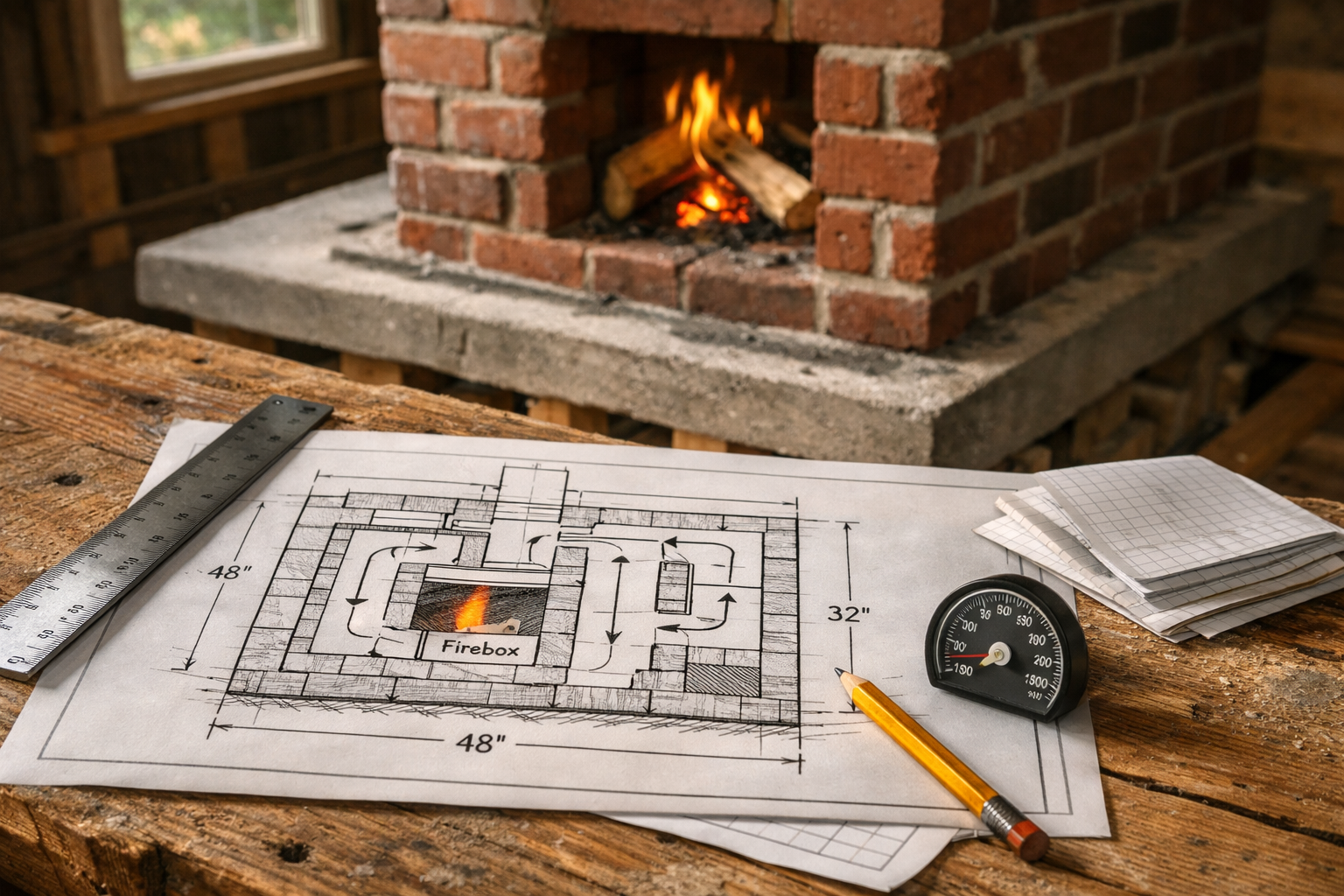
A masonry heater burns wood hot and fast for a short period, then radiates that stored heat out slowly through masonry mass for most of the day. A wood stove does the opposite: it burns low and slow, often for hours, radiating heat directly off metal in real time.
This is the single biggest misconception people bring into a masonry heater project. You don’t damper it down and let it smolder overnight like you might with a cast-iron stove. In fact, a smoldering fire in a masonry heater is a problem, not a feature. These units need short, intense, hot burns — often 1,000°F-plus in the firebox — that fully combust the wood and leave the flue gases clean before they wind through the heater’s internal channels.
Why Slow Burns Ruin Masonry Heaters
Damping down a masonry heater the way you would a wood stove causes incomplete combustion. That means more creosote buildup inside those long internal flue channels, which are much harder to clean than a straight stovepipe.
The Batch-Burn Cycle in Practice
You load a full firebox, burn it hot with the air fully open for 60 to 90 minutes, then let it burn out completely and coast on stored heat. Most cabin owners run one or two batches a day depending on outside temperature and how well the cabin holds heat overall.
Foundation and Structural Load: The Part Most Articles Skip
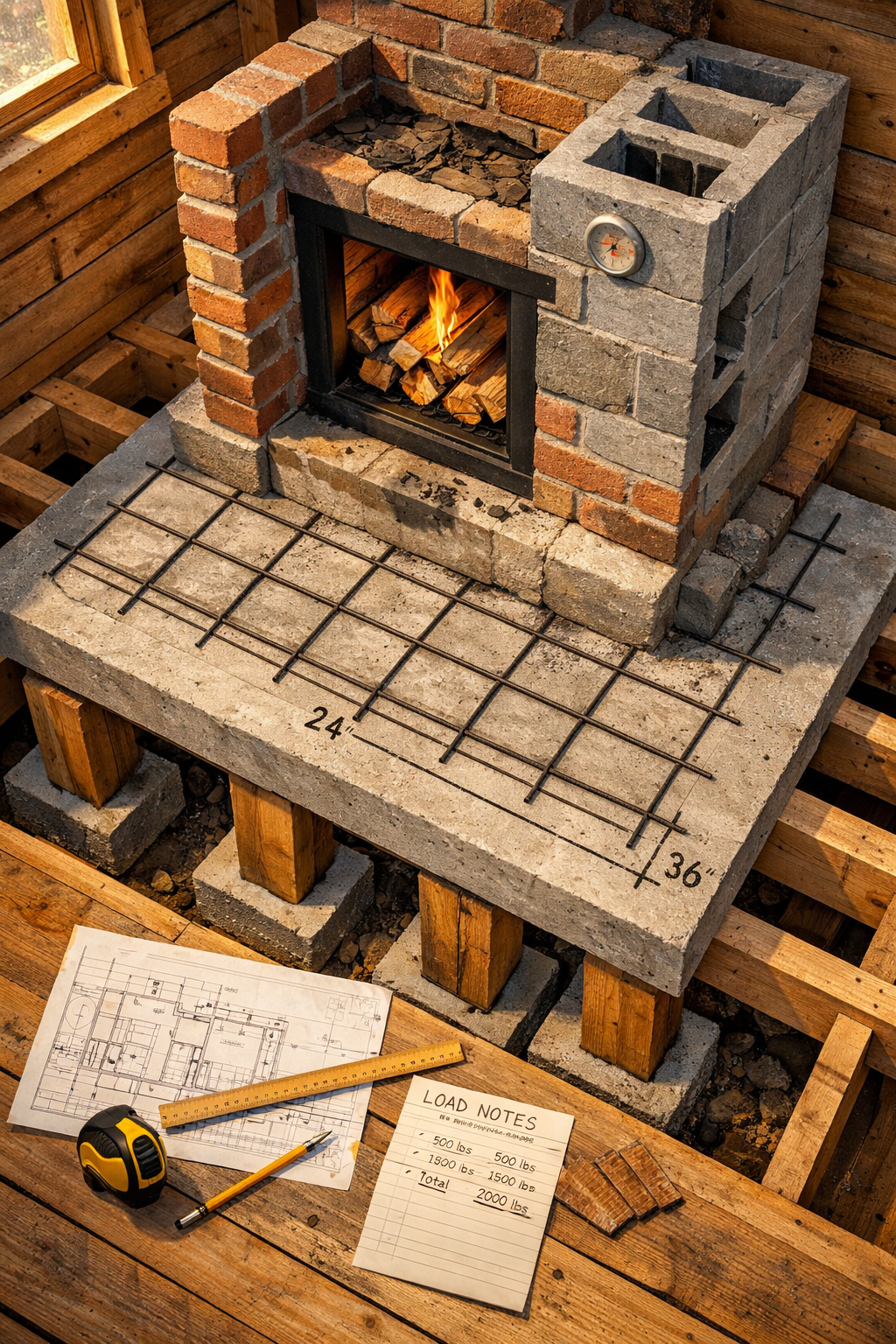
A masonry heater weighs between 3,000 and 8,000 pounds depending on size and design, and that weight sits in one concentrated footprint. That’s the tradeoff nobody wants to lead with, but it’s the one that decides whether this project is even possible on your site.
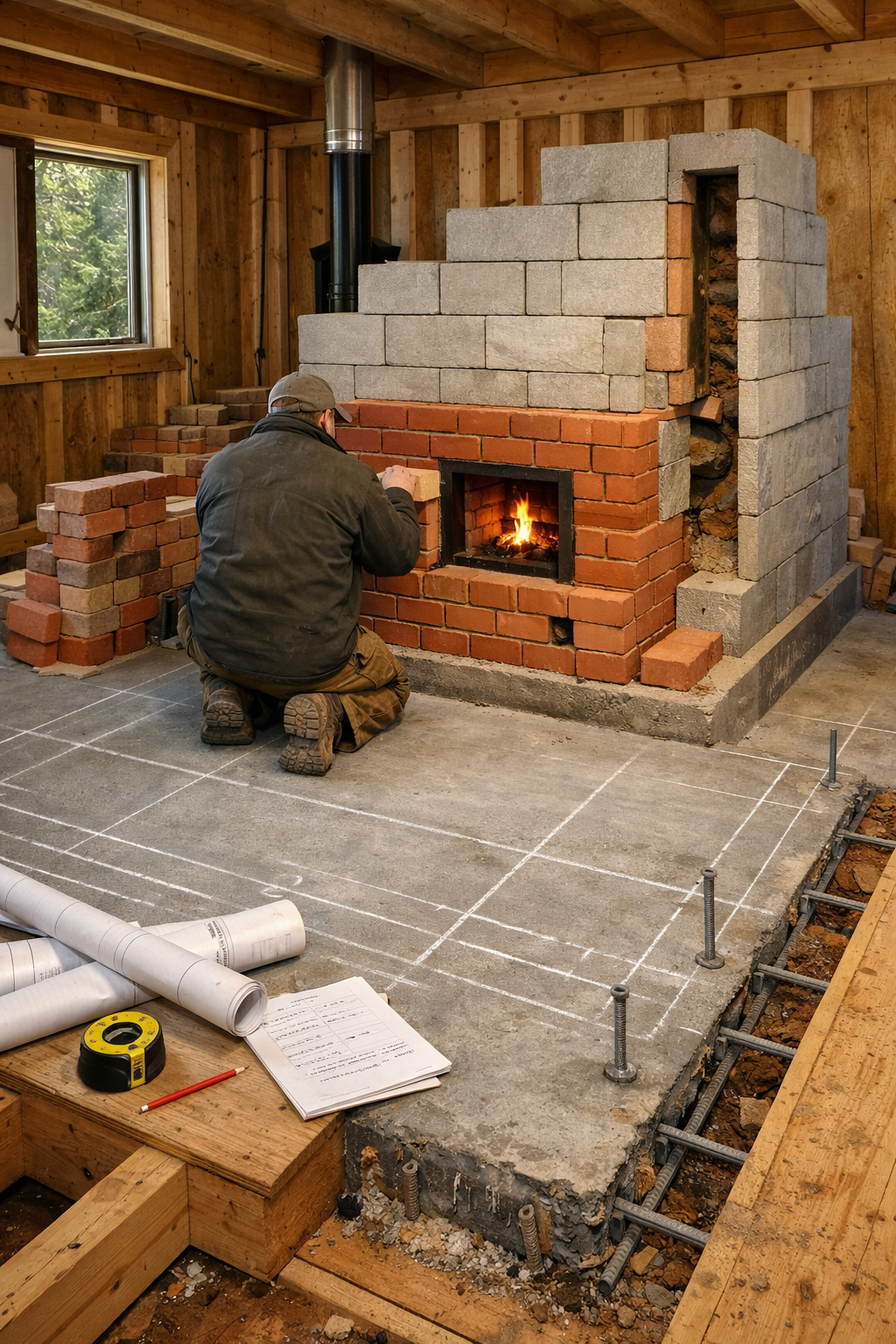
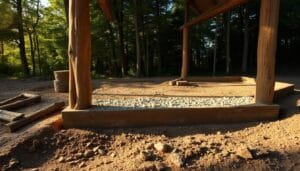
Most small off-grid cabins get built on piers, skids, or a simple frost-protected slab sized for a light timber structure. None of that is remotely adequate for a masonry heater. You need a dedicated reinforced concrete footing or slab, typically 12 to 18 inches thick with rebar, engineered to carry the point load without settling or cracking over time. If your cabin sits on sloped or unstable ground, you may need helical piers or a deeper footing designed by a structural engineer, which adds real cost before the heater itself is even ordered.
Retrofitting Onto an Existing Cabin
Adding a masonry heater to a cabin you’ve already built is rarely simple. Unless your existing floor structure was designed for that load from day one, you’re looking at cutting into the floor, pouring a new isolated footing below it, and reworking the framing around the opening.
Building From Scratch on a Permanent Slab
If you’re pouring a permanent slab from day one, this whole equation gets much easier. You size the slab and footing for the heater during design, run the flue penetration into the roof plan early, and avoid the retrofit headaches entirely. That’s the honest reason full masonry heaters mostly show up in permanent, code-built homes rather than budget off-grid cabins.
Firebox Style: Rumford, Finnish Contraflow, or Soapstone
These three approaches solve the heat-storage problem differently, and picking one shapes your cost, your footprint, and how much heat you actually get out of each burn.
A Rumford fireplace is the shallow, wide, tall-throated design that radiates heat directly into the room rather than storing much of it. It’s beautiful and burns clean, but it’s closer to a decorative fireplace than an off-grid heat source, since most of the heat still goes up the flue.
A Finnish contraflow heater routes hot gases down through internal masonry channels before they exit, extracting far more heat into the mass itself. This is the design most people actually mean when they say “masonry heater,” and it’s the one that gives you that long, slow radiant heat over 12 to 24 hours.
Soapstone heaters use soapstone slabs instead of brick or firebrick for the outer mass. Soapstone holds and releases heat a bit differently than dense brick, warming up faster and radiating a touch more evenly, though it usually costs more per unit of mass and needs a mason experienced with slab construction rather than standard brick laying.
Design
Heat Storage
Typical Weight
DIY Friendliness
Rumford fireplace
Low
1,500-2,500 lbs
Moderate, common masonry skills
Finnish contraflow
High
4,000-8,000 lbs
Low, needs specialized flue design
Soapstone heater
High
3,000-6,000 lbs
Low, needs slab-fitting experience
Sizing, Fuel Use, and Realistic Cost for a Small Cabin
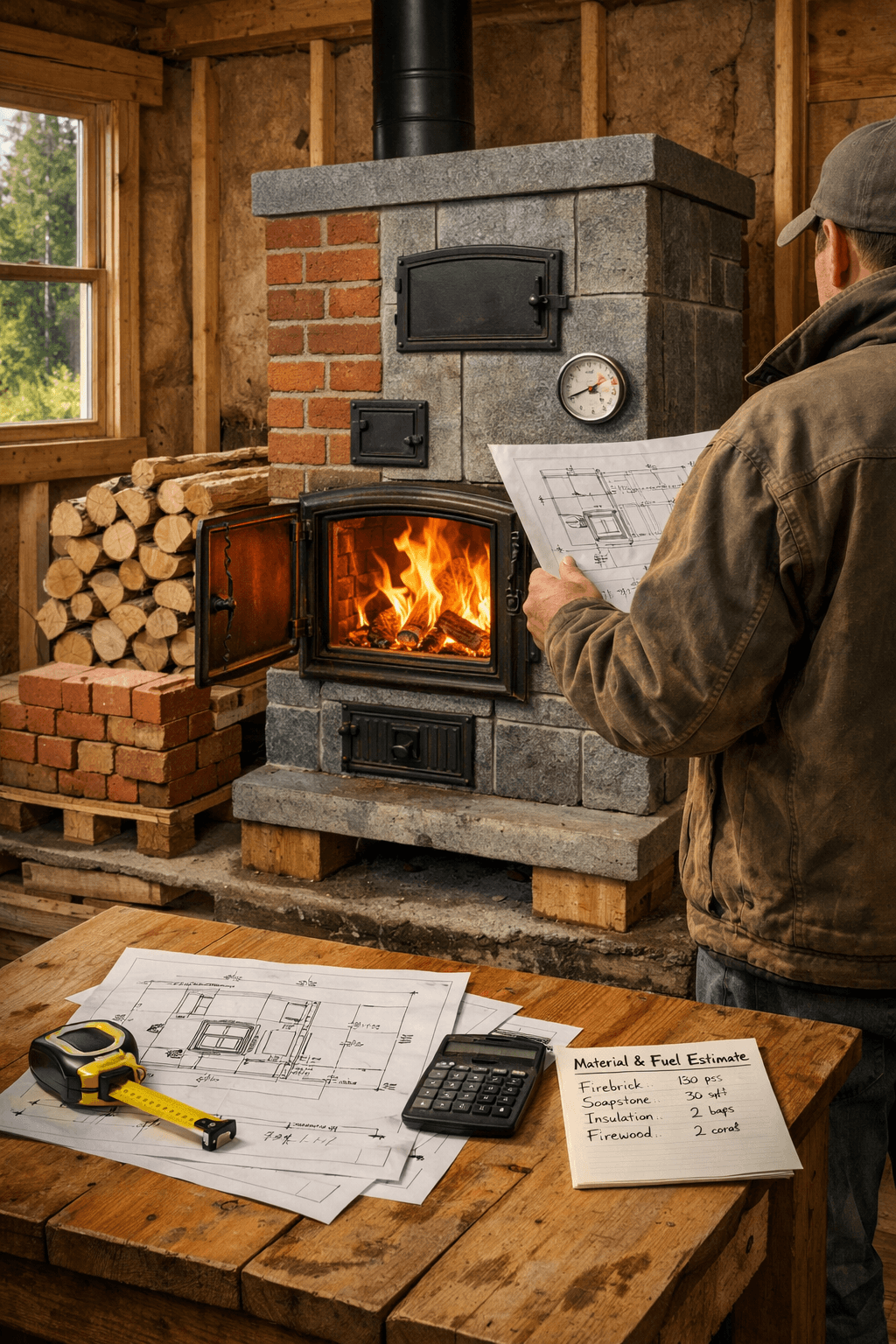
Sizing a masonry heater comes down to matching stored BTU output to your cabin’s heat loss, not just picking the biggest unit that fits. For a well-insulated 400- to 800-square-foot off-grid cabin, a mid-size contraflow unit storing roughly 40,000 to 60,000 BTUs of heat per burn cycle is usually plenty, even in a cold climate.
Fuel efficiency is genuinely one of the strongest arguments for a masonry heater. Because combustion is fast and complete, you typically burn less total wood over a season compared to a wood stove run at a low smolder, since so much of a damped-down stove’s heat and unburned fuel goes straight up the chimney as smoke. A cabin that might eat through 4 to 5 cords a winter with an inefficient stove could realistically run on closer to 2 to 3 cords with a properly sized masonry heater.
Cost is where reality bites. Materials and a professional mason build for a mid-size unit commonly run $8,000 to $20,000, and that’s before the reinforced foundation work discussed earlier. Compare that to a quality steel wood stove installed with a code-compliant chimney for somewhere around $2,500 to $5,000 total, and you can see why most small budget-built cabins go the stove route instead.
Permits matter too. Most counties treat a masonry heater as a structural and code item, not just an appliance install, which means:
A building permit application showing foundation design and engineering, where required.
An inspection of the footing before the masonry work begins.
A separate mechanical or chimney permit covering the flue and roof penetration.
Clearance verification from combustible framing, typically per the manufacturer’s or mason’s listed clearances.
A final inspection before you’re legally allowed to use it.
If you’re still comparing your off-grid heating options, it’s worth reading through the wood stove and heating breakdowns on cabinlodger.com, since for most small cabin builds a well-installed stove ends up being the more realistic starting point, with a masonry heater as a later upgrade once you’ve got a permanent slab down.
Frequently Asked Questions
Can I build a masonry heater myself, or do I need a mason?
Simple Rumford-style fireboxes are within reach for a confident DIYer with masonry experience, but Finnish contraflow and soapstone designs involve precise internal flue geometry that most builders should leave to an experienced masonry heater mason.
Is a masonry heater actually better than a wood stove for an off-grid cabin?
It depends on your foundation. A masonry heater burns less wood and holds heat longer, but a wood stove costs a third as much and works on a standard cabin floor without a multi-ton reinforced slab underneath it.
How much wood does a masonry heater actually save per winter?
Expect roughly 2 to 3 cords per season for a well-sized unit in a small cabin, versus 4 to 5 cords for an inefficient wood stove run on low, though your climate and insulation change that estimate.