Skip the lumber yard markup. A local lumber mill can sell you the same framing stock for 20-40% less than a big-box store, but only if you know what to ask for. Most cabin builders walk in blind, assume every board is ready to nail up, and end up with warped studs three weeks later. That’s the gap this article closes.
What Kind of Mill Are You Actually Dealing With?
Not all mills operate the same way, and that changes what you can negotiate. A portable mill is often one guy with a Wood-Mizer bandsaw trailer who’ll cut your own logs on-site or process a small batch to order. A stationary mill is a fixed shop, usually family-run, cutting local timber into standard dimensions with some custom capability. An industrial mill supplies retail chains in bulk and generally won’t deal with a one-off cabin order at all.
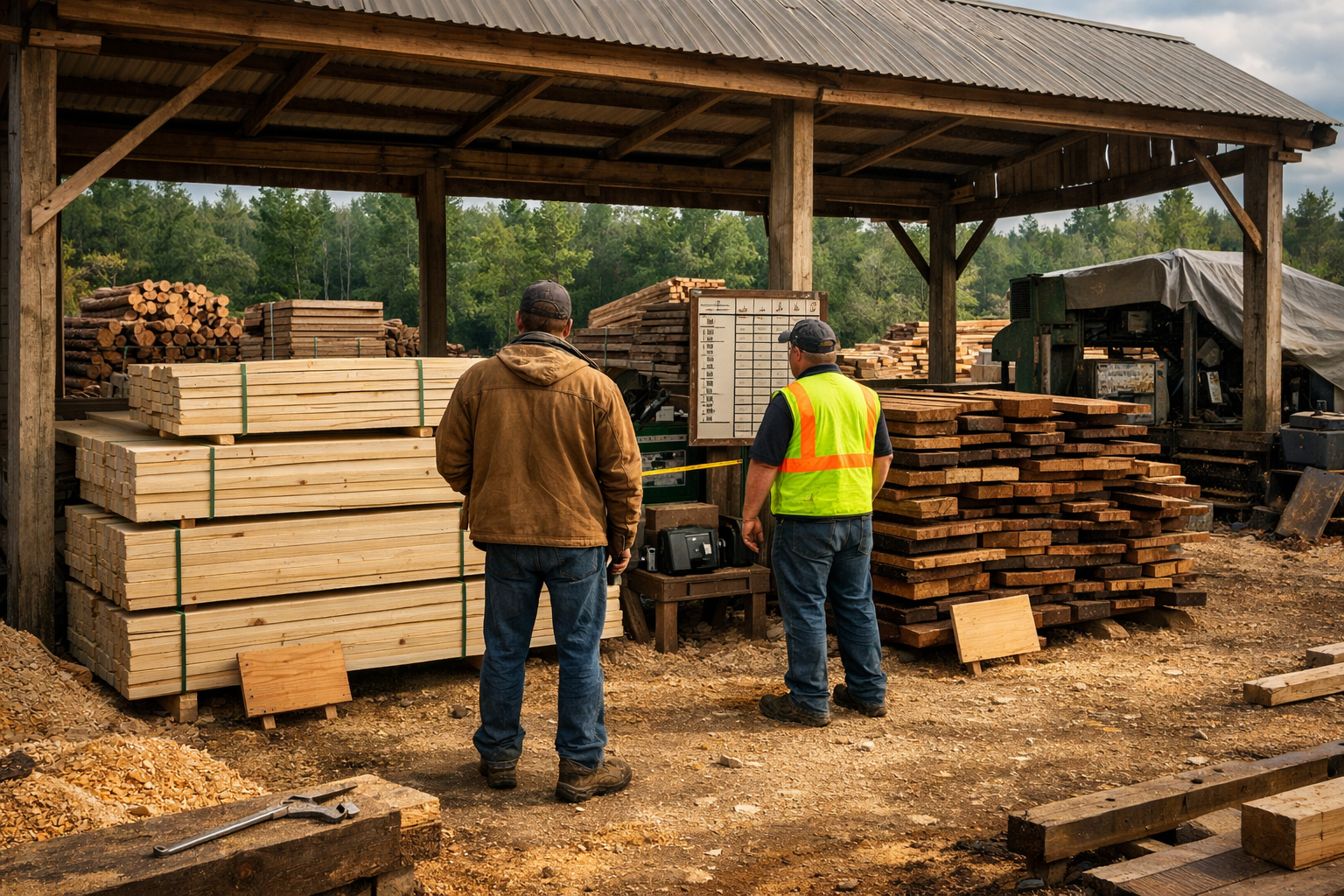
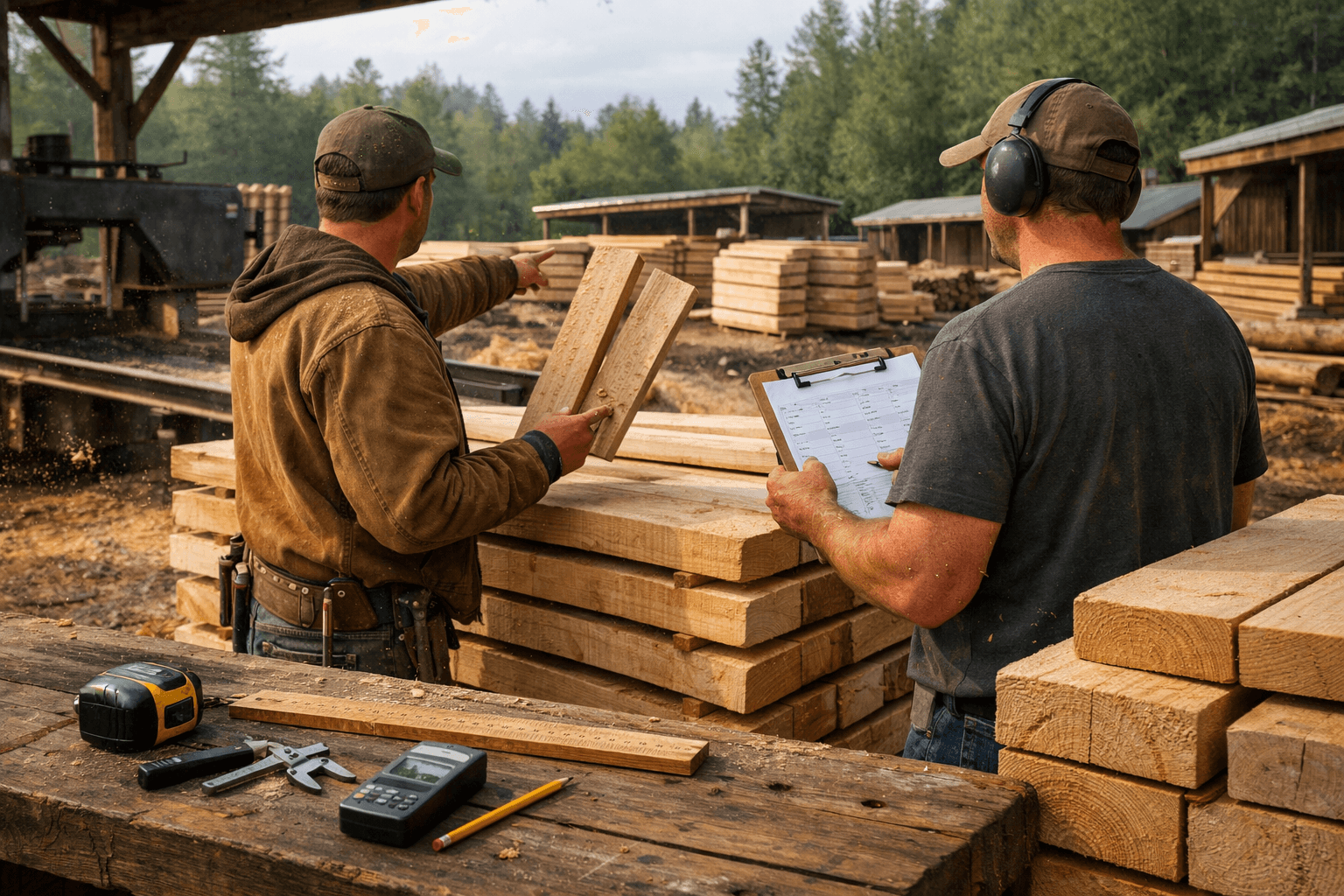
For a cabin build, the stationary local mill is your sweet spot. They’ve got enough volume to offer real pricing, but they’re small enough that the owner or head sawyer will actually talk to you about board feet, cuts, and scheduling.
Portable Mills for On-Site Timber
If you’re clearing your own lot and have decent standing timber, a portable mill operator can come out and mill your logs into usable lumber right there. You’re paying for their time and blade wear, typically by the hour or per thousand board feet, but you skip buying wood altogether. The catch: the lumber comes out green, and you’ll need drying time before framing.
Stationary Mills for Steady Supply
These are the mills worth building a relationship with over multiple projects. Call ahead, ask what’s currently on the yard, and find out their turnaround for custom orders. Many will hold or set aside inventory once they know you’re a repeat customer.
Grading and Cutting Methods That Actually Matter for Framing
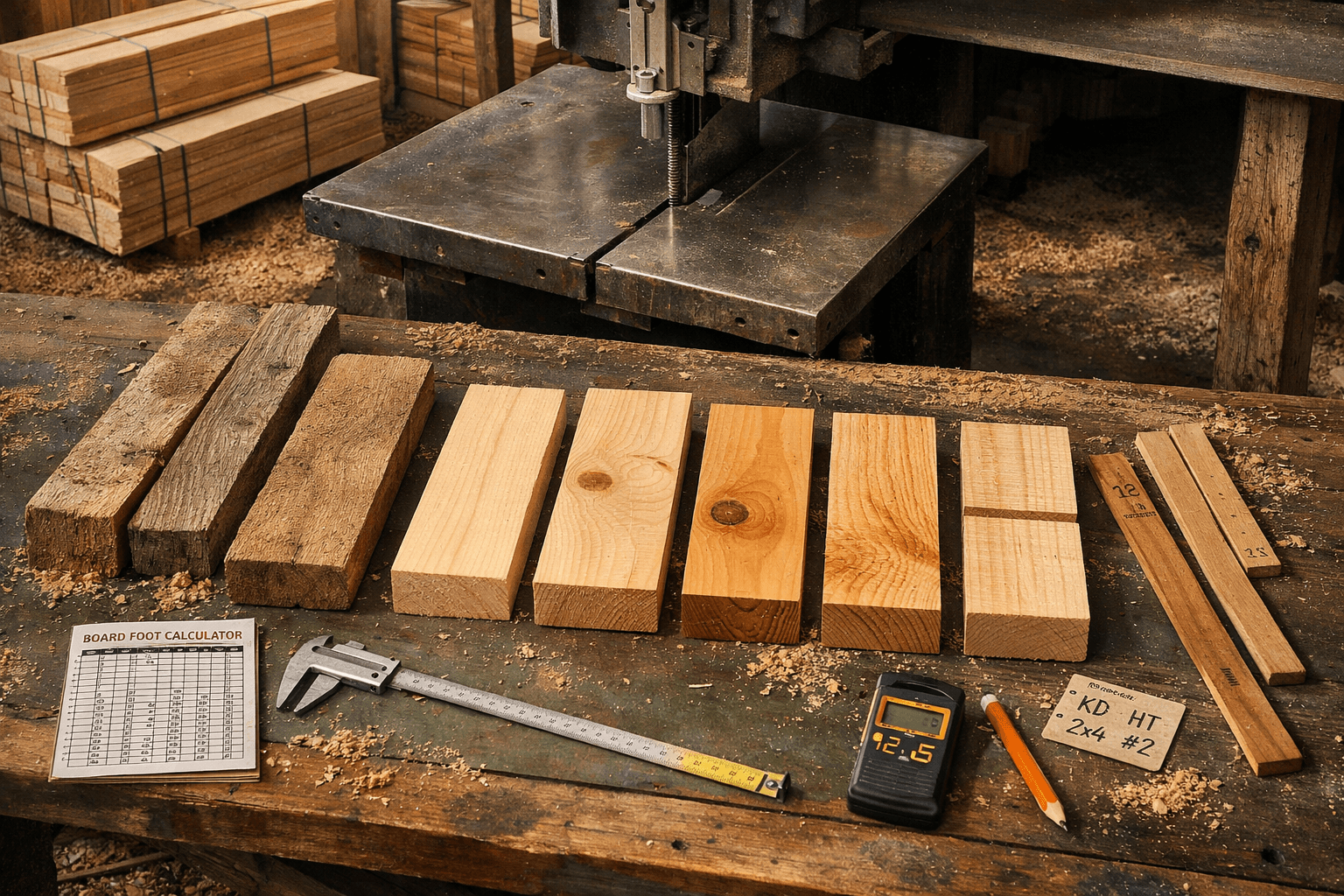
Grading determines whether a board can carry structural load, and this is where DIY builders get burned buying off a mill’s “seconds” pile without checking. Lumber graded No. 2 and Better is standard for framing; anything below that, often sold as “utility” or “shop grade,” may have knots, wane, or checks that reduce strength.
Cutting method affects appearance and stability more than raw strength for most framing uses. Plain-sawn lumber is the standard, fastest, and cheapest cut, showing cathedral grain patterns. Quarter-sawn boards are cut at an angle to the growth rings, resist cupping better, and cost more because there’s more waste per log. Live edge slabs keep the natural bark-side profile and are strictly a finish/furniture cut, not structural framing stock.
Here’s where the real savings live: ask about off-grade or “seconds” lumber specifically for non-critical framing members like blocking, sheathing backers, or interior nailers. Mills often sell these at 30-50% below their standard grade price because of minor cosmetic defects that don’t matter if the board’s getting covered by drywall or siding anyway.
Kiln-Dried vs. Air-Dried: Don’t Frame With Green Wood
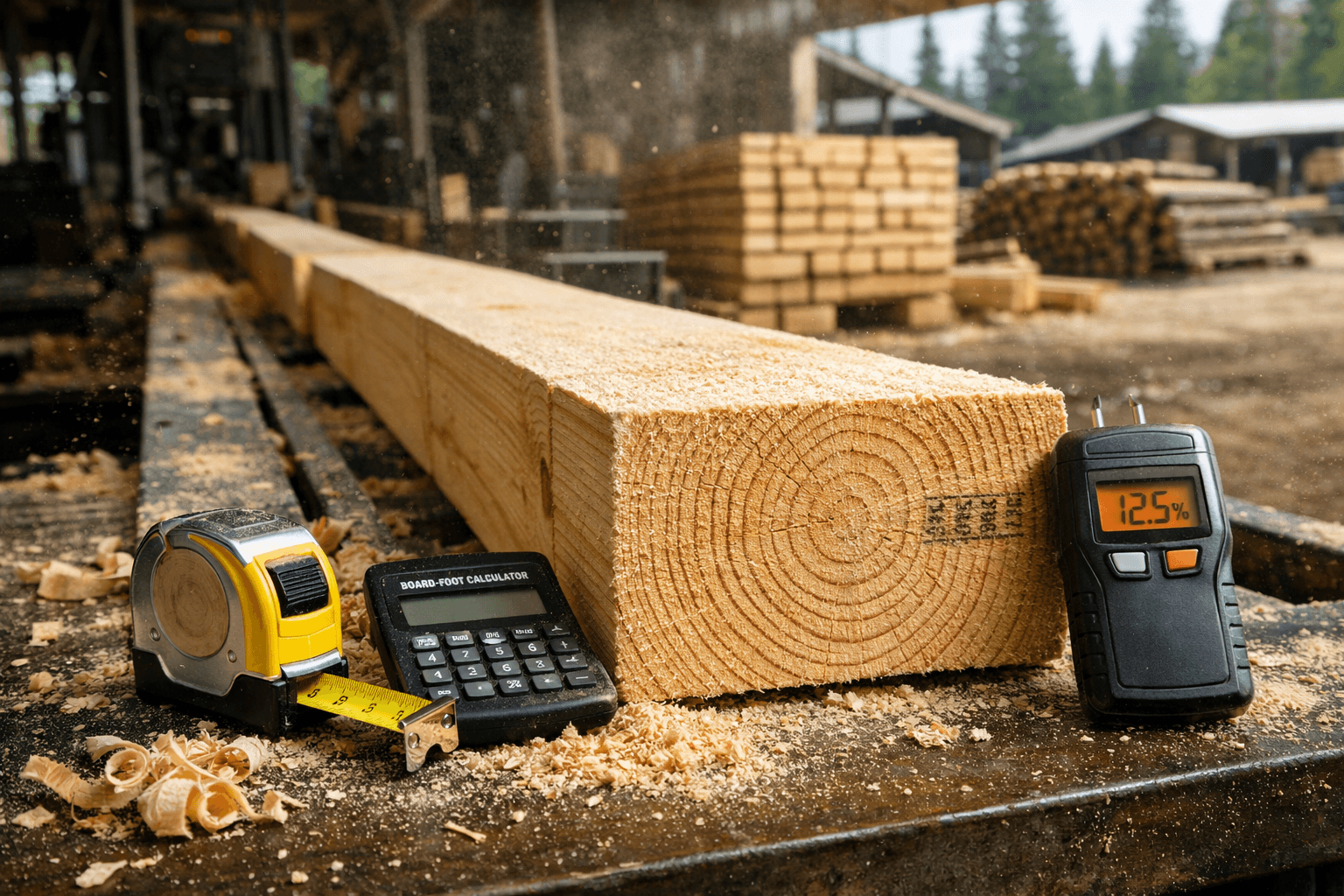
Kiln-dried lumber is dried in a controlled chamber down to roughly 12-19% moisture content, ready to frame with minimal further shrinkage. Air-dried lumber sits stacked outdoors for months or years and typically levels off around 15-20% moisture depending on climate. Green, freshly milled lumber can run 40-60% moisture, and if you frame with it, expect gaps, twisting, and nail pops as it dries in place.
This is the single biggest mistake I see from first-time cabin builders sourcing direct from a mill: they assume everything on the lot is ready to build with. Small mills often don’t have a kiln, especially portable operators, so they’re selling air-dried or even green stock by default.
Ask directly what the moisture content is and how it was measured.
Request kiln-dried lumber for anything structural — studs, joists, rafters.
If only air-dried is available, let it acclimate on-site for at least 2-4 weeks before framing.
Use a cheap pin-type moisture meter (around $30-40) to spot-check boards before you nail them up.
Budget extra time in your build schedule if you’re buying green and drying it yourself.
Softwood, Hardwood, and What Actually Costs Less at the Mill
Softwoods like pine, spruce, and Douglas fir dominate cabin framing because they’re fast-growing, lighter, and cheaper per board foot than hardwoods. Hardwoods like oak and maple show up mostly in flooring, trim, or furniture, not framing, because of weight and cost. If a mill is quoting you hardwood for wall studs, something’s off, unless they’re just moving overstock cheap.
Local species availability drives pricing more than anything else. A mill in the Northeast might have cheap eastern white pine and hemlock; a mill in the Pacific Northwest is swimming in Douglas fir. Buying whatever’s regionally abundant, instead of insisting on a specific species you saw in a magazine cabin build, is where the real cost savings happen.
Species
Typical Use
Cost vs. Retail Pine (2×4, 8ft)
Eastern White Pine
Framing, siding
15-25% less
Douglas Fir
Framing, beams
10-20% less
Hemlock
Framing, sheathing
20-30% less
Red Oak
Flooring, trim
30-50% more
Nominal vs. Actual Dimensions
A “2×4” isn’t 2 inches by 4 inches. Kiln-dried, planed lumber measures roughly 1.5 by 3.5 inches actual. But mill-direct lumber, especially rough-sawn stock, often comes at true nominal size or close to it, meaning a “2×4” really is close to 2 by 4 inches before drying and planing shrink it down. This matters for your framing calculations and for matching mill lumber with retail dimensional lumber in the same wall.
Negotiating Direct: Custom Cuts and Cost Comparison
Buying direct only pays off if you negotiate the right things, not just the price per board foot. Ask about custom milling to your exact dimensions, ask about seconds, and always ask about delivery versus pickup, because a fee for hauling can eat your savings fast if you’re 40 miles from the mill.
Realistic cost comparison: a big-box lumber yard might charge $6-8 for a standard kiln-dried 2x6x8 stud. A local mill selling the same species, kiln-dried, direct, might run $4-5.50 for the same piece, with custom-length cuts often included at no extra charge since they’re sawing to order anyway. Add a transport or delivery fee, often $50-150 depending on distance and load size, and the per-board savings shrink but usually still come out ahead on a full framing package.
I’d recommend calling at least two or three mills within an hour’s drive before committing to one. Prices, grading standards, and drying capability vary a lot between operations, and the cheapest quote on paper isn’t always the best deal once you factor in moisture content and cut quality. If you want a rundown on how this fit into an actual build budget, Cabin Lodger has a running log of framing costs from a real cabin project that’s worth comparing against your own numbers.
Frequently Asked Questions
Is lumber from a local mill always cheaper than a lumber yard?
Not always. Raw pricing usually runs 15-30% lower, but delivery fees, custom cutting charges, and drying time can offset that. Always price the full package, not just the per-board cost.
Can I use green lumber straight from the mill for framing?
You can, but expect shrinkage, twisting, and nail pops as it dries in place. Let it air-dry for at least 2-4 weeks, or pay extra for kiln drying, before framing anything structural.
What’s the difference between mill grading and lumber yard grading?
Both generally use standards like No. 2 and Better, but small mills sometimes grade less strictly and sell off-grade “seconds” cheap. Fine for blocking or sheathing, risky for load-bearing framing without inspection.