That board in your hand could be pine, could be fir, could be something you really don’t want holding up your roof. If you’re staring at a stack of reclaimed lumber, an old barn wall, or a tree that just came down in a storm, asking “what type of wood is this” isn’t idle curiosity — it’s the question that decides whether that wood becomes your cabin’s frame or your firewood pile. Get the ID wrong and you might build with something that rots fast, splits under load, or was never meant to bear weight in the first place.
Start With the End Grain, Not the Surface Color
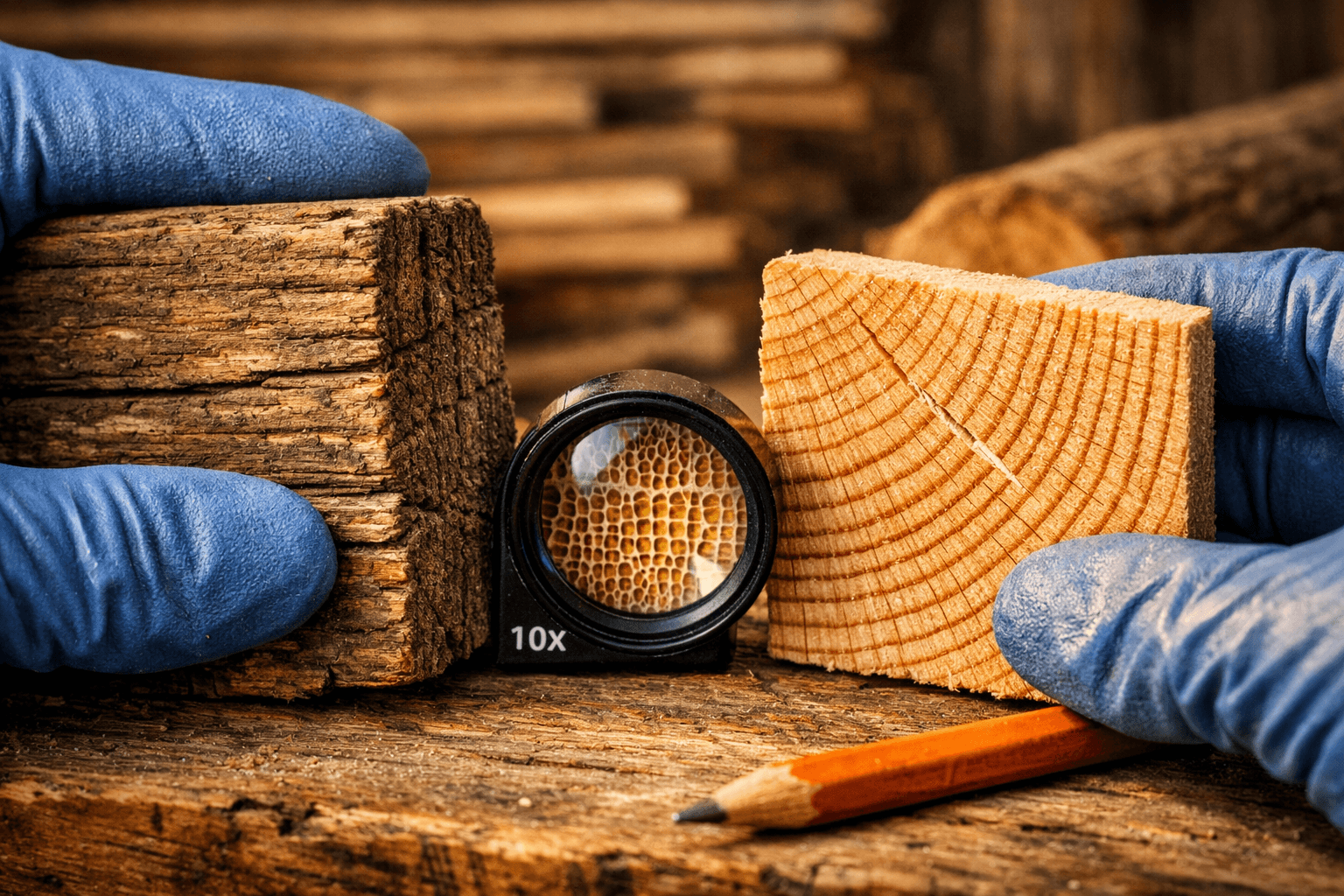
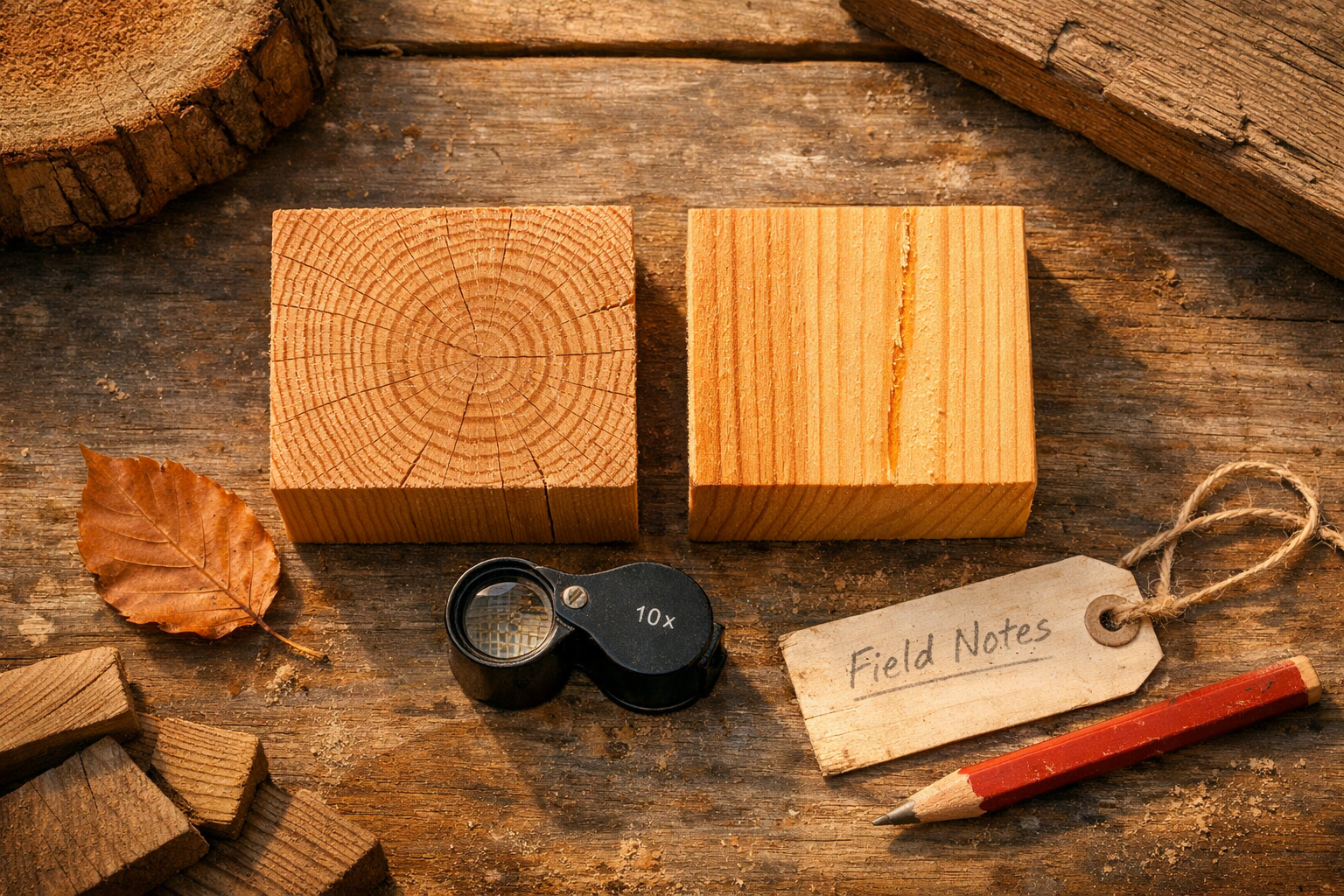
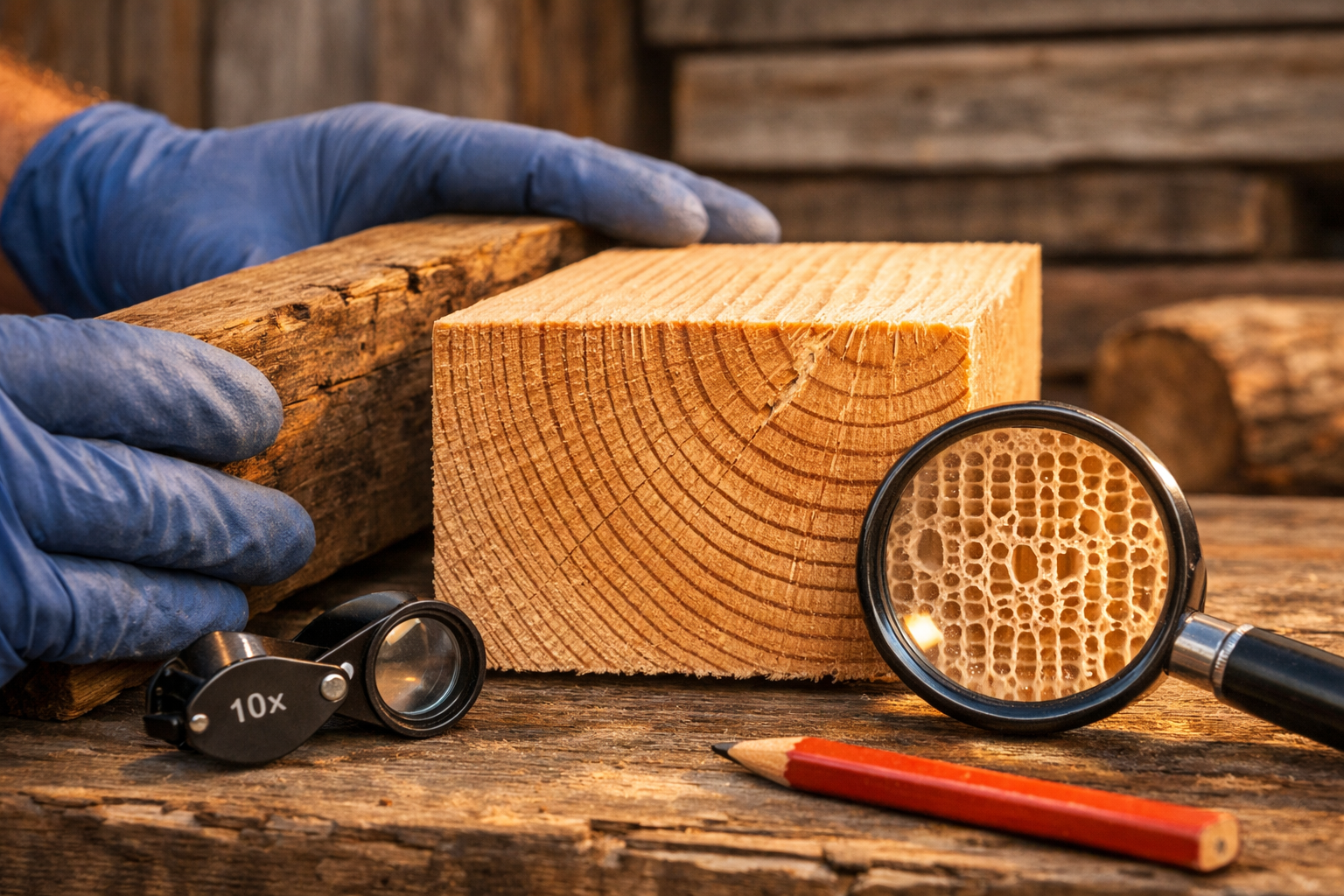
Color lies. Weathering, stain, sun bleaching, and decades of dust can turn a piece of oak the same gray as a piece of pine, so if you’re identifying wood by color alone, you’re already off track. The most reliable clue is the end grain — the cut face at the tip of a board or log round, where you can see the actual cell structure instead of just a painted or weathered surface.
Slice or sand a fresh cut on the end grain and look at it with a 10x loupe if you’ve got one, or even just good light and a magnifying glass. Hardwoods like oak and ash show visible pores — little holes scattered or arranged in rings, since they’re leaf-bearing trees with a more complex vascular structure. Softwoods like pine, fir, and cedar have no visible pores at all; instead you’ll see resin canals in some species and a more uniform, streaky pattern.
Growth rings tell you more once you’re looking at end grain anyway. Tight, narrow rings usually mean slow growth in a cooler climate or a suppressed forest tree, and that wood tends to be denser and more stable. Wide, spread-out rings suggest fast growth, which is common in farmed pine and can mean softer, less dimensionally stable lumber. On a stump or log round, count the rings and check their spacing before you assume anything about strength.
Softwood or Hardwood: The Leaf Test Beats the Hardness Test
The softwood/hardwood split isn’t about how hard the wood actually feels — it’s about the tree type. Hardwoods come from broadleaf, deciduous trees; softwoods come from cone-bearing conifers, and that’s true even though some softwoods (like southern yellow pine) are harder than some hardwoods (like balsa).
If you’ve still got bark, branches, or leaves attached to a fallen tree, use them before you cut anything. Oak has lobed leaves and deeply furrowed, gray-brown bark. Cedar has scaly, reddish, fibrous bark and flat, scale-like foliage instead of needles. Pine has long needles bundled in twos or threes and thick, plated bark with visible resin pockets. Fir has flat, single needles and smoother, resin-blistered bark when young.
A Simple Hardness Check You Can Do With a Thumbnail
Press your thumbnail into a clean, flat spot on the wood. If it dents easily, you’re likely dealing with a softwood like pine or cedar. If it barely marks the surface, you’re probably looking at a hardwood like oak or maple. This isn’t a lab-grade test, but it’s a fast field check that works well enough on a job site.
Smell Test for Fresh-Cut Lumber
Cedar has a sharp, sweet, unmistakable aroma that most people recognize instantly — that’s your fastest confirmation. Pine smells resinous and a little sharp. Oak has almost no smell when dry, but wets down to a sour, tannic odor. Fir smells mild and slightly citrusy when freshly cut. This only works on fresh cuts, though; wood that’s been sitting for a few years loses most of its scent.
Common Cabin Species and What They’re Actually Good For
Not every species belongs in the same part of your build, and knowing the ID is only half the job — you still need to match the wood to the right use.
Species
Grain/Pore Type
Typical Cabin Use
Rot Resistance
Pine
Softwood, resin canals, straight grain
Framing, sheathing, interior trim
Low — needs treatment
Cedar
Softwood, fine straight grain, no pores
Siding, shingles, exposed beams
High — natural oils resist decay
Douglas Fir
Softwood, prominent growth rings
Structural beams, joists
Moderate
Oak
Hardwood, large visible pores
Flooring, furniture, load points
Moderate to high (white oak higher than red)
Cedar’s natural resistance to rot and insects is why it shows up on so many cabin exteriors, even though it costs more per board foot than pine. Douglas fir is the workhorse for structural framing because it’s strong relative to its weight, and you’ll find it in engineered lumber and dimensional studs alike. Oak is heavy and durable but a pain to work with hand tools, so it tends to show up in flooring or small structural accents rather than whole-wall framing.
Reclaimed Wood and Storm-Fallen Trees: Where Misidentification Gets Expensive
This is where the stakes actually matter. Fresh lumber from a yard comes with a species stamp; reclaimed wood and storm-fallen trees don’t, and that’s exactly where builders get burned.
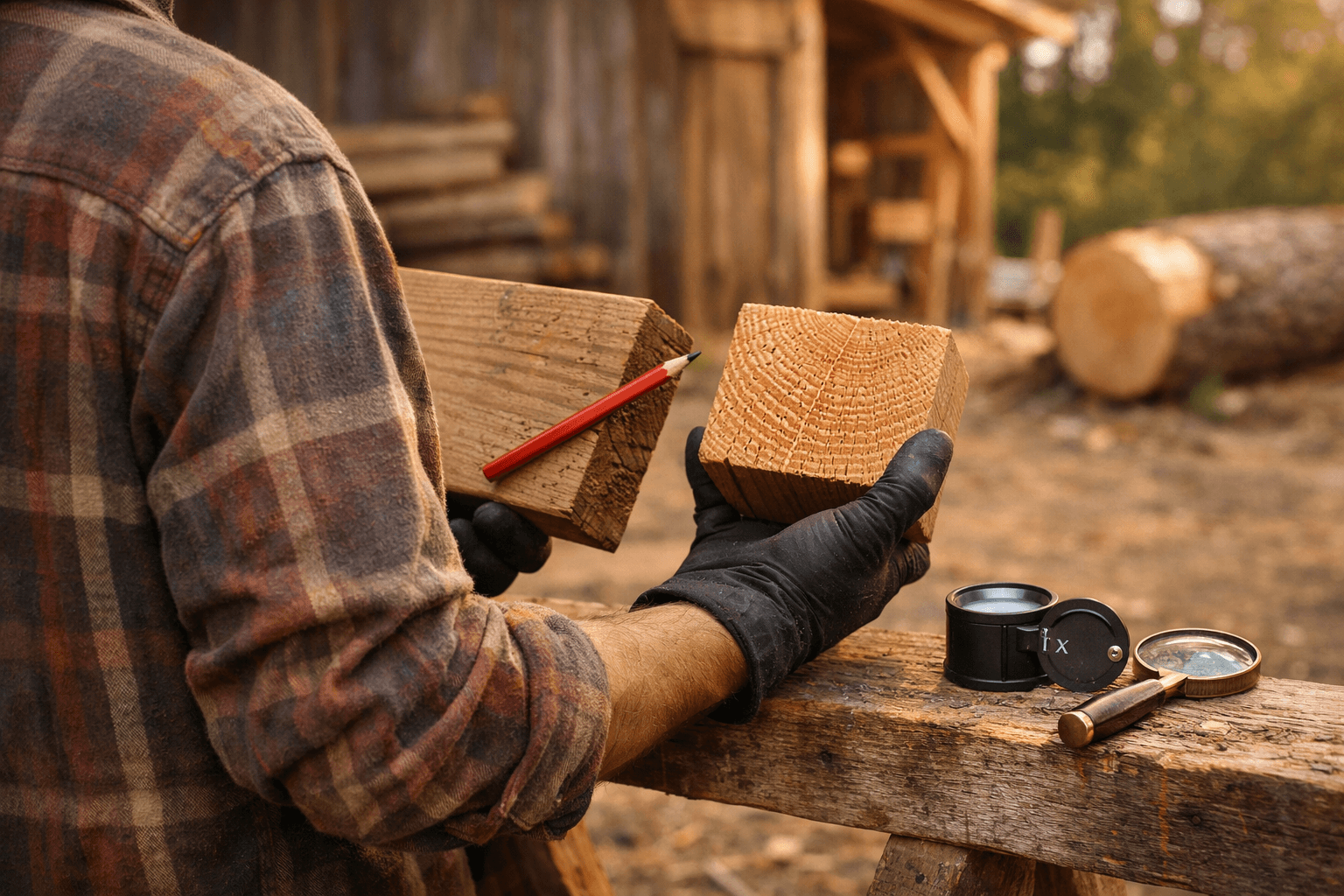
Reclaimed barn wood and old joists have often been painted, oiled, smoke-darkened, or just weathered gray for 40-plus years, so surface appearance tells you almost nothing. Always cut a fresh cross-section before you judge it. A board that looks black and rotten on the outside can reveal solid, sound oak or fir once you get past the weathered skin, while a board that looks fine on the surface can be punky and soft two inches in.
Before you frame anything with reclaimed or storm-salvaged timber, run through this sequence:
Cut a fresh cross-section and check the end grain for pore structure and ring spacing.
Press a screwdriver or awl into several spots along the length, checking for soft, spongy give that signals rot.
Smell a fresh cut to help confirm species when visual ID is unclear.
Check for insect exit holes, powdery frass, or galleries under the bark.
Weigh the piece in your hand — wood that feels unusually light for its size has likely lost density to decay.
Test a hidden section with a moisture meter if you have one; anything reading above 19% needs more drying time before use.
Reserve any piece with visible rot, heavy insect damage, or punky sections for non-structural use only, or don’t use it at all.
If you’re unsure after all that, a lot of builders lean on wood identification apps or field guides that use bark and leaf photos plus end-grain close-ups to narrow down species — they’re not perfect, but they’re a decent second opinion when you don’t have a forestry background. For treating whatever wood you do decide to use, cabinlodger.com has a rundown of borate treatments and sealants that work well for cabin-grade lumber, which is worth a look before you commit good timber to a wall that’ll be hard to open back up later.
Frequently Asked Questions
Can I identify wood species just by looking at the color?
No — color changes drastically with age, sun exposure, and finish, so two different species can look identical after a few years outside. Always check end grain and pore structure instead of relying on surface tone.
Is softwood always weaker than hardwood?
Not necessarily. The softwood/hardwood label refers to tree type (conifer vs. broadleaf), not actual strength — southern yellow pine, a softwood, is denser and stronger than some true hardwoods like balsa or basswood.
How do I know if reclaimed wood is safe to use structurally?
Cut a cross-section, probe with an awl for soft spots, check for insect galleries, and confirm moisture content is under 19% with a meter. Any punky, spongy, or heavily insect-damaged wood should stay out of load-bearing spots.