That stain can of yours isn’t just picking a color, it’s setting a maintenance clock you’ll have to live by for years. Woodworking stains for cabin projects get treated like a paint-chip decision when they’re really a durability contract with your siding. Pick wrong, and you’re not repainting for fun in three years, you’re scraping off rot that started because water got behind a finish that never had a fighting chance.
If your cabin sits off-grid or gets visited once a month, this decision matters more than it would for a house you walk past daily. Nobody’s catching the first sign of failure early out there.
Oil-Based, Water-Based, or Gel: Which Actually Survives a Cabin Winter?
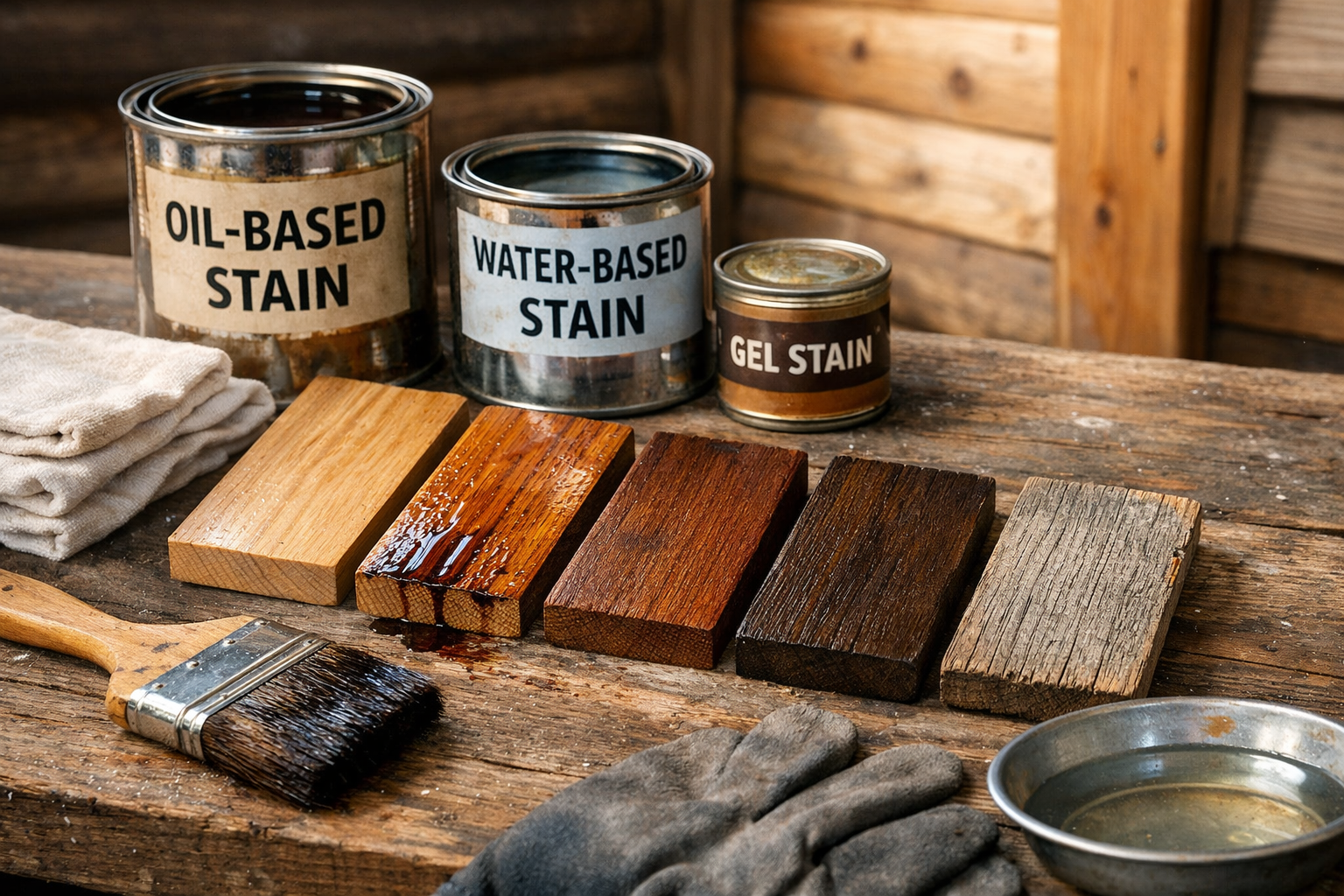
Oil-based stains soak deepest into open-grain wood like cedar and pine, which is why they’re still the default for log cabin siding facing real weather. They penetrate the fibers instead of sitting on top, so they flex with the wood as it swells and shrinks through freeze-thaw cycles.
Oil-Based: The Workhorse
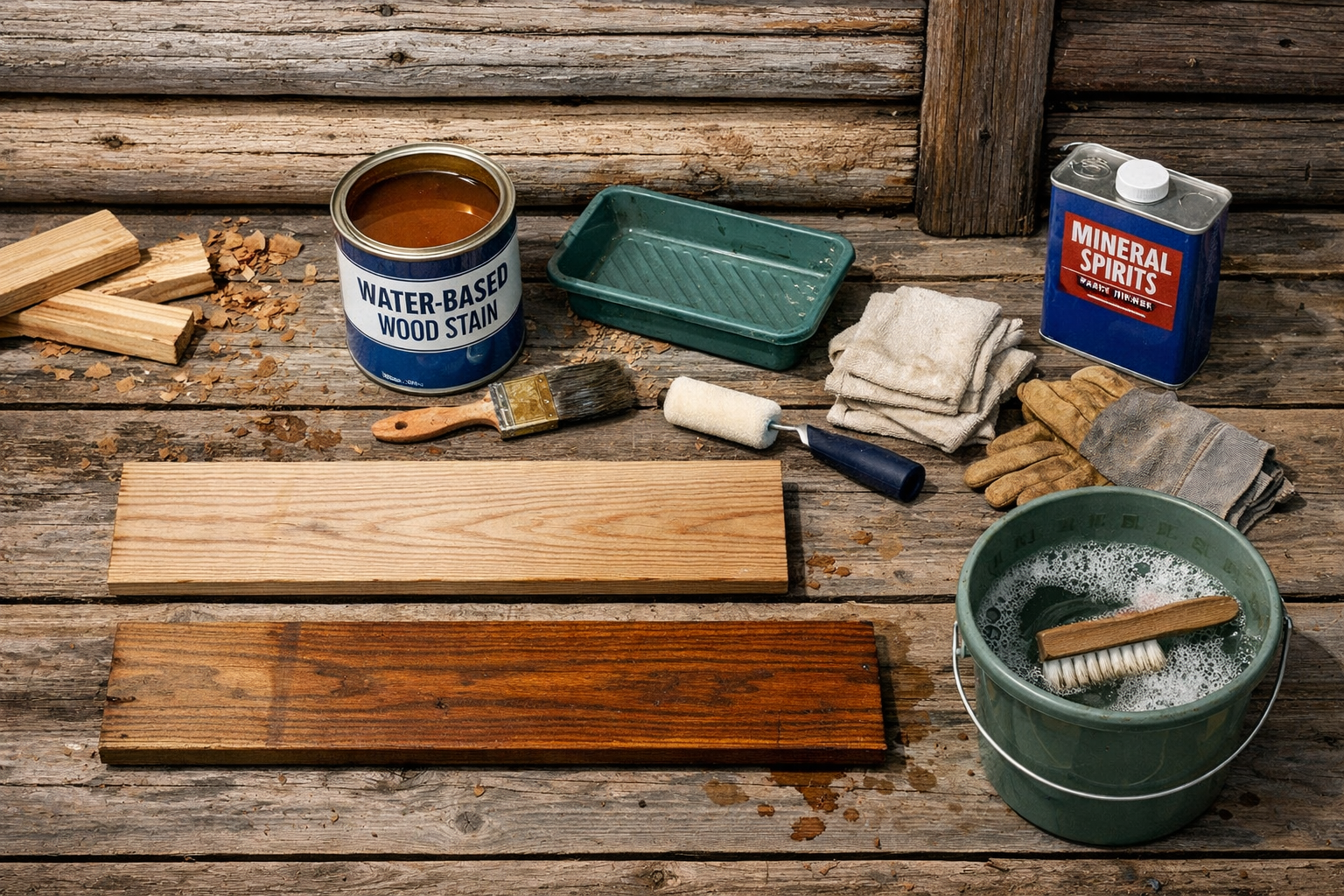
Expect a reapplication cycle of 3 to 5 years on exterior log walls, depending on sun exposure. Southern and western faces facing full sun will fade first; north walls under an overhang might stretch past 5 years. Oil-based stains smell strong and need mineral spirits for cleanup, and dry slower, but the penetration is what keeps water from creeping into the grain during a wet spring.
Water-Based: Faster but Thinner
Water-based stains dry in 2 to 4 hours versus 8 to 24 hours for oil-based, and cleanup is soap and water. The tradeoff is they sit closer to the surface, so on exterior cabin walls you’ll likely be back at it every 2 to 3 years instead of 5. For interior paneling, trim, or furniture, water-based is the better call since UV and moisture aren’t beating on it daily.
Gel Stains: For Vertical Logs and Uneven Grain
Gel stains are thick enough to hang on vertical surfaces without dripping, which makes them useful on log ends and dormers where liquid stain runs. They lay color more evenly over blotchy, porous wood like pine, but they build a thicker film and can peel instead of wearing gradually, so exterior gel use should stay limited to trim pieces, not full log walls.
Semi-Transparent vs. Solid Color: The Real Tradeoff Is Reapplication, Not Looks
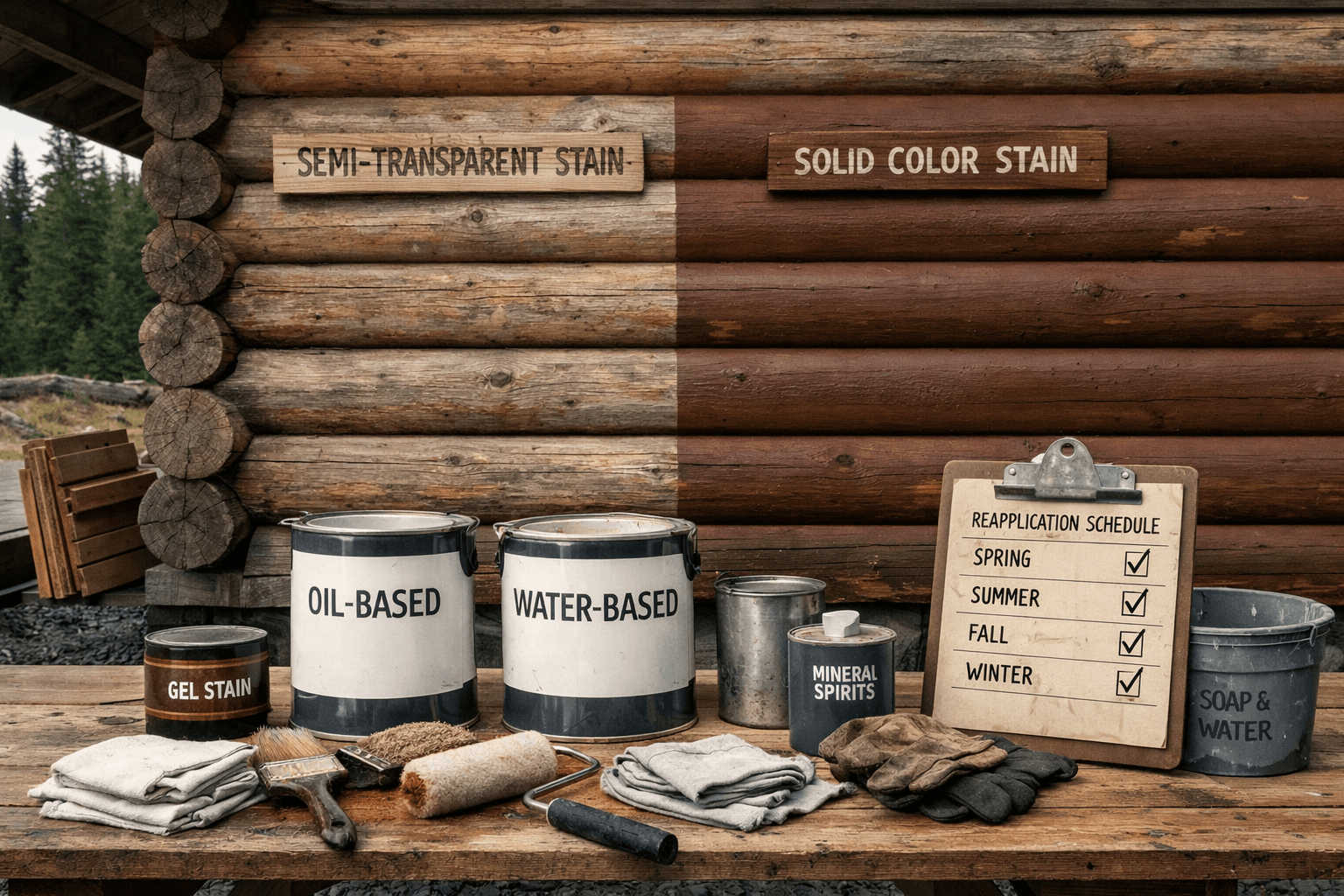
Semi-transparent stains let the wood grain show through and typically need refreshing every 2 to 4 years on exposed cabin walls; solid color stains hide the grain almost entirely but hold up 5 to 8 years before failing. The choice isn’t cosmetic, it’s about how often you’re willing to climb a ladder.
Semi-transparent looks more like “real wood” and is what most cabin owners want visually. But it has less pigment blocking UV rays, so it breaks down faster on sun-facing walls. If your cabin is a weekend retreat two hours from the nearest hardware store, that shorter cycle means more trips you didn’t plan for.
Solid color stains function closer to thin paint. They block UV better and last longer, but once wood grain is gone under a solid stain, going back to a natural look means sanding it all off or living with the coverage forever. That’s a real commitment, not a small one.
Stain Type
Typical Reapplication
Grain Visible
Best Use
Oil-based semi-transparent
3-5 years
Yes
Exterior log walls
Water-based semi-transparent
2-3 years
Yes
Interior trim, furniture
Gel stain
2-4 years (trim only)
Yes
Log ends, uneven grain spots
Solid color
5-8 years
No
High-exposure exterior walls
Does Wood Stain Protect Against UV, or Do You Need Something Else?
Most stains alone don’t fully block UV, and that’s the mistake I see most often on remote builds. Pigment in the stain does most of the UV work, and clear or lightly tinted stains offer almost none, which is why a clear-coated cabin can gray out in a single summer.
Darker semi-transparent stains with more pigment load block more UV than lighter tones, but even those benefit from a dedicated exterior topcoat rated for UV if your walls get direct sun most of the day. Skipping that step is one of the most common corners cut on cabin exteriors, and it’s the reason some builds need a full strip-and-restart after only two seasons instead of a simple recoat.
Before staining anything, get the moisture content right. Applying stain over wood that’s still wet from milling, rain, or recent pressure treatment traps moisture under the finish and causes peeling and poor adhesion within months. A moisture meter reading under 15% is a reasonable target for most softwoods before staining exterior logs.
Here’s a simple sequence worth following on any exterior cabin surface:
Check moisture content with a pin-type meter; wait for readings under 15%.
Sand or clean off mill glaze, dirt, and old finish residue.
Test the stain on a scrap piece or hidden corner first — porous cabin wood can absorb unevenly.
Apply with a brush for tight grain areas and a sprayer for large flat wall sections.
Back-brush sprayed stain to work it into the grain rather than leaving it on the surface.
Let it dry per the label, usually 24 hours minimum outdoors before a second coat.
Add a UV topcoat if the base stain is light-colored or clear.
Setting a Maintenance Schedule Instead of Guessing
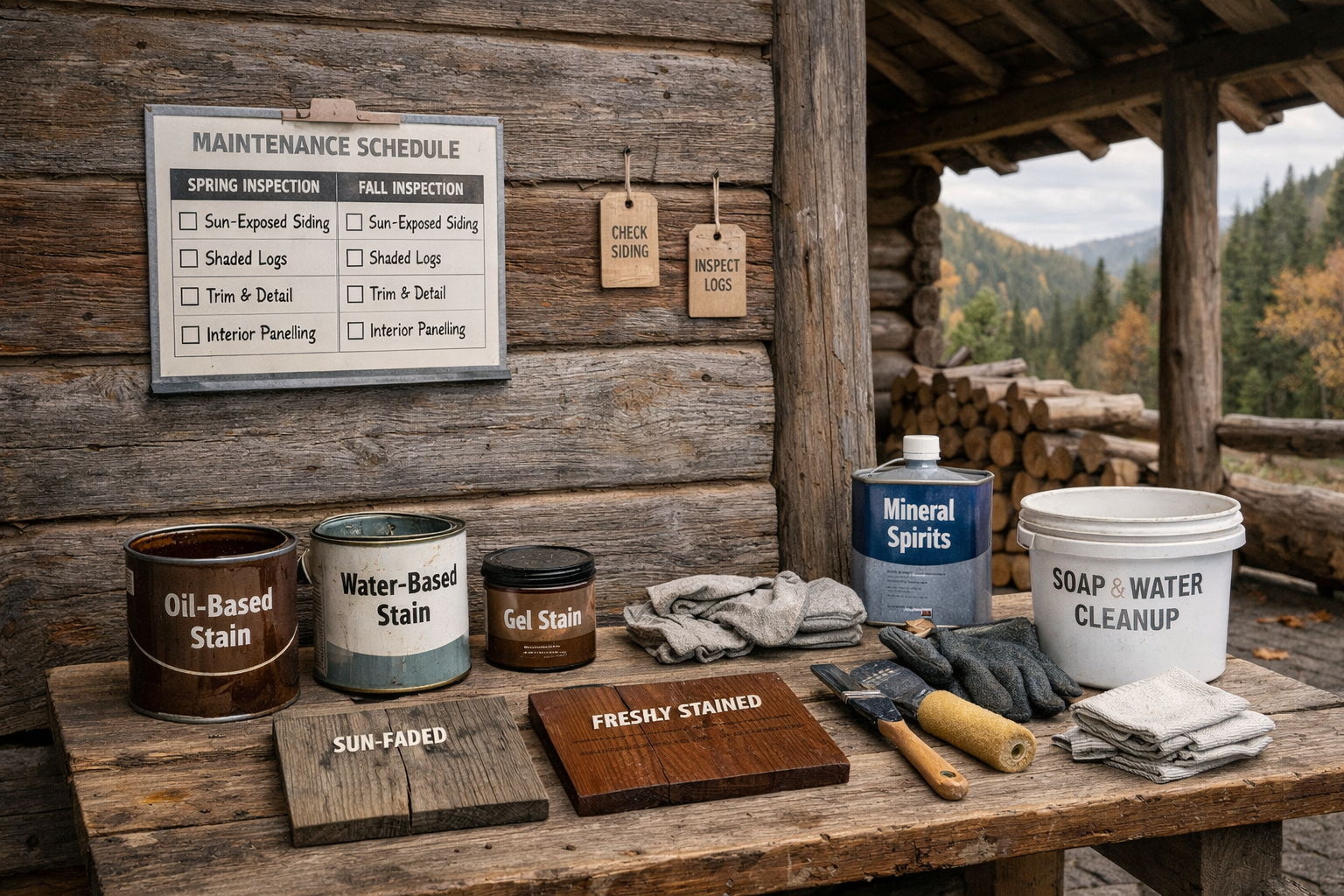
The real question isn’t which stain looks best on your cabin, it’s how many years you can go between coats before water damage outruns your visits. That’s the differentiating question off-grid builders need to ask that a typical homeowner never does.
Walk your place on a calendar, not a hunch. If you’re only out at your cabin every few weeks, build a reapplication schedule around your actual visit pattern rather than the label’s average estimate, since a missed season on an exposed south wall can mean rot setting in before you even notice fading. I keep a running log of what was applied where and when on my own build, and I’ve found it’s the only way to catch a wall that’s wearing faster than the rest before it becomes a repair job instead of a recoat.
For readers tracking their own builds, cabinlodger.com has a running log of what’s worked and failed across seasons, which is a decent way to sanity-check your own maintenance timing against someone else’s real weather exposure.
Don’t assume every stain you buy includes UV protection or rot resistance by default; read the can. Many exterior-rated stains still expect a topcoat for full performance, and that detail gets skipped more than it should.
Frequently Asked Questions
How long does exterior wood stain actually last on a cabin?
Expect 2 to 5 years for semi-transparent stains and 5 to 8 years for solid color stains on exterior walls, with sun-facing sides wearing out first. North-facing or shaded walls often stretch beyond those ranges.
Can I use an interior wood stain on exterior cabin siding?
No. Interior stains lack the UV blockers and moisture-resistant resins built into exterior formulas, so they break down fast outdoors, often within a single season of direct weather exposure, and won’t protect against rain-driven grain swelling.
Do I need to sand between stain coats on log siding?
Usually not between coats of the same stain, but light sanding helps if you’re switching stain types or the surface feels rough after drying. Always wipe off dust before the next coat goes on.